Tehran walks out on the Islamabad deal as US warships mass off the Gulf
Tehran declared itself unbound by a 2025 understanding with Washington on 14 July 2026. Within hours, the Pentagon ordered 20-plus warships into the Gulf, and the IRGC warned of a regional oil shutdown.
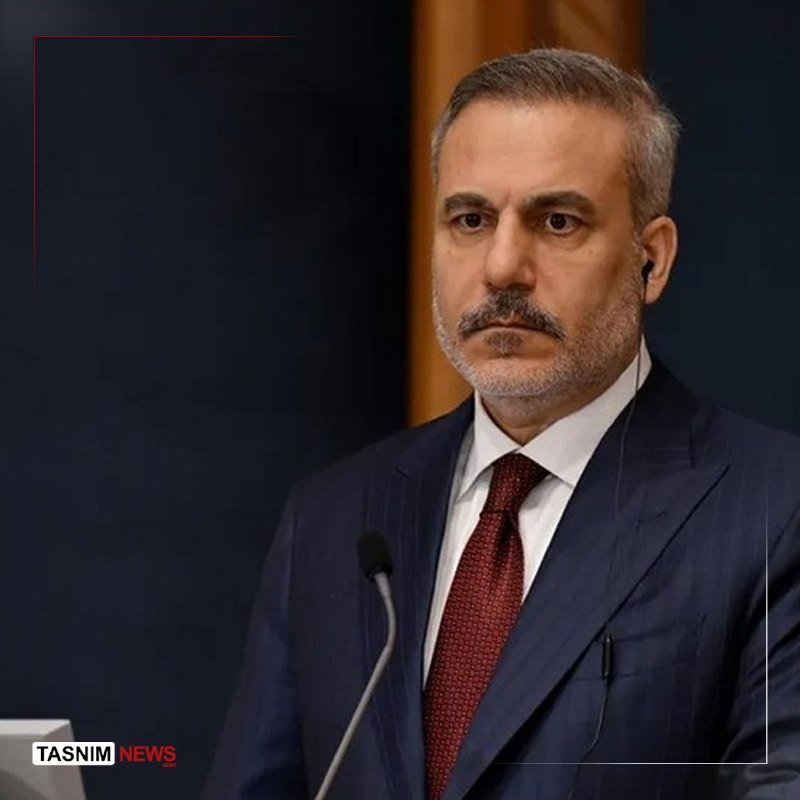
At 19:02 UTC on 14 July 2026, Tehran publicly disowned a piece of paper most of the world had already forgotten. Iran's government told reporters that it currently has "no commitments" under the Islamabad memorandum of understanding with the United States, a declaration carried that evening by wire and aggregator feeds. Within roughly twenty-five hours, the posture on both sides had hardened enough that the regional energy market stopped pretending otherwise.
By 20:20 UTC on 14 July, US Central Command had announced a force of more than twenty US warships and hundreds of aircraft backing what it described as a renewed blockade of Iran, an order of magnitude larger than the maritime posture the US Navy had maintained in the Gulf at any point in the previous year. By 10:57 UTC on 15 July, Iran's Islamic Revolutionary Guard Corps had put its own marker down: as long as US forces remain in the region, not a drop of oil and gas will be exported from the area, an explicit threat to choke the Strait of Hormuz. By 14:19 UTC on 15 July, CENTCOM was confirming multiple strikes on Iranian targets, the kind of action that, in earlier decades, would have taken weeks of confirmation to surface publicly.
What is unusual is the speed and the symmetry. A diplomatic exit, a naval deployment, an oil-export threat, and a kinetic exchange have arrived inside a single news cycle, with each side's narrative calibrated to make the other look like the escalator. Both, of course, claim to be responding.
What the Islamabad memorandum actually was
The Islamabad memorandum, signed in the Pakistani capital during 2025, was a narrow procedural understanding rather than a grand bargain. It was meant to keep the Strait of Hormuz navigable and the nuclear file technically negotiated while the broader relationship remained hostile. The text bound both parties to specific de-escalation steps: limits on enrichment, certain inspection arrangements, and quiet coordination on shipping lanes.
By 14 July 2026, Iran was saying the document no longer constrains it. The phrasing matters. Tehran did not announce a withdrawal from the non-proliferation regime, did not renounce the Nuclear Non-Proliferation Treaty, and did not tear up the 2015 framework. It simply told reporters that the bilateral memorandum "no longer binds" it, a legal posture that leaves maximum room to re-enter the deal later if the domestic balance shifts, while freeing it now.
The decision is consistent with a pattern in which Tehran uses bilateral diplomatic scaffolding as a pressure valve rather than a ceiling. When the political cost of holding to commitments is higher than the cost of dropping them, the scaffolding is treated as optional.
Twenty-plus warships, one chokepoint
CENTCOM's announcement of a "force of 20+ U.S. warships and hundreds of aircraft" backing a "renewed blockade" is a numerical escalation that should be read literally. A blockade is not a sanctions regime and not a freedom-of-navigation operation; it is a recognised act of war under the law of the sea, justified in the American framing as enforcement of prior sanctions. The inclusion of "hundreds of aircraft" implies the strike package needed not just to interdict shipping but to suppress anti-ship missiles, coastal batteries, and fast-attack craft in the northern Gulf, all of which Iran's IRGC Navy operates in large numbers.
For Iran, the IRGC statement that "not a drop of oil and gas will be exported from the region" is a counter-blockade threat with the entire southern Gulf coastline as its instrument. Roughly a fifth of the world's seaborne crude transits the Strait of Hormuz. Even a partial closure, lasting days rather than weeks, would reset Asian refining margins and force emergency releases from strategic reserves across the OECD.
The two threats are mirror images: each side is betting that the other cannot afford the economic shock of a prolonged closure. So far, the bet has not been tested against a real closure, only against the threat of one.
The strike sequence and the information fog
By 14:19 UTC on 15 July, CENTCOM's public channels were reporting multiple strikes against Iran, with the targets and the toll still being compiled. The aggregation feed carried the line without further detail. That sparsity is itself a tell. Major US strike packages in the post-2020 period have typically been followed, within hours, by satellite imagery from commercial providers, by social-media geolocation from observers in adjacent countries, and by Iranian state media confirmation or denial. As of the 15 July UTC afternoon, the public record contained the announcement but not yet the kind of independent corroboration that would let outside analysts confirm specific damage.
Iranian state-aligned channels, which have not been the most reliable factual source in past cycles, will likely be the first to surface domestic casualty figures. Western wire services, constrained by access, will likely lead with what CENTCOM says. The gap between those two ledes is where the next twenty-four hours of coverage will be fought.
What neither side is saying
Both Washington and Tehran are framing this as a sequence of responses, a chain in which each move is provoked by the previous one. The structural reading is simpler. The Islamabad memorandum was, in effect, the last remaining procedural cushion between the two sides. Once Tehran declared it had "no commitments" under that text, the question stopped being whether there would be a kinetic exchange in 2026 and became how visible that exchange would be.
What remains genuinely uncertain is the depth of the Iranian threat. The IRGC is institutionally capable of harassing Gulf shipping; it is less clear that it is institutionally ready, or politically authorised, to mount a sustained closure. On the other side, the deployment of twenty-plus warships is a long-tail commitment: ships steam home, crews rotate, munitions budgets are visible in appropriations bills, and the political appetite in Washington for an open-ended Gulf campaign is finite. Whoever blinks first will be the one whose domestic press begins asking why the energy bill has gone up.
The energy market will price that question before any human analyst does. The next 72 hours are the window in which a partial closure is still recoverable, and the window in which it becomes the new normal.
This article was prepared by the Monexus newsroom. The wire framework led on the IRGC statement and the CENTCOM strike confirmation; the structural read is the publication's own.
Wire provenance
This editorial synthesis draws on the following public wire/social posts:
- https://t.me/unusual_whales/1942317
- https://t.me/unusual_whales/1942186
- https://t.me/polymarket/260714-1820
- https://t.me/polymarket/260714-1702