Tehran signals escalation as Foreign Ministry declares US in breach of understanding
Iran's Foreign Ministry says Washington has violated the terms of a memorandum of understanding and warns of a forceful response, framing Washington as complicit in crimes against Palestinians.
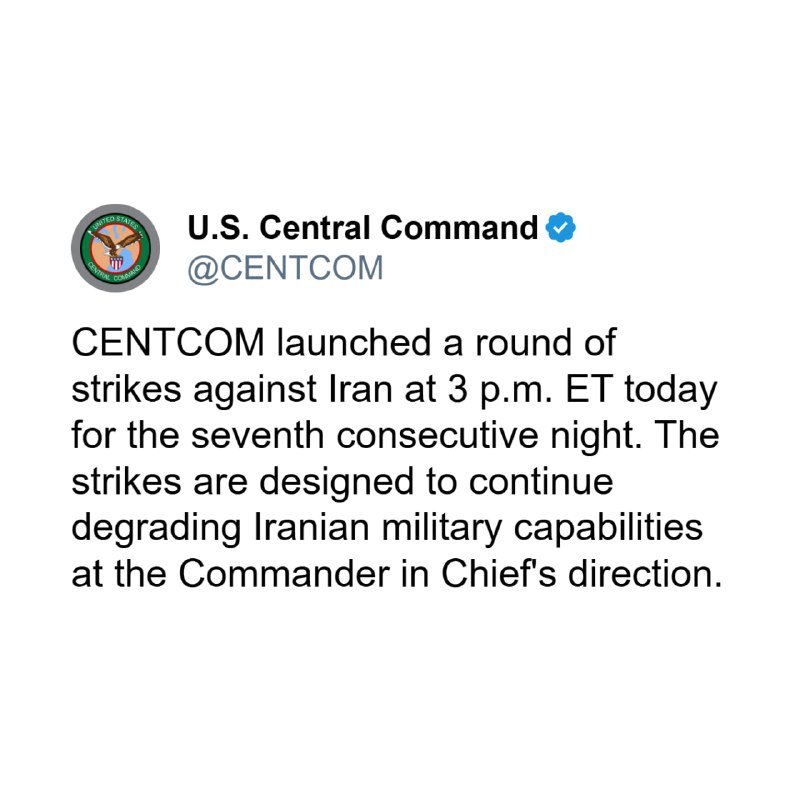
At 15:28 UTC on 15 July 2026, Iran's Foreign Ministry accused the United States of breaching the terms of a memorandum of understanding and warned that Tehran would respond "forcefully" to attacks, declaring that "our hands are not tied." The statement, carried by the BRICS-affiliated Telegram channel BRICS News, set the tone for a cascade of official Iranian messaging over the following ninety minutes that framed Washington not as a neutral party but as a partner in ongoing crimes against Palestinians and warned of wider regional escalation by the so-called Axis of Resistance.
The cascade matters less for any single sentence than for what it signals about Tehran's strategic posture. Within roughly an hour and a half, four distinct Iranian state-linked outlets had carried overlapping but stylistically different versions of the same warning: a Foreign Ministry broadside, a sharper charge that the "American regime" is a partner in "the continuation of the genocide of the Palestinians," a military adviser's threat that the resistance front would drag the US and Israel into a "quagmire," and a Foreign Ministry spokesperson's confirmation that Iran would respond to any US breach of commitments. Read together, they amount to a deliberate signalling exercise, calibrated for both domestic and regional audiences, that leaves the door open to escalation while preserving deniability on specifics.
What Tehran actually said
The opening salvo came at 15:28 UTC via the Telegram channel BRICS News, which reported the Foreign Ministry's accusation that Washington had violated the terms of a memorandum of understanding and quoted the line, "Our hands are not tied." The channel did not publish the full text of the underlying MoU, and the Foreign Ministry has not, as of the timestamps available, publicly identified which provision it alleges was breached. That gap is significant: in disputes of this kind, the named violation is usually the substantive hook, and the absence of one leaves the statement in the realm of posture rather than legal claim.
At 15:53 UTC, the Beirut-based Al Alam Arabic carried a sharper formulation. The Foreign Ministry, per that channel, called the "American regime" a partner "in the crimes committed and in the continuation of the genocide of the Palestinians." The wording is notable for two reasons. It elides any distinction between the US government and the broader American political system, a rhetorical move that is standard in Iranian official discourse but which carries diplomatic weight when issued at Foreign Ministry level. And it folds a separate, ongoing conflict into the bilateral framing, suggesting Tehran intends to treat any US posture on the Iran file as inseparable from US posture on Gaza.
The military dimension
At 16:45 UTC, PressTV carried remarks from a senior military adviser to the commander-in-chief of Iran's armed forces, warning that the "Axis of Resistance" would drag the United States and Israel into a quagmire. The framing is longstanding in Iranian strategic rhetoric, but the timing matters: it places a uniformed-adjacent voice in the same news cycle as the diplomatic escalator, signalling that the warnings are not merely Foreign Ministry boilerplate.
Moments later, IRNA English, the state news agency's English service, reported the Foreign Ministry spokesperson's confirmation that Iran would respond to any breach of US commitments. The IRNA framing is the most procedural of the four: it presents the warning as a standing policy line rather than a reaction to a specific incident, which suggests the messaging is intended to harden expectations rather than to narrate a particular event.
What the framing leaves out
Read on its own terms, the cascade tells a clean story: Washington has allegedly violated an understanding, and Tehran reserves the right to retaliate. The structural problem is that none of the four items identifies what the MoU contains, who signed it, when it was signed, or what conduct is alleged to constitute the breach. Iranian state media frequently operates on precisely this register, in which the underlying document is treated as settled context rather than something the reader needs to see. That choice makes the warnings politically legible to a regional audience that already shares the framing, and opaque to outsiders who would need the text to evaluate the claim.
There is also a counter-narrative that the cascade does not engage with, and that any honest reading has to acknowledge. Western and Gulf-based outlets covering the same corridor have, in recent months, framed Iran's posture as calibrated deterrence rather than reactive diplomacy, with explicit hedging built into public messaging to avoid a kinetic spiral. On that reading, the four statements of 15 July are not signs of imminent action but of an intra-bureaucratic signalling contest inside Tehran, in which the Foreign Ministry, the military adviser's office, and state media each perform a different facet of Iranian policy for different constituencies. That interpretation cannot be ruled out from the available evidence, and it should be on the table alongside the more alarmist reading.
The structural read
The deeper pattern here is the convergence of three usually separate Iranian messaging tracks into a single news cycle. Diplomatic protest, religious-political solidarity with Palestinians, and military threat have, in the past, been deployed in sequence, with days between them. Compressing them into ninety minutes is itself a signal: it forecloses the possibility that any one statement can be walked back in isolation, and it forces external observers to engage with the package rather than the parts.
That is also why the Western response to statements of this kind tends to be flat rather than escalatory. Governments that have spent two years managing the Iran file have learned to read the difference between signalling and action, and to price the signalling accordingly. The risk in that posture is that it produces a kind of mutual dismissal, in which each side treats the other's warnings as theatre and therefore stops attending to them; the upside is that it preserves room for the diplomatic channel to keep functioning through periods of public confrontation.
What to watch next
The next forty-eight hours will tell whether the cascade hardens into something concrete. Three indicators will matter: whether the Foreign Ministry publishes the text of the underlying MoU or identifies the specific breach it alleges; whether a separate Iranian military or paramilitary-aligned outlet produces operational language rather than political framing; and whether a third-party mediator, Turkey or Oman most plausibly, surfaces to confirm that back-channel contact has been preserved through the public escalation. None of those indicators is present in the current source set, and Monexus will update if and when they appear.
For now, the honest summary is narrower than the headlines. Four Iranian state-linked outlets, in roughly ninety minutes, produced four overlapping warnings to Washington. The substance of the alleged breach has not been disclosed. The diplomatic channel has not been confirmed broken. And the military dimension, while present, remains rhetorical rather than operational.
Desk note: Monexus is treating the four 15 July 2026 Telegram items as primary Iranian state-adjacent sources and has paraphrased rather than reproduced their language, in line with our standing practice of citing Iranian official messaging with explicit sourcing rather than as stand-alone fact.
Wire provenance
This editorial synthesis draws on the following public wire/social posts:
- https://t.me/bricsnews
- https://t.me/alalamarabic
- https://t.me/presstv
- https://t.me/Irna_en
- https://en.wikipedia.org/wiki/Axis_of_Resistance