Iran sends delegation to Doha as diplomatic track on regional de-escalation accelerates
An Iranian government aircraft departed Tehran for Doha on 15 July, with Resistance-aligned tracking channels flagging it as the most likely carrier of Tehran's negotiation team.
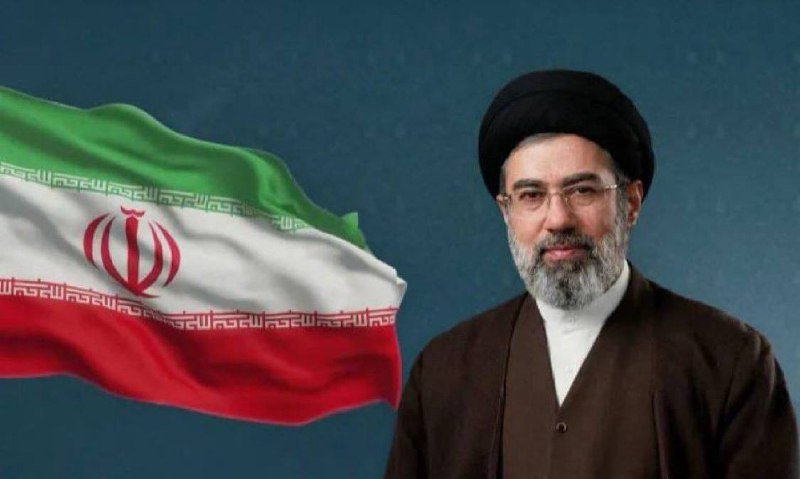
A government aircraft left Mehrabad for Doha shortly before midday UTC on 15 July, and within thirty minutes the movement had rippled through a small but well-wired network of flight-watching and Resistance-aligned accounts on Telegram. By 11:56 UTC, Iranian state-affiliated outlet Tasnim confirmed the trip: a delegation travelling to Qatar.
The framing across those channels varies, but the operational signal is consistent. Doha is where the diplomatic track on regional de-escalation, the question of Iran's nuclear file, and the Hamas-Israel mediation route have all intermittently converged since the October 2023 Gaza war. Tehran confirming a delegation, even with no public readout on the agenda, is the kind of movement worth watching before talking heads assign it meaning.
What the wire actually shows
The four signals posted between 11:22 and 11:56 UTC on 15 July layer neatly. First, a Telegram account operating under the rnintel handle flags an Iranian delegation leaving Tehran for Qatar. Ten minutes later, wfwitness, a flight-watching account that has built credibility by calling official movements hours before state media notices, posts that a Tehran government aircraft is en route to Doha and is most likely carrying the negotiation team. DDGeopolitics reamplifies the same item under a ResistanceTrench "boost" tag, indicating the channel network views the flight's political weight as worth promoting across its distribution. At 11:56 UTC, Tasnim, the outlet closest to Iran's national-security establishment, confirms the trip in clipped language: an Iranian delegation from Tehran is on the way to Qatar.
There is no public announcement of a counterpart, no agenda on the table, no readout from Qatari diplomacy. The substance is precisely the absence of substance. Governments send delegations to Doha; Doha hosts; and the actual negotiations either start the same evening, the next morning, or do not start at all. Until the Iranian side names who is travelling and what they are authorised to discuss, this is a signal, not a session.
Why Doha, again
Qatar's emergence as the Gulf's diplomatic waiting room predates the current crisis. Doha hosted the indirect exchanges that produced the November 2023 Hamas-Israel pause; it sustained the technical back-channel on prisoner files through 2024; it has hosted Iranian envoy missions on and off since the 2021 Al-Ula reconciliation reopened the GCC-Iran line. None of those tracks require Qatar to be the substantive party, only to be the venue. The Gulf state's utility to all sides is that it is broadly acceptable to Tehran, to Washington, and to Israel as a back-channel host, while remaining formally outside any of the headline disputes.
That structural advantage, the capacity to be useful to every side and beholden to none in particular, is what makes Doha the default. For Tehran, a Doha trip can be framed domestically as Gulf-led diplomacy rather than as a direct climb-down toward the United States. For Washington, a Doha meeting preserves the fiction that the regional players are carrying the negotiation rather than the United States dictating terms. For Israel, Doha offers the indispensable conduit to a Hamas leadership that has refused direct contact with Tel Aviv since the war resumed. The same airport, the same hotels, the same auxiliary relationships between local diplomatic staff, have absorbed this traffic for years.
The counter-read: resistance framing as a tell
The pattern of the day's disclosures is itself instructive. Three of the four messages sit inside a network of channels whose editorial instinct is sceptical of the Iranian-Saudi-Qatari diplomatic mainstream. The framing in the original wfwitness post, that this is most likely the negotiation team, is the kind of attribution that an official channel would not have felt comfortable asserting. The ResistanceTrench "boost" amplifies the same judgement into a regional audience of several million.
Two readings are plausible. The first is that the network is providing a service: it tracks flights, identifies aircraft, and publishes what official channels will only later confirm. The second is that the diplomatic track itself is the story these channels want to flag, and the aircraft is the smallest verifiable unit of evidence. Either way, the diplomacy in question is happening publicly enough that flight tracking can see it; that is not how covert negotiations usually look.
What this leaves open
Until the Iranian foreign ministry or office of the president names the delegation head, several materially different possibilities remain on the table. A technical nuclear-file discussion, mediated by the Qatari foreign ministry, would look very different from a high-level political visit aimed at coordinating posture before a wider regional forum. A back-channel on Gaza, hosted in Doha and now extended to a Tehran presence, would involve different interlocutors than a Saudi-Iran-Iraq trilateral. And a routine bilateral courtesy, of the kind Tehran has run with Doha for years, requires nothing more than a working-level delegation.
What the wire shows on 15 July is none of those specifically. It shows movement, on a familiar route, in a pattern that on past occasions has preceded substantive diplomatic activity of several different kinds. The next piece of verifiable information to watch for is the size and composition of the Iranian team on arrival, and whether any Qatari, Saudi, Turkish, or Egyptian counterpart is announced within forty-eight hours.
Desk note: Monexus reads this as a posture signal with multiple plausible substantive tracks, not as a confirmed session. The sourcing hierarchy, Tasnim as the official confirmation inside the four-post cluster, and the Resistance-aligned channels as the early flight-tracking layer, follows the standard Monexus approach to Gulf diplomacy coverage: lead with what is verifiable, name what is uncertain, and refuse to let any single channel's editorial framing determine the headline.
Wire provenance
This editorial synthesis draws on the following public wire/social posts:
- https://t.me/rnintel
- https://t.me/wfwitness
- https://t.me/DDGeopolitics
- https://t.me/tasnimplus