Iran's army issues 'decisive response' warning after US strike on southeastern barracks
Iran's Army Ground Force says a 'decisive response' to a US strike on barracks in southeastern Iran is 'certain and imminent,' sharpening the standoff hours after Tehran publicly condemned a UK ban on the IRGC.
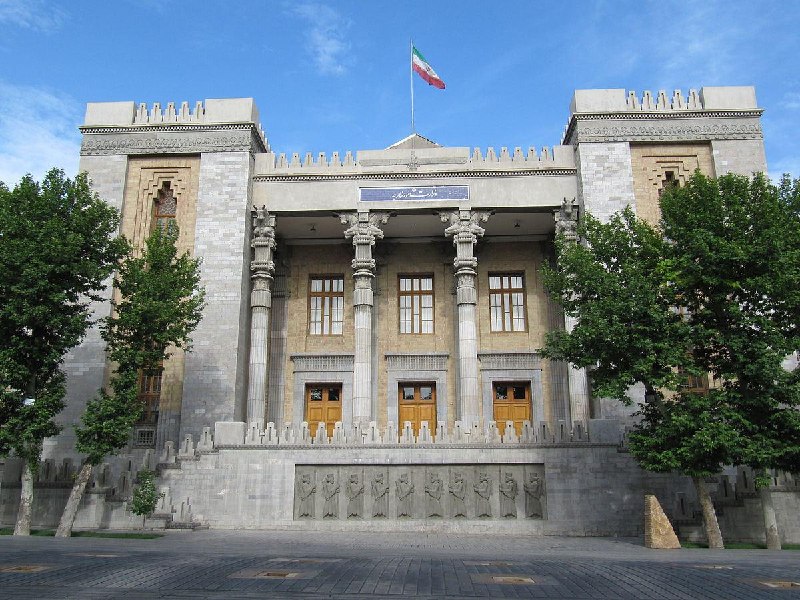
At 11:26 UTC on 15 July 2026, Iran's Army Ground Force declared that a "decisive response" to a United States strike on what Iranian officials described as military sleeping quarters in southeastern Iran is "certain and imminent." The warning, carried by PressTV, escalated a fast-moving exchange between Tehran and Washington a day after the strike was first reported.
The framing matters as much as the threat. By publicly telegraphing retaliation through state media within hours of the attack, the Iranian Army is doing two things at once: signalling to a domestic audience that the institution has not been caught flat-footed, and signalling to Washington that the cost of any further action will be paid in kind. Both signals are aimed, in part, at a third audience: the regular armed forces, who have spent months positioning themselves alongside the Islamic Revolution Guards Corps (IRGC) on questions of national defence.
The barracks strike and the army's warning
The Army Ground Force's statement described the US action as a "cowardly attack" on "sleeping quarters," language designed to underscore that Iranian servicemembers were at rest when struck. PressTV's midday bulletin, posted at 12:45 UTC, framed the warning as a unified institutional posture: "The ground forces of the Iranian Army warned that there will be a definite and imminent response in due course to the US attack on a military barracks in southeastern Iran."
The phrasing leaves the form of the response deliberately undefined. Iranian military statements in recent years have used similarly hedged language before retaliatory operations, including missile and drone strikes against US positions in Iraq and Syria. The "in due course" qualifier is doing diplomatic work: it tells Washington that a response is coming, while leaving Tehran room to calibrate timing, target set and intensity. For an army branch that has historically played a subordinate role to the IRGC in asymmetric operations, the public warning is also an internal statement about standing.
Why the army, not just the IRGC
The Iranian Army's prominence in this episode is the story's most underappreciated thread. The IRGC has long been the public face of Iran's confrontational posture toward the United States and Israel; the regular Army has tended to defer. That hierarchy is shifting on the evidence of the past 24 hours.
At 12:00 UTC, PressTV reported that the Iranian Army had publicly backed the IRGC and condemned the UK Parliament's move to proscribe the IRGC as a terrorist organisation. The army's statement framed the British decision as illegitimate interference in Iran's internal affairs, a position Tehran had already advanced through the foreign ministry. The double appearance, on a kinetic episode (the barracks strike) and on a legal-political one (the UK ban), suggests the regular army is consolidating its public alignment with the IRGC at exactly the moment Western pressure is widening. Whether that consolidation holds once any retaliation is executed, and what it costs the army in equipment and personnel, is the open question.
The Western pressure picture
The barracks strike did not arrive in a vacuum. UK moves against the IRGC, renewed US sanctions architecture, and ongoing Israeli operations against Iran-aligned assets have all contributed to a pressure environment in which any single incident can become a flashpoint. PressTV's framing of the UK ban as part of a coordinated Western campaign is the line Tehran is advancing; Western capitals are unlikely to confirm coordination but the sequencing, sanctions, proscription, kinetic action inside Iranian territory, is visible.
Iran's strategic problem is asymmetry of exposure. A US strike on a barracks in southeastern Iran is, by geography, inside Iranian territory; an Iranian response, if it comes, will almost certainly project outward, against US positions in the Gulf, against shipping, or against partner forces in Iraq or Syria. The location of the response, more than its magnitude, will be the read-the-other-side signal Washington will be watching for. Iran's capacity to absorb a second strike and still mount an external operation is the operational question that the army's rhetoric is currently outrunning.
What stays contested
Three things remain genuinely unclear. First, the precise target set struck in southeastern Iran, and whether it was a forward operating base, a logistics depot, or a command node; PressTV's "sleeping quarters" framing implies the former but does not preclude the latter. Second, the casualty count; Iranian state media has not yet published a figure, and any number released in the first 48 hours should be treated as preliminary. Third, the timing and shape of the promised "decisive response." Iranian messaging in the past has used public warnings to constrain US behaviour before a strike and to claim credit after one; the two functions are not mutually exclusive.
What can be said with more confidence is the direction of travel. Iran's regular army has chosen, in the space of a single news cycle, to fuse its public posture with the IRGC's on both a kinetic and a legal-political front. That fusion makes any near-term de-escalation harder, because two institutional voices now have a stake in the rhetoric being followed by action. The date to watch is not the next Iranian statement; it is the next observable movement of Iranian-aligned forces in the Gulf or in Iraq.
This publication's coverage of the barracks strike relies on PressTV bulletins, an Iranian state outlet whose framing routinely privileges Tehran's narrative. Monexus reports the warning as carried, flags the institutional alignment between the Iranian Army and the IRGC, and withholds judgment on casualty figures and target characterisation until independent confirmation is available.
Wire provenance
This editorial synthesis draws on the following public wire/social posts:
- https://t.me/presstv/1
- https://t.me/presstv/2
- https://t.me/presstv/3