Hormuz tolls, walk-backs, and strikes: what the White House actually sold this week
Within 36 hours, the White House floated a 20 percent Hormuz toll, walked it back, threatened fresh strikes on Iranian infrastructure, and announced a substitute package of Gulf investment deals. The pattern matters more than any single announcement.
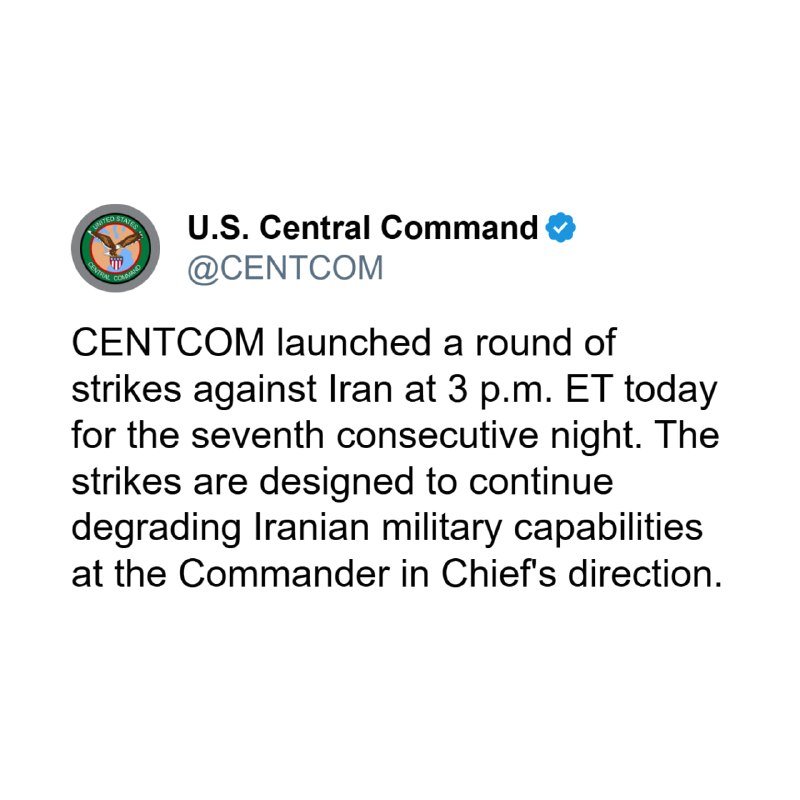
On the afternoon of 14 July 2026, the White House declared President Donald Trump was "very serious" about imposing a 20 percent toll on cargo transiting the Strait of Hormuz. Within roughly two hours, Polymarket reported Trump was replacing the fee with "trade and investment deals" from Gulf states. Within hours after that, Politico reported via Unusual Whales that the threat had been walked back entirely. By the following morning, Reuters confirmed the US had launched new strikes aimed at degrading Iranian capabilities in the strait, while Trump warned of further attacks on infrastructure if talks did not resume. By evening on 14 July, Trump was declaring the strait "open to all ship traffic except for Iran."
Strip away the noise and the through-line is simpler than the headline cycle suggests: Washington is using the threat of disruption as leverage, withdrawing the threat when it provokes too much friction, and reserving the option of kinetic action when diplomacy stalls. The fees were never going to be the policy. The fees were the negotiation posture.
The fee that wasn't
The 20 percent toll, framed by the White House on 14 July at 14:43 UTC as a serious proposition, would have applied to every cargo vessel moving through the narrow corridor that carries a large share of seaborne oil. Within roughly an hour and a half, Polymarket reported the substitute formula: trade and investment deals with Gulf monarchies in lieu of a transit levy. By evening, Politico reported, via the Unusual Whales news desk, that the fee threat had been walked back altogether.
The reversal is the story. A unilateral US toll on a waterway of this importance would have drawn immediate legal challenge under the Law of the Sea Convention, instant retaliation from EU and Asian shipping registries, and an outcry from every Gulf capital that relies on the corridor's reputation as a commons. The administration knew this. The threat was, functionally, a placeholder for whatever bilateral package the Gulf states were willing to underwrite.
The strikes that came anyway
Reuters reported on 15 July at 05:55 UTC that the US had launched fresh strikes aimed at degrading Iranian capabilities in the strait. Trump coupled the action with a warning that further attacks on infrastructure would follow if talks did not resume. The dual track is the operating doctrine: a military instrument applied at scale designed to leave infrastructure damaged but not destroyed, paired with a diplomatic off-ramp left deliberately visible.
The Iranian counter-move, per Polymarket reporting on 14 July, is to begin charging its own transit fees in the strait by the end of next month. The platform put the probability at 52 percent, a coin-flip with real freight consequences. Two toll regimes, imposed by two governments with opposed interests, on the same stretch of water, is a recipe for an insurance-market repricing that has not yet shown up in mainstream coverage but will.
What "open to all traffic except Iran" actually means
Trump's 14 July statement at 17:37 UTC, that the strait is "open to all ship traffic except for Iran," was framed as a maritime-security announcement. It is also, in plain terms, a partial blockade of one country by another, announced by tweet. The legal architecture around it is thin: the US has not declared a formal interdiction zone, no coalition naval task force has been named, and the practical mechanics of singling out Iranian-owned or Iranian-chartered tonnage inside a traffic lane this busy are unsolved.
The statement functions instead as a market signal. Shippers, insurers, and bunker-fuel suppliers price corridor risk in days, not months. A declaration of this kind, even when its enforcement is ambiguous, pushes war-risk premiums up and pushes charterers onto longer routes. That is itself a form of pressure on Tehran, applied without a single additional shot.
What this week tells us
The pattern is the policy. Announce a maximalist measure, let markets and allies react, replace it with a softer vehicle, reserve the right to use force, and keep the diplomatic channel visible. The fee was never meant to be collected; the strikes were meant to be felt. The walk-back was the message to the Gulf that no unilateral burden-sharing arrangement was coming, and the substitute package was the offer to those same monarchies that they could buy their way out of the disruption with capital commitments instead.
For Tehran, the calculation is whether to absorb the strikes while keeping the diplomatic channel alive, or to escalate by formally closing the strait and triggering the kind of oil-price shock that would force Washington back to the table on Iranian terms. Polymarket's 52 percent read on Iranian transit fees suggests the betting market thinks Tehran picks the toll route, not the closure route. The next two weeks will tell.
Monexus framed this as a sequenced pressure campaign, not a series of disconnected headlines. The wire cycle, by contrast, treated each announcement as a separate event, which obscures the fact that the walk-back is the policy.