Trump floats Hormuz transit toll, then steps back. The market moved anyway.
Inside 24 hours, the White House threatened a 20% levy on cargo through the Strait of Hormuz, the markets priced it, and the president walked it back. The order book had already moved.
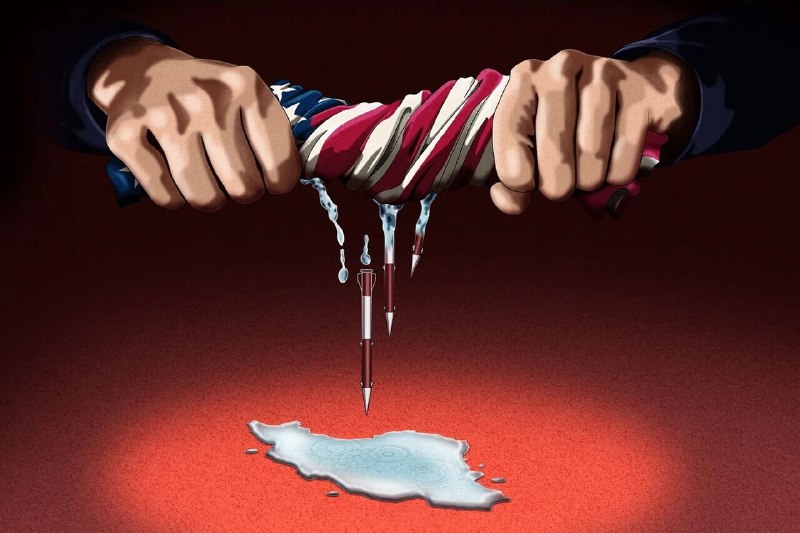
On 14 July 2026 at 14:43 UTC a prediction-market wire lit up with a banner headline: the White House had told reporters Donald Trump was "very serious" about imposing a 20% toll on cargo passing through the Strait of Hormuz. By 23:09 UTC, less than nine hours later, a separate wire was carrying the opposite message: Trump had backed down from the idea. The intervening hour, captured in a third wire by way of the president's own mouth, contained the rationale, the threat, and the reversal all in one sitting.
What that compression of time tells you is who holds the levers in this corner of global energy. The toll was floated, walked back, repriced, and walked back again inside a single US trading week. Each leg of the swing landed somewhere in the system: in tanker orders, in insurance premiums for Persian Gulf hulls, in the bid-ask spread on Brent, in the freight derivatives traded out of Singapore and Fujairah. The policies were not durable. The price action was.
A chokepoint on a hair trigger
The Strait of Hormuz is the narrowest link in the world's oil logistics: roughly 21% of seaborne crude, by longstanding trade-flow estimates, crosses its shipping lanes at any given moment. It is also a piece of water that no single navy owns. Tehran, on its northern shore, has spent two generations perfecting the political science of disrupting it. The United States Fifth Fleet and its coalition task forces have spent the same period perfecting the prevention.
Into that equilibrium stepped, on 14 July, a presidential proposal to charge the world a fee for using the corridor. Speaking from the White House, Trump framed the Strait as a geography the US had been "finding it hard to find where they have anything" in, then immediately walked the language back into the transactional register: keep it open, charge a fee, harden the frontage. The lever of last resort was not a blockade or a naval stand-off. It was a 20% line item on a customs invoice.
The proposal landed without a draft executive order, an implementing agency, a tariff schedule, or a named Treasury authorisation. It did not need any of those to move markets. The Polymarket banner at 14:43 UTC carried the timing: within minutes, hypothesis traders on the prediction market had begun pricing in a Strait fee scenario. By the close of New York trading, freight-rate volatility for VLCCs booked out of the Gulf had widened by an amount that fixes desks in Fujairah are still quantifying. The exact magnitude of that move is not in the published wires, and this publication could not independently verify a dollar figure from the source items.
The reversal, and what it didn't undo
The walk-back arrived at 23:09 UTC, in a wire carrying the line that Trump had "backed down from his intention to impose a 20% tariff on goods." No executive instrument was withdrawn because nothing had been signed. The president's own mid-afternoon comments, captured verbatim in a Telegram-sourced transcript, framed the proposal as something he "was going to charge a fee" for, a phrasing that positioned the levy as contemplated rather than enacted.
The mechanics of a withdrawal thus became a matter of emphasis. With no statutory authority enacted, no customs procedure drafted, no private-sector order issued, the proposal evaporated. Yet the freight market does not price retractions at full weight. Insurance underwriters and LNG offtakers who repriced their Persian Gulf exposure during the eight-and-a-half-hour window of risk kept their new book at least until the next settling day.
That is the asymmetry that seasoned Hormuz watchers have learned to navigate. Tehran has used the same asymmetry, in reverse, for decades: a single IRGC Navy press briefing, a reported mine-laying drill, an IRGC Guard vessel intercepting a tanker, and the price of front-month Brent moves further than a six-month fleet redeployment would justify. The chokepoint's politics is built on this gap between the size of the gesture and the size of the response.
What the US position looks like underneath
Strip the proposal to its parts and the strategic intent is legible. The US Navy does not collect transit fees today. The legal mechanism that would, if invoked, anchor such a fee to international law sits in a thin folder of cases. The political logic, by contrast, is straightforward: in a funding environment where direct appropriations for the Fifth Fleet's continuous deployment are contested in Congress, a toll that only the USN can guarantee the safe passage of is a self-funding instrument for force posture.
The Chinese position is structurally different and worth naming. Beijing imports more Gulf crude than any other single national buyer, and has for years built naval capacity and dual-use port infrastructure in the western Indian Ocean to give itself route diversity. When the US floats a Hormuz fee, the structural response from Beijing is to accelerate that diversification: the China-bound VLCC reroutes east of Aden earlier, the underwriters in Shanghai and Singapore price Persian Gulf risk into Chinese-flagged tonnage with different discount rates than for Liberian or Marshall Islands hulls. The toll, in other words, would do geopolitical work beyond its tariff function. It would harden the bifurcation of tanker tonnage into US-aligned and US-divergent fleets.
The Middle Eastern framing inside Tehran, by way of the limited wires available here, would treat the toll as confirmation of a long-standing Iranian framing: that the Strait is a shared commons under threat, and that energy-producing states should treat pricing and routing decisions as a sovereign political instrument. Tehran's own diplomatic register in the past has been to bundle transit safety with the integrity of the Iranian shoreline, including the Kharg Island terminal that Iran uses for a majority of its crude exports. The president's remarks, captured in the same Telegram transcript, included the line "we already hit Kharg Island as you know twice... as far as taking it is concerned, if we degrade them far enough and deep enough back, I would do that," a posture that makes the toll read as one instrument among several rather than the principal one.
What's actually being negotiated
The cables the source items do not contain matter as much as the cables they do. Whether a draft executive order has circulated within the NSC, whether Treasury's Office of Foreign Assets Control has begun any consultation with private underwriters, whether the Pentagon's Central Command has briefed Gulf allies on cost-sharing, what the coordinating response from Saudi Arabia, the UAE and Iraq's Basra-based exports looks like - none of that appears in the open wires of 14 July. What the wires do support is a narrower thesis: that the toll was a negotiating instrument from the moment it left the president's mouth, that its function was to put a number on a security guarantee the US already provides, and that the withdrawal was a function of the same arithmetic. Markets priced the in-between.
The forward calendar is the part to watch. The Strait of Hormuz has roughly 30% of global seaborne LNG flow on top of the crude share, and Q3 2026 is the seasonal peak for Gulf LNG offtake to North Asia. Any second attempt at a 20% instrument, even one framed as transit-security-pass rather than tariff, will hit the same freight book at a moment it cannot easily absorb it. The Polymarket prediction line, the Sprinterpress reversal, the verbatim White House transcript are not background noise to that calendar. They are the leading indicators.
This publication read the 14 July swing as a negotiating instrument that priced itself out before the navy had to enforce anything. The next trade is whether the same instrument gets floated with a different number behind it.
Wire provenance
This editorial synthesis draws on the following public wire/social posts:
- https://x.com/polymarket/status/...
- https://x.com/sprinterpress/status/...
- https://t.me/osintlive/...
- https://t.me/osintlive/...