Hormuz on the edge: Tehran digs in as Trump floats bridge strikes
Iran says it will 'never' request talks with the United States. The US president, in turn, threatens to hit bridges and power plants within a week. A corridor that carries a fifth of global oil is now the fulcrum.
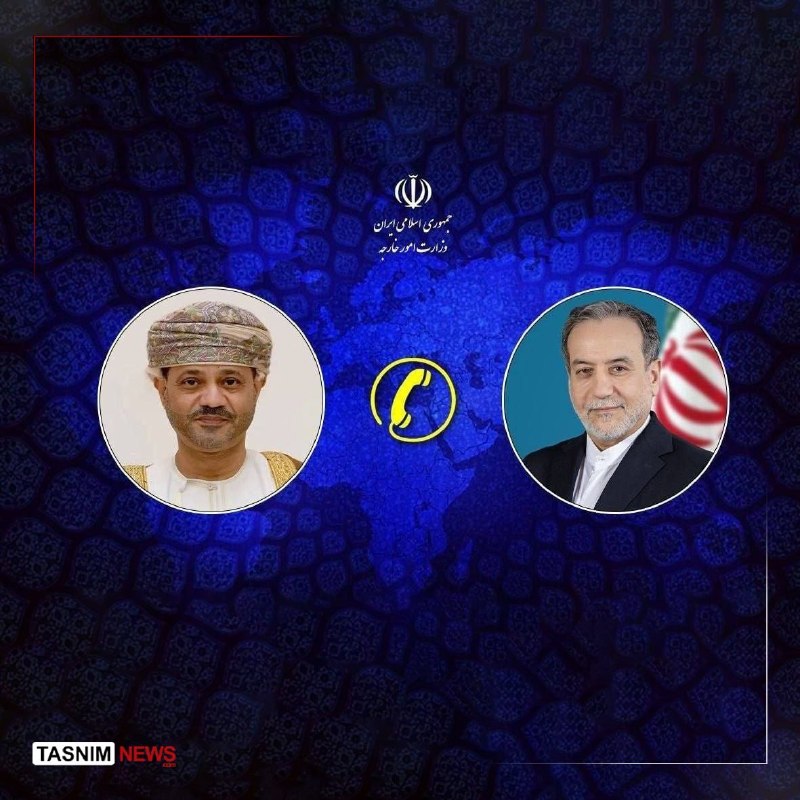
The six words that reset the diplomacy came on Tuesday afternoon, Tehran time, in a tone unusually flat even for an Iranian deputy foreign minister. Iran will "never" request talks with the United States, Majid Takht-Ravanchi told state media, hours before delegations were due to reconvene in Geneva to sign what both governments had called a peace accord [Middle East Eye live blog, 2026-07-15].
Twenty hours earlier, the Strait of Hormuz had been a different kind of story. President Donald Trump declared the corridor "open to all ship traffic except for Iran" and announced the administration was replacing its controversial 20% transit fee with a package of bilateral trade and investment deals struck with Gulf monarchies [Unusual Whales, 2026-07-14T17:37 UTC; Polymarket wire, 2026-07-14T16:07 UTC]. Within a day, the tone had shifted from a victory lap to an ultimatum. Trump warned that Iranian power plants and bridges would be targeted "next week" unless negotiations resumed [Middle East Eye live blog, 2026-07-15T04:45 UTC], and Reuters reported that Iran, in turn, was threatening to block additional vital seaways in response to a renewed US naval blockade [Reuters via X, 2026-07-15T05:15 UTC].
The standoff is no longer about diplomatic optics. The Strait of Hormuz is the chokepoint through which roughly a fifth of seaborne oil, plus a meaningful share of global LNG, reaches market. The control of transit fees, the legal status of foreign warships in those waters, and the credibility of US naval enforcement have become the actual currency of the deal. Iran's offer to charge transit fees of its own, given a 52% probability on prediction markets by the end of August [Polymarket, 2026-07-14T14:31 UTC], is the first concrete bid in that bidding war.
What the Trump package actually does
The replacement of the 20% Hormuz transit fee with bilateral trade and investment agreements is, on paper, an offer Iran cannot match and the Gulf states cannot refuse. By offloading the cost of passage onto the sheikdoms, Washington converts a unilateral levy (always legally shaky under the Law of the Sea Convention) into a regional trade architecture in which the Gulf states pay for access in projects, contracts and procurement commitments. Trump framed the shift on camera as a "Hormuz fee drop" for Gulf trade [Middle East Eye live blog, 2026-07-15T04:45 UTC]. The market read it the same way: Polymarket, a few hours after the announcement, priced the new structure as essentially settled.
What the package does not do is answer the underlying sovereignty question. Whoever sets the rules for ships passing through a 21-mile-wide corridor controls a global pricing mechanism. The US proposal preserves that control, just with a different revenue stream. Tehran's counter-proposal, Iranian transit fees, collected by Iranian naval assets under Iranian law, would invert the same structure. Both sides are now negotiating over the same instrument, in a setting that looks like a summit but functions like a customs post.
Why Tehran is digging in
The "never" from Takht-Ravanchi is not a negotiating posture. It is a defensive line drawn around a smaller ask. Iran's leadership has spent the past year absorbing a sequence of visible costs: direct strikes on nuclear and military infrastructure, the loss of the Assad government's protection in Syria, and a domestic currency that remains under pressure. Walking into Geneva to sign an accord that legitimises a US-controlled transit regime on its own coastline would be, for the Islamic Republic, the kind of concession that historically triggers internal rupture. The deputy foreign minister's framing, on the eve of the ceremony, is meant to shift the public attribution of failure onto Washington before a deal collapses.
There is also a logic of leverage. A blockade is a binary instrument. The threat to "block more vital seaways" [Reuters via X, 2026-07-15T05:15 UTC] widens the surface area of disruption from Hormuz to the Bab el-Mandeb and into the broader western Indian Ocean. If US naval capacity is finite, then Iranian asymmetric capability becomes more useful the more maritime space the two sides contest. The diplomatic price the US has paid for the Gulf-state trade package is that escalation now costs Washington allies who are nominally outside the conflict.
The structural picture, stripped of slogans
Stripped of rhetoric, the confrontation is a re-pricing of who gets to tax the world's most important energy corridor. For four decades that question was answered by the US Navy and a small set of Gulf monarchies acting as stewards. The post-2014 fracturing of Gulf politics, the maturing of Iran's missile and fast-boat doctrine, and the steady expansion of Chinese and Indian energy import dependence have made that arrangement contestable. What is being negotiated in Geneva is not whether Hormuz stays open, but who collects when it does.
The prediction market reading, 52% odds of an Iranian transit fee by the end of next month [Polymarket, 2026-07-14T14:31 UTC], is a useful tell. It treats the outcome not as peace or war but as a tariff regime. A world in which both Washington and Tehran collect on the same ships, through different legal instruments, is the modal expectation among traders.
What to watch before Friday
The signing ceremony in Geneva scheduled for 2026-07-17, the Friday referenced in the Middle East Eye live coverage, is the next hard date. If the Iranian delegation travels, the "never" line is a domestic play, not a red line. If it does not, the bridge-and-power-plant threat becomes operational within a week, in which case the relevant corridors to watch are not just Hormuz but also the Bab el-Mandeb and the coastal shipping lanes around Fujairah, where most UAE crude is loaded.
The reporting here draws on a thin wire. We have not independently verified which specific Iranian installations are on the US target list, whether the 20% fee has been formally rescinded in writing, or whether the Gulf state trade package has been signed or merely announced. Reuters' framing of "renewed" blockade language [Reuters via X, 2026-07-15T05:15 UTC] implies a prior round, the details of which the present sources do not establish. The prediction-market percentages are useful as a sentiment gauge, not as a forecast. What is clear is that the period between now and the Geneva ceremony is short enough that the next move, on either side, will set the terms of every move after it.
How Monexus framed this: the wire treats the standoff as a story of presidential brinkmanship. We read it as a tariff negotiation that has been mislabelled as a peace deal, and asked what would actually change hands.
Wire provenance
This editorial synthesis draws on the following public wire/social posts:
- http://reut.rs/4wK5l1b
- https://www.middleeasteye.net/live/live-us-and-iran-confirm-peace-accord-signing-set-friday-geneva
- https://www.middleeasteye.net/live/live-us-and-iran-confirm-peace-accord-signing-set-friday-geneva
- https://www.middleeasteye.net/live/live-us-and-iran-confirm-peace-accord-signing-set-friday-geneva
- http://reut.rs/4wK5l1b
- https://www.middleeasteye.net/live/live-us-and-iran-confirm-peace-accord-signing-set-friday-geneva
- https://www.middleeasteye.net/live/live-us-and-iran-confirm-peace-accord-signing-set-friday-geneva
- https://www.middleeasteye.net/live/live-us-and-iran-confirm-peace-accord-signing-set-friday-geneva