Gaza casualty toll crosses 73,000 as daily deaths continue, Palestinian health ministry says
The cumulative toll reported by Gaza's health authorities has passed 73,000 dead, with another 14 killed over the most recent 24 hours, according to Telegram channels that relay the ministry's daily figures.
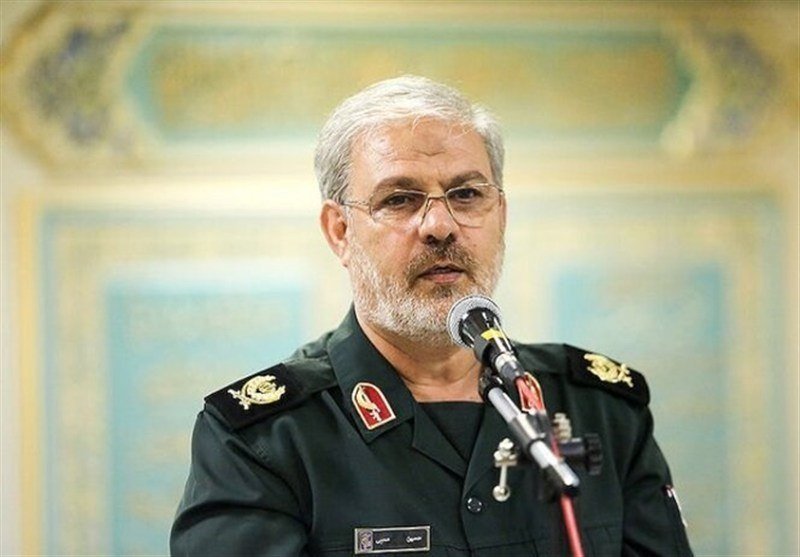
The Palestinian Ministry of Health in Gaza announced on 15 July 2026 that the cumulative death toll in the strip since the start of the war has reached 73,246, with another 14 Palestinians killed over the preceding 24 hours. The daily figure, relayed on Telegram by The Cradle Media and Al-Alam Arabic at 08:45 and 08:48 UTC respectively, breaks down as 13 killed in new strikes and one who died from injuries sustained earlier. Eighteen wounded arrived at hospitals in the same 24-hour period, Al-Alam reported at 08:48 UTC.
The casualty announcements are part of a daily ritual that has run, with rare interruptions, since October 2023. The ministry is the single most cited source for death tolls inside Gaza, and its bulletins are republished by outlets across the political spectrum. They are also contested. Israeli authorities have disputed the ministry's methodology, particularly during the early phase of the war, and Western wire services routinely flag the data as Gaza-authority figures while still treating them as the best available proxy. The numbers themselves, nonetheless, continue to set the frame for international humanitarian debate.
The figures, and what is being counted
The 73,246 figure was reported on 15 July 2026 by Tasnim News English at 09:17 UTC, citing the Palestinian Ministry of Health in Gaza. The same channel cited the ministry's characterisation of the war as "genocidal." The Cradle Media, an outlet critical of Israeli policy but widely read in Middle East and Global-South media, ran a near-identical line at 08:45 UTC, and Al-Alam Arabic, the Iranian state broadcaster's Arabic service, ran the hospital-arrivals line at 08:48 UTC.
Three points stand out in the latest bulletins. First, the cumulative total is not a single event but an aggregation: it comprises those killed in strikes, those who died of wounds after reaching hospital, and a much larger category of deaths the ministry attributes to indirect causes such as disease, malnutrition, and the collapse of medical infrastructure. Second, the ministry does not disaggregate combatants from civilians in its daily release; independent verification outfits working with forensic data, including the London-based Airwars project and teams at the United Nations, have previously estimated civilian shares at roughly 70 percent of identified casualties. Third, the daily count of 14 is low by the standards of the war's heaviest weeks in late 2023 and 2024, when single-day tolls occasionally exceeded 400. Daily fatalities have settled into the low double digits for much of 2026, consistent with a lower-intensity phase of Israeli operations in northern Gaza but also consistent with a population that has been displaced, dispersed, and partly pushed out of documentation.
A contested evidentiary record
Israeli officials have previously argued that the ministry's figures inflate deaths because they include people Hamas identifies as combatants without disclosing the breakdown, and because the underlying data infrastructure has degraded as hospitals have been damaged. The Israeli Coordinator of Government Activities in the Territories (COGAT) has, in turn, issued its own periodic figures for aid and casualty movement.
The counter-position, articulated in humanitarian briefings and in articles from outlets including Al Jazeera, Middle East Eye, and The Cradle, is that the ministry's count understates deaths rather than overstates them, because many bodies remain under rubble and because indirect deaths are recorded on a conservative basis. The UN Office for the Coordination of Humanitarian Affairs (OCHA) has historically cited the ministry's toll while flagging the same caveats; the World Health Organization has echoed the framing that the official count underestimates the true scale.
The 14 deaths reported on 15 July sit inside that contested evidentiary record. The ministry did not, in the bulletins carried by The Cradle Media or Al-Alam Arabic, publish a breakdown of women and children killed, which had been a feature of its earlier daily releases. The absence of the breakdown, and the absence from these particular channels of any statement from the Israel Defense Forces, leaves the day's bulletin narrower than usual.
Structural backdrop: documentation under fire
Beyond the politics of counting lies a quieter structural problem: the infrastructure that produced the count has been damaged. Several of the ministry's hospitals have been struck or rendered non-functional during the war, and the staff who maintain patient records have been displaced, killed, or forced to work without electricity for extended periods. Independent data teams have supplemented the ministry's work with satellite imagery, funeral notices, and obituary aggregation; their results have generally tracked the ministry's totals within a margin that has narrowed as the war has progressed. The implication is procedural before it is political: the casualty count is the sum of human beings, but it is also the product of a state of administrative collapse that is itself an artefact of the war.
The framing matters because international humanitarian law relies on documented casualty counts to calibrate responses, and donor governments have at various points used the ministry's figures as the basis for funding decisions, ceasefire calls, and arms-transfer reviews. Even critics of the ministry's methodology treat its daily release as the leading indicator of humanitarian conditions inside the strip.
What to watch next
The ministry announces casualty figures daily, generally in the late morning local time (early morning UTC). The 15 July release is the latest in that sequence; the 16 July release will land on Telegram channels at roughly the same time. Independent verification outfits continue to release periodic reviews of the cumulative count; the next such review, from any of the established academic or forensic projects, is the single most important secondary check on the daily bulletins.
The unresolved question is not whether the war's toll is severe, but whether the world is willing to act on its scale. The 14 deaths on 14-15 July are a small number against the cumulative total, but the cumulative total is now large enough that each additional day adds a digit rather than merely a statistic. The political pressure to treat Gaza as a closed file is real; the political pressure to keep counting is real too.
Desk note: Monexus's sourcing for this bulletin is the daily release carried on 15 July by Telegram channels that relay the Palestinian Ministry of Health in Gaza, supplemented by the routine caveats applied in mainstream wire coverage. The ministry is treated as a primary source for its own figures; readers elsewhere will find the same daily count cited across the political spectrum, with the dispute confined to methodology and disaggregation rather than to the existence of the count.
Wire provenance
This editorial synthesis draws on the following public wire/social posts:
- https://t.me/tasnimnews_en
- https://t.me/alalamarabic
- https://t.me/thecradlemedia
- https://t.me/TheCradleMedia
- https://en.wikipedia.org/wiki/Palestinian_Ministry_of_Health