De Beers hits pause at Venetia, and South Africa's diamond town reads the writing on the wall
De Beers will idle South Africa's largest diamond mine for two years. The shock in Limpopo is less about the closure than about what it says about the company's wider retreat from the country that built its name.
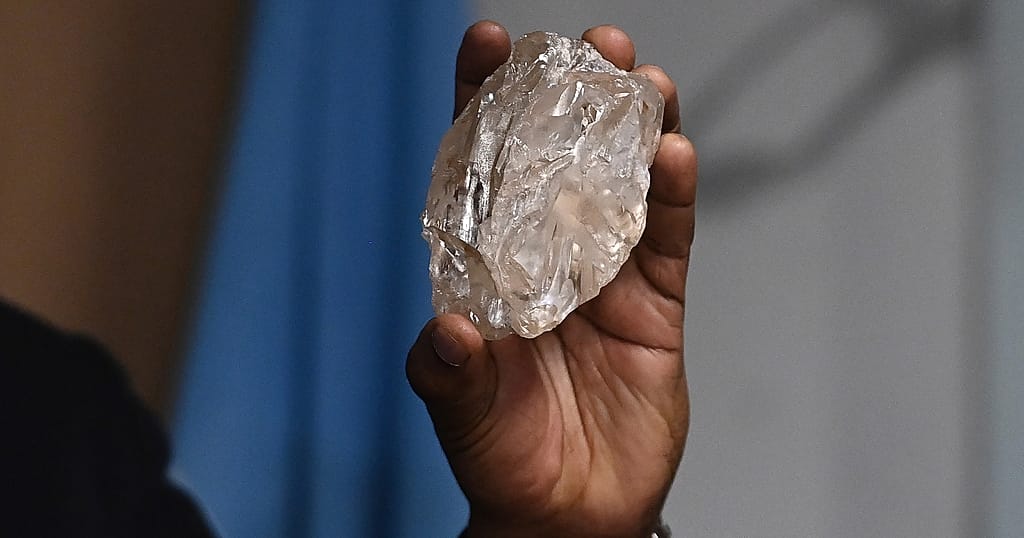
On 13 July 2026, De Beers told the South African market that it would halt diamond production at the Venetia mine in Limpopo for two years, citing weak global demand and a need to cut costs. Two days later, the news had already travelled further than the press release. In Musina, the dusty gateway town to the mine, managers were quietly running the numbers on a contract workforce that will, by Christmas, have very little left to do. The pause is the loudest signal yet that the company that put South African diamonds on the world's engagement rings is no longer willing to bet its balance sheet on the country that built it.
The decision matters less for the tonnage lost than for what it confirms. Diamond prices have softened for more than a year as lab-grown stones have eaten into the bridal market and as Chinese demand, once the swing variable for the industry's mid-tier, has stayed patchy. De Beers' parent, Anglo American, has spent the past eighteen months reshaping the group around copper and iron ore, the metals that the energy transition is pulling forward. Venetia, even at full tilt, was a smaller contributor to group earnings than it was a decade ago. A two-year stoppage is a way of buying optionality: keep the orebody, shed the operating cost, wait for prices.
The arithmetic inside the announcement
The headline figure is the duration. Two years is long enough to clear most of a rough-diamond price cycle, short enough that a reopening remains credible. The Africanews dispatch on 13 July framed the move as a cost-control measure "while trading conditions remained tough," language that places the decision inside the industry's demand story rather than any operational crisis at the pit face. The Telegram wire out of the Africa-intel cluster on 15 July carried the same operational detail, locating the mine in northern South Africa and tying the suspension specifically to weak global demand.
What neither release puts a number on is the workforce. Venetia has historically run with a core staff of roughly 1,400 and a contractor complement that swells the on-site headcount past 4,000 at peak. A two-year idling of the open-pit operation does not necessarily close the underground transition project, which De Beers has been developing for more than a decade to extend the mine's life into the 2040s. But the underground project requires surface cash flow to keep its capex profile funded. Read the announcement carefully and the subtext is that De Beers wants the option to slow underground spend too, without saying so out loud.
The company has framed the move as a pause, not a closure. The distinction matters for two reasons. First, it preserves the social and labour compact that the mine has with Musina and the surrounding Limpopo villages, where alternative employers are thin on the ground. Second, it keeps the mining right alive on the books, which protects De Beers' licence position against a competing application if the diamond market turns before the two years are up. The risk is that "pause" becomes "pension" if rough prices do not recover to a level that justifies the cost of restarting.
The country that built De Beers, walking away from De Beers
Venetia is the last big diamond mine De Beers operates inside South Africa. The company's footprint on home turf has thinned for a generation: the Kimberley mines were sold into the Petra Diamonds group, the Namaqualand operations closed in the 2000s, and the Voorspoed mine in the Free State was shuttered in 2018. Venetia survived partly because of its scale and partly because of its symbolism, the last operational thread tying the De Beers name, the Oppenheimer legacy, and the South African soil they were founded on in 1888.
That thread is now fraying. Anglo American's own strategic review, completed in 2024 and 2025, narrowed the group to a smaller set of "future-facing" commodities and accelerated the divestment of diamonds. De Beers has been up for sale, formally or informally, for most of the past year, with potential buyers ranging from sovereign-wealth-backed consortia to a possible state-led anchor in Botswana, where the group's Jwaneng and Orapa mines account for the bulk of its current production. The Venetia announcement lands inside that wider restructuring, and the South African read is that the parent is willing to take a two-year revenue hit in Limpopo to make the rest of the portfolio more attractive to a buyer.
The counter-narrative, more uncomfortable for Pretoria, is that the South African operating environment has become less competitive than its neighbours. Botswana offers longer security of tenure, a streamlined royalty regime, and a state partner in Debswana that shares capital costs. Namibia, where De Beers has a 50/50 joint venture with the government through Namdeb, has been more aggressive at pushing beneficiation and downstream cutting. Angola, after the legal reforms of the early 2020s, is drawing exploration dollars that used to land in South Africa. None of these shifts happened because of any single decision in Pretoria; they are the cumulative product of a decade of mineral-policy drift.
What the pause tells the broader market
A two-year shutdown of the largest mine in a country that still accounts for a meaningful share of the global carat supply is, on its own, a tightening event for the rough market. De Beers' own production guidance for 2026 had already been sliding, and the marketing arm has been holding back goods to defend price. Venetia's idling reduces the pressure on De Beers to keep pushing volume into a soft market, and it gives the Russian side of the global pipeline, Alrosa's post-sanction production, more room to set mid-range price points without competition.
The lab-grown disruption is the structural backdrop that no wire service report can quite capture in a headline. Lab-grown diamond output has continued to compound, with Chinese and Indian producers adding capacity that is now reaching price points at which natural rough cannot compete for bridal demand. The pause is, in effect, a managed retreat from a market segment that is no longer growing in real terms. The brutal read is that De Beers, after a century and a half, is now a price-taker in a market it once wrote the rules for. The company's response is to take capacity off the table and wait for supply to balance, a strategy that worked in the 2008–09 downturn and may not work as cleanly in a market where the missing demand is structural rather than cyclical.
Stakes and the road back to Musina
The short-term winners are De Beers' balance sheet, which sheds a couple of hundred million dollars of operating cost, and the rough market, which faces one fewer large seller. The losers, in the near term, are the contractors and the small businesses in Musina and the neighbouring villages that service the mine, plus the South African treasury, which loses a steady diamond royalty stream at precisely the moment the fiscus is under pressure from the Transnet rail backlog and an Eskom tariff review.
The longer stakes are about the architecture of the South African mining industry. If a two-year pause at Venetia becomes a permanent exit, the country's diamond narrative closes on a melancholy note: from the 1867 discovery on the banks of the Orange River, through the De Beers consolidation, through the post-apartheid beneficiation push, to a slow withdrawal by the company that gave the country its most famous export. The mines that close do not always reopen. Musina has read that part of the script before, and it is reading it again now.
What remains genuinely uncertain is the underground project. De Beers has invested more than $2 billion over the life of the Venetia underground development, and the company has not publicly committed to keeping the capex profile on its prior schedule through a two-year surface shutdown. The sources reviewed here do not specify the underground plan, and that is the variable to watch through the next two quarterly results. The rest of the announcement is a cost story; the underground decision is a corporate-strategy story, and South Africa has not yet been told which one wins.
Desk note: Monexus framed this as a strategic restructuring story, not a labour story. The wire packages emphasised demand weakness and cost control; the structural read is Anglo American's continued retreat from South Africa and the wider pressure on natural-diamond economics from lab-grown supply. The labour and royalty angles are noted in passing, not centred.
Wire provenance
This editorial synthesis draws on the following public wire/social posts:
- https://t.me/africaintel
- https://en.wikipedia.org/wiki/Venetia_mine
- https://en.wikipedia.org/wiki/De_Beers
- https://en.wikipedia.org/wiki/Anglo_American_plc