China's cheap AI is winning on price. American startups are paying attention
American AI is expensive. As invoices balloon, a growing cohort of US startups is quietly routing work through Chinese models priced up to an order of magnitude below OpenAI and Anthropic.
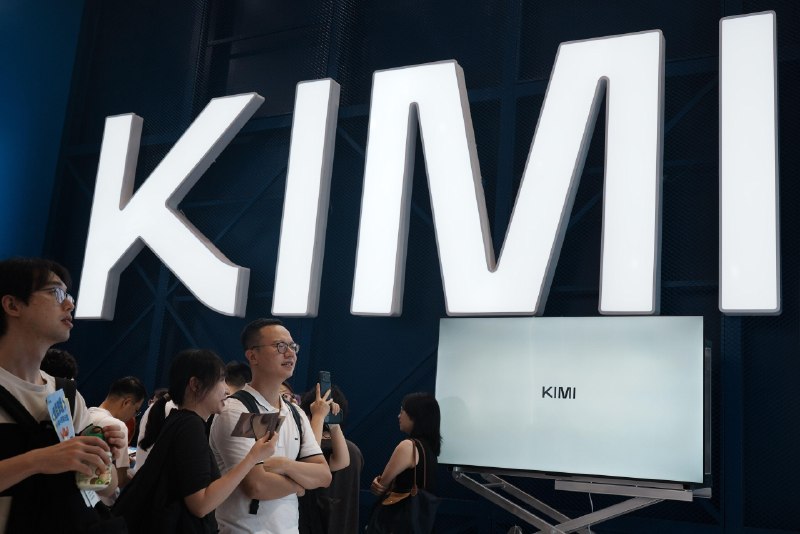
A fast-growing share of the bill for artificial intelligence is now coming due at American startups, and a growing number of founders are choosing to send at least some of that work to China. According to a 15 July 2026 report from NPR's business desk, AI has become one of the fastest-expanding line items on small-company budgets, and a meaningful fraction of those firms have begun switching to cheaper Chinese AI models to keep their runway alive.
The shift is not theoretical. It is happening invoice by invoice, model by model, and it carries the early markers of a realignment in who sets the price of intelligence.
For most of the past three years, the headline story in AI has been capability: a small group of US frontier labs shipping models that beat last quarter's benchmarks, raising enormous rounds, and pricing access accordingly. The story this summer is cost. A startup can run a useful open-weight Chinese model for a small fraction of what Anthropic or OpenAI charges for comparable output, and an increasing number are doing exactly that. The price gap is now wide enough to bend product roadmaps.
The bill that's bending the roadmap
NPR's reporting describes companies cutting a fast-rising line item by routing workloads through cheaper Chinese models, a category that has expanded rapidly as Chinese labs have open-weighted competitive systems. The economics work like this. A US frontier API charge is metered in cents per thousand tokens, the small unit of text or code that a model processes. The cheapest reputable Chinese endpoints, by multiple accounts in the developer community, sit a meaningful fraction below that. Multiply by millions of tokens per customer query, then by thousands of queries per day, and the savings are no longer a rounding error. They are payroll.
The pattern echoes what happened in cloud infrastructure a decade ago, when budget-constrained teams began routing overflow traffic to lower-cost providers, and in solar panels more recently, when Chinese cell prices forced a global re-rating of the entire module market. Software costs more, on paper, but the consumer of software is more price-sensitive, and the bargaining power sits with whoever can substitute fastest.
What the Chinese side says, and what it sells
From Beijing's vantage, the development is straightforward industrial policy paying off. Chinese large-model developers, several of them spin-outs of the country's leading internet firms and research universities, have shipped open-weight families that compete on benchmarks and crush on price. The Chinese industry's framing, carried in outlets from the South China Morning Post to state-aligned Xinhua, is that open release is a deliberate strategy to seed global dependence on Chinese model infrastructure, the same play Huawei and ZTE ran on telecom gear two decades ago.
That framing has a kernel of truth. Open weights lower the switching cost for adopters, and switching costs, once low, are hard to raise. The counter-argument, more common in US industry circles, is that Chinese models are cheap because Chinese cloud compute is cheap, that hardware subsidies from state-aligned investors are doing real economic work, and that the price advantage is in part a transfer rather than a margin. Neither framing fully fits the evidence yet, but the price gap is the price gap regardless of its accounting.
What it means in Washington
The political reaction so far has been muted, in part because the technology is moving faster than the policy. US export controls on advanced AI chips to China have hardened over the past two years, but those controls target training at the frontier, not inference at commodity scale. A Chinese lab that already has enough compute to train a competitive model can serve it cheaply worldwide without re-clearing any controlled chip set.
For Washington, the harder question is whether to treat cheap Chinese AI the way it treated cheap Chinese telecom kit, with eventual bans on grounds of national security, or the way it has so far treated cheap Chinese EVs, with tariff walls designed to protect a domestic industry that does not yet exist at scale. Both are live policy options, neither has been chosen, and the choice will shape which startups grow and which margins survive.
Stakes, and what to watch
The winners in the short term are price-sensitive founders who keep burning less cash. The losers are US frontier labs whose pricing power rests on the assumption that customers cannot substitute easily, an assumption that is being tested in public. OpenAI, Anthropic, and their peers still lead on raw capability at the top of the benchmark ladder, but benchmarks are not invoices.
What remains uncertain is the durability of the gap. If Chinese model quality continues to converge with US frontier systems, price becomes the binding constraint, and the market structure of AI starts to resemble solar modules more than cloud services. If US labs ship enough capability step-changes to justify the premium, the substitution effect plateaus and pricing power holds. NPR's reporting does not settle the question, and the sources do not specify which Chinese providers are most often cited by the founders in question. Those are the two threads to watch in the back half of 2026: the next round of open-weight releases from Chinese labs, and the first US policy response that tries to contain the substitution rather than subsidise around it.
Monexus frames this story at the seam where US industrial policy, Chinese industrial strategy, and a private-sector balance sheet meet. NPR supplies the demand-side evidence; the supply side is consistent with Chinese lab open-release patterns reported in regional coverage.
Wire provenance
This editorial synthesis draws on the following public wire/social posts:
- https://en.wikipedia.org/wiki/Open-source_artificial_intelligence
- https://en.wikipedia.org/wiki/China_AI_Development_Plan
- https://en.wikipedia.org/wiki/United_States_export_controls_on_advanced_computing_chips_to_China