Oil curve tilts toward war risk as US blockade force massed outside Iran
Brent futures are pricing in supply disruption for the first time since the spring as CENTCOM publicly masses a 20-ship blockade force, and Polymarket traders give only a one-in-five shot at a US-Iran diplomatic off-ramp before month-end.
On 15 July 2026 at 16:40 UTC, Reuters reported that the Brent forward curve has flipped into a structure traders read as a live supply-risk premium. The contract that delivers next month is now priced above the one that delivers the month after. In plain English, the market has stopped paying for scarcity later and started paying for it now.
That is the financial fingerprint of an oil shock being priced before it is shipped. It is also the most concrete signal yet that the confrontation between Washington and Tehran, suspended in form but not in force posture, has crossed the threshold from diplomatic theatre to operational risk. Two Polymarket contracts tracking the odds of a US-Iran meeting by 31 July sat at 17% and 20% on the same afternoon, a quiet consensus that the off-ramp is the less likely outcome.
What the curve is telling you
Reuters' reporting focuses on the structure of the curve rather than the level of the price, and that distinction matters. A flat or contango curve, in which later-dated barrels cost more than nearer ones, is the boring shape of a market that expects plenty of oil tomorrow. The shape that flipped this week is called backwardation: physical barrels in the near month are priced at a premium to those delivered later. It is the curve traders associate with the Strait of Hormuz being closed, with a tanker being held up, with a refinery in Abadan being knocked out. It is the curve that says: pay up, because the next cargo you can lay hands on may not sail.
Iran sits on the eastern shore of the Gulf and controls, alongside Oman, the chokepoint through which roughly a fifth of seaborne crude moves. A blockade does not have to be a shooting war to move that number. It just has to be credible enough that an underwriter in London or a charterer in Singapore starts demanding war-risk premiums, and enough of the marginal barrel reroutes around the Cape of Good Hope that freight rates spike and Atlantic Basin inventories tighten.
The force posture the Pentagon has chosen to publicise
The curve did not move on speculation. On 14 July 2026 at 20:20 UTC, US Central Command announced a force of more than twenty US warships and hundreds of aircraft backing what it described as a renewed blockade of Iran. The order-of-battle is unusual in two respects. It is large enough that, even allowing for routine deployments and posturing, it cannot be read as a fishing fleet. And it was announced rather than leaked, which means Washington wants the price of confrontation to be visible to the Iranian decision-making room in real time.
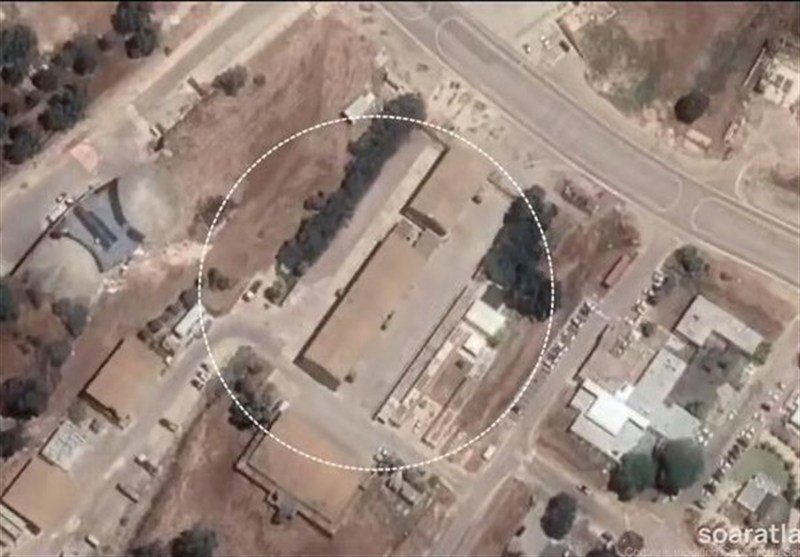
By 15 July 2026 at 14:19 UTC, CENTCOM was publicly stating that US forces had struck Iran multiple times. The phrasing is consistent with a campaign of selective, signalling strikes on military targets along the coast or in the interior, calibrated to demonstrate reach without committing to an air campaign of the kind that would foreclose diplomacy entirely. That this language was carried on Unusual Whales rather than a military press release is itself part of the signal: deniable enough to walk back, public enough to be read by Tehran's operational planners.
What the betting market thinks, and what it does not
The Polymarket contracts on a US-Iran meeting by month-end, sitting in the high teens on 15 July, are worth treating as a thermometer rather than a forecast. A one-in-five price reflects three things at once. First, the cost of organising a senior-level encounter on four weeks' notice. Second, the political risk inside Iran of being seen to climb down after a public blockade announcement. Third, the structural fact that this White House has shown no appetite for the kind of incremental confidence-building that produces meetings at moments of maximum tension.
A trader who thinks a meeting is genuinely likely is implicitly betting that one side will de-escalate under financial pressure, that the Strait will reopen quietly, and that the blockade force will sail home having done its job without firing. None of that is impossible. None of it is the base case the curve is pricing.
The structural read
What we are watching is a deliberate escalation through economic signal, not a slide toward war by accident. The blockade announcement, the strikes, and the forward-curve reaction are three instruments playing the same chord. The aim, on the most charitable reading, is to compress Iran's decision window: choose between a negotiated settlement on terms that are politically survivable in Tehran, or absorb a sustained cost in oil revenue, currency, and naval reach that compounds week on week. On the harsher reading, it is a coercive campaign with a kinetic floor underneath it, where the strikes are not signalling but rehearsals.
Either way, the burden of the next move sits with the Iranian side, and the relevant Iranian decision-makers are not the Foreign Ministry in Tehran but the security establishment around it. The diplomatic channel, to the extent it exists, is being priced as a tail risk, not as the expected path.
What remains uncertain
The reporting so far does not specify which Iranian targets have been struck, nor whether the Iranian response, if any, has been confined to rhetoric or has extended to the asymmetric toolkit Tehran has spent two decades refining in the Gulf and the Levant. The Reuters curve story is silent on volume disruption because, at this point, there is none to report. The Polymarket price is a snapshot of trader sentiment at one moment and will move with the next headline. The CENTCOM order-of-battle is published; the rules of engagement attached to it are not.
The honest read is this: a financial market is preparing for a supply shock it hopes does not arrive, a betting market is pricing the diplomatic exit as unlikely, and a military force large enough to sustain a blockade indefinitely is sitting in the water. Each of those three signals, taken on its own, is ambiguous. Taken together, they describe a situation in which war is being readied with care and conducted with restraint, and in which the difference between the two is being decided in real time.
This publication frames the blockade as a coercive economic instrument first and a military campaign second, in line with the order-of-battle CENTCOM itself has chosen to publish, and treats the Reuters curve data as the leading indicator rather than the headline price.
Wire provenance
This editorial synthesis draws on the following public wire/social posts:
- http://reut.rs/4wIFKpl
- https://t.me/unusual_whales
- https://t.me/unusual_whales