Argentina and Spain reach the World Cup final: what the scorelines actually say
Argentina booked its place in the World Cup final on 15 July 2026 with a 2-1 win over England. Spain had earlier eliminated France. Two results, two very different kinds of semifinal.
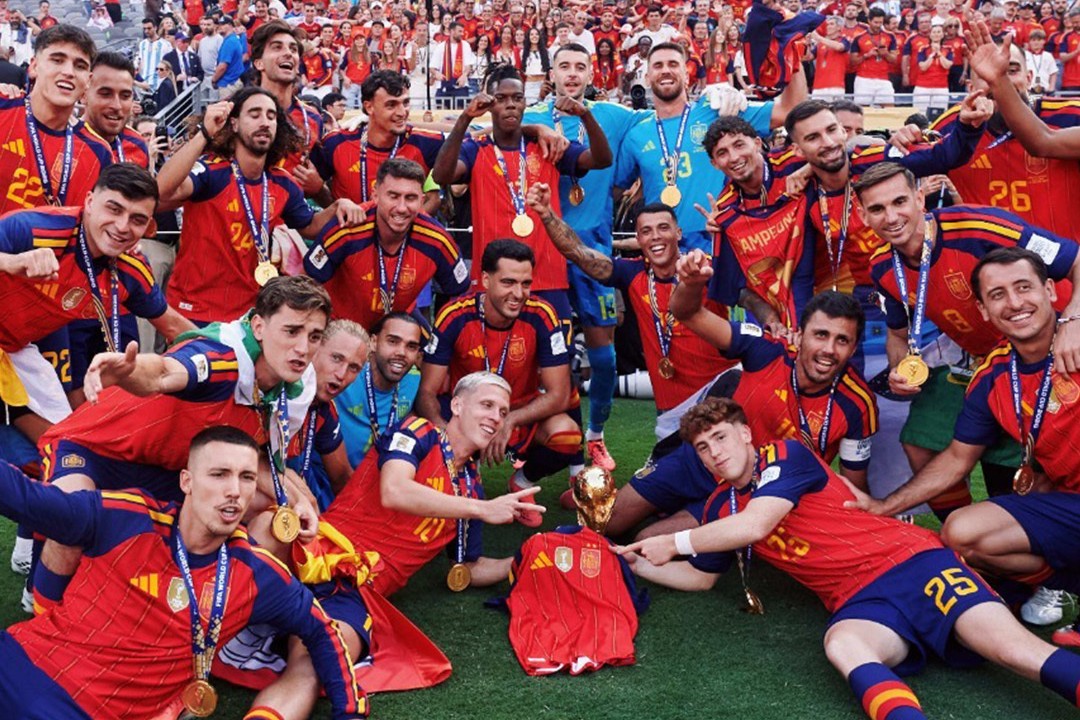
At 22:15 UTC on 15 July 2026, two national teams held tickets to a World Cup final. Argentina had just taken the second of its two goals in a 2-1 semifinal over England. Spain had already been waiting since its own semifinal win over France. The pairing was set before midnight in Europe; for Argentine and Spanish fans, the rest of the night was logistics.
The scoreline is the smallest fact worth knowing. The interesting story is what kind of semifinal each side played. Spain's route was a controlled dismantling of France, with goals and game-management that have become the team's trademark under the current staff. Argentina's route was closer to the opposite: an England side that pressed high, created chances, and lost to a side that simply finished the moments that mattered. The thread of running commentary that carried both results through Tuesday evening told the story in goals, not in narrative.
Spain did what Spain does
Per the running feed of semifinal updates, Spain reached the final by eliminating France. The post from the regional news channel at 21:10 UTC flagged Spain as the first finalist, with Argentina then joining them after the late result. The order matters: Spain were the side that had to absorb France's pressure early and then strike at the right moments, and they did it cleanly enough that the second semifinal was rendered a footnote in real time.
For a side built on positional play, the pattern is the point. France have spent the last decade cycling through tournament identities built around individual quality. Spain's identity is collective. The team concedes territory in benign zones, then breaks lines through the half-spaces where full-backs are isolated. Whether the scoreline read 1-0, 2-0, or a more flattering margin, the structural read of the semifinal was the same: Spain controlled the game's tempo, France controlled pockets of possession, and the score reflected the side that converted. The coverage that landed first among Spanish-language channels framed the result as routine. For once, that framing was not exaggerated.
Argentina won the kind of game Argentina wins
The 2-1 over England was tighter, louder, and more revealing. England came into the semifinal as a side that had built its tournament on defensive shape and set-piece efficiency, then shifted toward a higher block in the knockout rounds. Argentina, by contrast, spent the early part of the competition looking like a team that had not quite figured out what it wanted to be when Messi was not on the ball. That question got a working answer on Tuesday.
The second goal, flagged in the live feed at 21:27 UTC, was the one that changed the game's math. A 2-1 lead is a different proposition from a 1-1 scoreline with the second leg of momentum swinging England's way. From the moment the ball went in, Argentina could sit, concede the wide areas, and dare England to break them down through central midfield. England tried. The defence held. The pattern is consistent with how Argentina has closed out tight games in recent tournaments: absorb, counter, finish.
What the day actually looked like from the wire
The single most honest thing about the day's reporting is that it arrived in two registers. The Spanish semifinal landed as a sporting result. The Argentine semifinal landed as a story, with the channel carrying both running updates and crowd footage from Dahieh in Beirut, where Argentina's support runs deep in the diaspora communities. That is not a minor detail: the Argentine national team has a multinational fanbase, and the geography of who was celebrating on Tuesday night was wider than Buenos Aires.
There is also the question of the final itself. The channels that ran the live feed on Tuesday included a post explicitly endorsing Spain for the final. Endorsements are not predictions, but they are a useful read on where the analytic instinct among working football journalists is sitting. Spain, on paper, are the more complete team. Argentina, on the recent record, are the side most likely to make a complete team look incomplete for ninety minutes. The final is not a foregone conclusion in either direction.
Stakes, and what the final does not decide
Both sides arrive at the final with something to prove beyond the trophy. For Spain, the final is a chance to confirm that the post-2008 generation has produced a second championship-winning side, distinct in style from the tiki-taka era and built on different personnel. For Argentina, the final is a chance to defend the title won in Qatar and to extend the Messi-era project's shelf life for one more tournament cycle.
The match itself will not settle the deeper argument. Spain's national-team project will continue to be read by some as the model football should follow, and by others as a system that works until it meets a forward line capable of punishing high pressing. Argentina's national-team project will continue to be read by some as the gold standard of tournament football, and by others as a side that depends on individual brilliance to mask structural weaknesses in midfield. The final will move the needle. It will not end the debate. The kicker to watch is not the trophy lift; it is how both federations read the result when they sit down in September to plan the next cycle.
How Monexus framed this versus the wire: the wire carried the result as a sporting fact. Monexus read the two semifinals as two different kinds of game, weighted by what each finalist showed under pressure rather than by reputation coming in.
Wire provenance
This editorial synthesis draws on the following public wire/social posts:
- https://t.me/wfwitness
- https://t.me/wfwitness
- https://t.me/rnintel
- https://t.me/rnintel