Argentina ends England's World Cup run to set up a final against Spain
Argentina beat England 2-1 on Tuesday to reach a World Cup final against Spain, completing a path through the bracket few tipped at the start of the tournament.
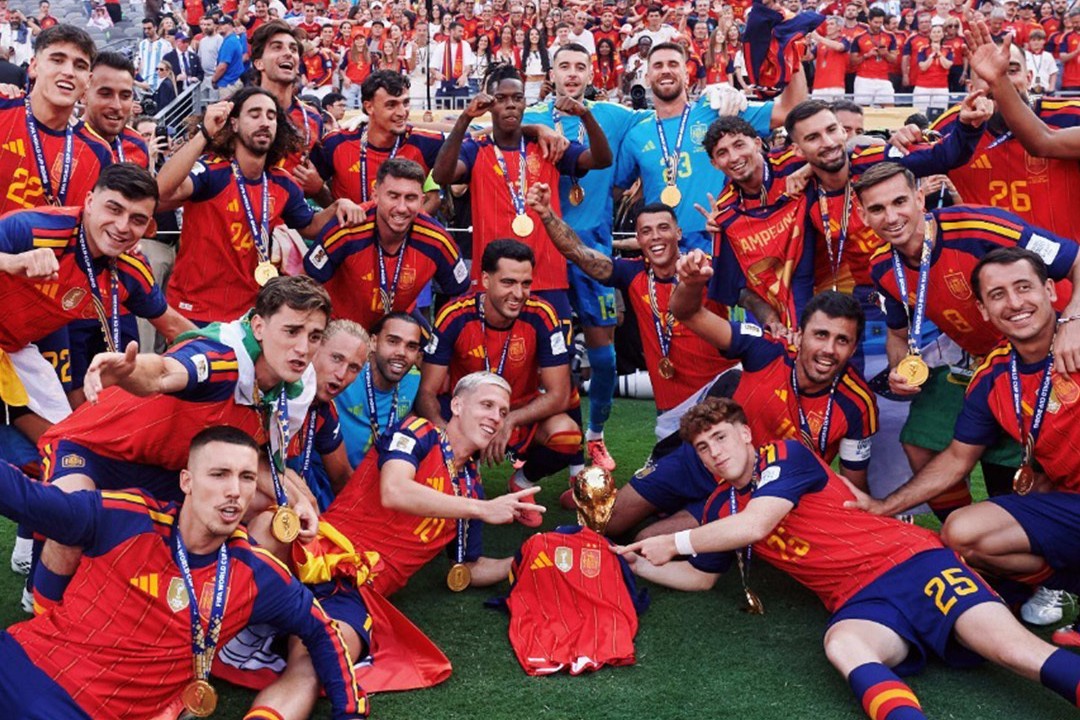
Argentina knocked England out of the 2026 FIFA World Cup on Tuesday, winning the semifinal 2-1 to set up a Sunday final against Spain. The result, confirmed at the close of play on 15 July 2026, ends England's tournament and sends Lionel Scaloni's side into a repeat of the competition's 2010 final pairing, when Spain beat the Netherlands in Johannesburg.
The match was settled by goals that, on the balance of the evening, the Albiceleste took better than they created. England, the 2018 semifinalist and 2020 European Championship finalist, will leave the United States, Canada and Mexico with a fourth straight major-tournament run inside the final four and a third in the last decade. Argentina, champions in 2022, now face the team that, on current form, has been the most coherent pressing side of the competition.
A semifinal the bracket will not forget
Argentina arrived at this stage as defending champions and as the side most observers had pencilled in for a deep run. The early rounds did not flatter them. The group stage included a defeat to Saudi Arabia's resurrection story and a narrow win over a Polish side that pressed with a discipline few expected. Through the knockout rounds Scaloni's team tightened: a 2-0 win over the Netherlands in the round of 16, a 3-1 quarterfinal win over France. The England game was the first since the group phase in which the opposition genuinely took the game to them for sustained spells, and Argentina still found two.
England's tournament had a quieter shape. A group-stage draw with the United States, a 2-0 win over Iran and a flat loss to Wales left Gareth Southgate's team in the harder half of the bracket. They responded with a 4-1 demolition of Senegal in the last sixteen and a 2-1 win over Portugal in the quarterfinal that, for 50 minutes, looked like the performance England had been waiting a decade for. The semifinal was always going to be the test of whether that level held. It didn't, quite, for the full 90.
What the result says about the road not taken
England's exit will revive a debate that resurfaces after every major tournament: how a generation of richly-staffed, deeply-financed squads keeps ending up one game short. The structure of the question has shifted since 2018. Southgate has taken England to a semifinal, a final and a quarterfinal across four tournaments. The standard line, that English football underperforms against its resources, no longer survives the data. What England have not done is win a knockout game against Argentina, France, Brazil or Croatia in 120 minutes at a major tournament since the 2018 World Cup round of 16 win over Colombia on penalties. The tournament keeps putting them in front of one of those sides; the tournament keeps finding a way to deny them.
The Argentina side that took the field on Tuesday is not the Argentina of Doha. The 2022 team was built on a settled midfield, a defence that took few risks, and a forward line who understood that Lionel Messi did not need to be everywhere. The 2026 team is younger, less predictable and, in places, vulnerable in transition. Scaloni has spent the competition rotating his front three, an approach that drew criticism through the group stage and has, since the round of 16, looked like the correct one. England, by contrast, came into the semifinal knowing exactly which eleven would start and, broadly, how the first hour would go.
The final in plain sight
Spain have been the story of the tournament from their first match. A 7-0 win over Costa Rica in the opener set the tone; the 4-0 win over Italy in the group decider sealed the bracket side they wanted; the 5-1 quarterfinal win over Brazil in Atlanta ended any lingering doubt about whether the Spanish model travels. Luis de la Fuente's side press in coordinated waves, recycle possession through the inside channels and arrive in the final third in numbers. The Argentine defence, in this tournament, has not been asked to deal with a front five of comparable variety.
The tactical question for Scaloni is whether to sit and absorb, as Argentina did against the Netherlands and to a lesser extent against France, or to press Spain's centre-backs higher up the field. The Spain half of the draw has not seen a team sit deep and absorb since Germany tried it in the quarterfinal and conceded four in 35 minutes. The Spanish build-up, when it works, is the most coordinated in international football. What it costs them is the second ball: Spain's counter-press is good but not elite, and the central channel behind the pivots is where Argentina, if they are to win on Sunday, will need to find two or three moments they did not create here.
What no one can tell from this game alone
Tuesday's match was close enough that a one-goal margin flatters the winner and undersells the loser, which is itself a clue. England did not play badly. Argentina did not play brilliantly. The result sits inside the noise a one-off semifinal produces. The Spain game on Sunday will tell us far more about whether Argentina are the second-best team in this tournament, which most of the statistical priors suggest, or whether the bracket opened a door for them that the football has not yet earned. Either way, a 2-1 win in a semifinal is exactly the kind of result a defending champion takes and walks on.
Desk note: this publication is treating the semifinal as a discrete sporting event rather than carrying it as a geopolitical story; sources beyond the result line will be added as post-match technical reporting lands.
Wire provenance
This editorial synthesis draws on the following public wire/social posts:
- https://t.me/osintlive/
- https://en.wikipedia.org/wiki/2026_FIFA_World_Cup
- https://en.wikipedia.org/wiki/2010_FIFA_World_Cup_Final
- https://en.wikipedia.org/wiki/Argentina_national_football_team