Argentina stun England in Atlanta to set up World Cup final repeat with Spain
A 2-1 comeback over England in Atlanta sends Argentina into a World Cup final against Spain, the same side that denied them the trophy four years ago.
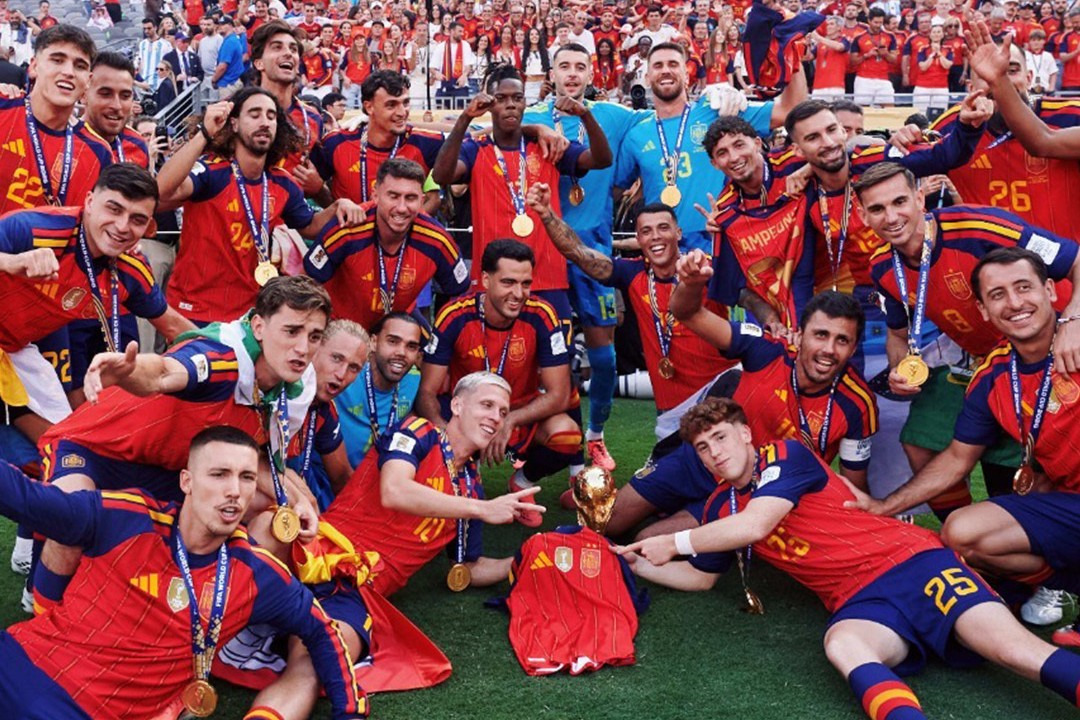
Anthony Gordon's opening goal had England dreaming inside Atlanta's Mercedes-Benz Stadium on 15 July 2026, and for long stretches of the second half the defending champions looked like the side more likely to land the knockout punch. Then the match tilted, as these matches do, in the last quarter-hour. A 2-1 Argentina win, sealed by goals from Enzo Fernández and Lautaro Martínez after Gordon's strike, sends the Albiceleste into a World Cup final against Spain and gives Lionel Scaloni's squad a chance to repeat the 2022 triumph in Lusail. The opponent is the same one that denied them in 2014, and the symmetry is not incidental.
For England, the pattern of exits at the hands of the game's elite continues. For Argentina, the comeback reopens a question that looked closed when Gordon finished past Emiliano Martínez in the first half: whether this generation can be the first since 1962 to retain the trophy. The next 72 hours, in the form of a final against a Spain side that has looked the most complete team of the tournament, will settle it.
The hour that changed the game
Gordon's opener rewarded an England performance that, for 60 minutes, suggested Thomas Tuchel's side had finally solved the Argentina problem. The forward's finish was the kind of goal that wins semi-finals: one chance, one connection, no margin for error. From there, England defended in two disciplined banks of four and let Argentina have possession in areas where possession does not hurt you. The game management worked until the 73rd minute.
Then the substitutions that had been telegraphed all tournament finally arrived. Scaloni sent on Martínez, shifted Julián Álvarez wide, and asked Fernández to play closer to Alexis Mac Allister. The midfield geometry that had made Argentina pedestrian for an hour suddenly had vertical lines. The equaliser, when it came, came from one of those vertical lines: a layered passing sequence that ended with Fernández sliding the ball beyond Jordan Pickford's near post. According to France 24's match report, the goal rewarded pressure Argentina had been building for twenty minutes without reward.
The winner, twelve minutes from time, was the Martínez the tournament has been waiting for. A ball across the six-yard box, a near-post run, a finish that Pickford got a hand to but could not keep out. Argentina's bench emptied onto the touchline. England's players stood still, in the way players do when a knockout tournament tells them the math has run out on their campaign.
England, again, at the same wall
This was England's fourth consecutive elimination by an elite opponent at a major tournament, and the recurrence is no longer a coincidence. Against France at Qatar 2022, against Spain at Euro 2024, against Argentina here, the pattern is the same: control the middle of the match, lead or match the opposition through 70 minutes, then concede territory, chances, and ultimately the game. The tactical vocabulary is established. The execution, against the best, is not.
Tuchel inherited a squad that is, on paper, the deepest England has taken to a tournament in two decades. Pickford, John Stones, Declan Rice, Jude Bellingham, Bukayo Saka, Gordon. The names are not the problem. The problem is what happens to that depth when an opposition coach reads the pattern and attacks it. Argentina's winning goal came from exactly the channel England has conceded from in three straight tournaments: a wide overload feeding a runner into the near-post corridor. The counter-narrative, that England simply lost to a better team on the night, has weight. It is also incomplete. A coincidence stops being a coincidence when it has a name attached.
There is a quieter counter-read. Gordon's opener came from a set-piece routine that England had worked on all week, and Tuchel's side carried the game's most dangerous transitions for the first half. The defeat, on the xG ledger available from the France 24 match feed, was closer than the scoreline suggests. England did not collapse. Argentina, with the bench and the nous of a defending champion, simply out-executed them in the moments that decide semi-finals.
A final shaped by 2014, 2022, and everything between
The pairing, on paper, settles an argument that has run across three tournaments. Spain won the under-21 Euros in 2024 with a midfield built on Pedri, Gavi, and Fermín López; Argentina won the 2022 World Cup with the deepest squad in their history. Both reached the 2026 final having played, by the standards of modern knockout football, relatively open football. Spain's run through the bracket included a controlled dismantling of France in the quarter-final. Argentina's path featured the only loss of their campaign, a group-stage defeat to Japan that has aged into a useful scar.
The structural question is whether possession football can win a final against the only team in the tournament that has demonstrated an answer to it. Spain kept 61% of the ball, on average, across their knockout games. Argentina, in this semi-final, finished with 54%. The gap is smaller than the stereotype suggests, and Argentina's goals came from direct play rather than sustained pressure. The final, accordingly, is unlikely to be the possession-versus-counter-attack matchup the bracket seeded.
The historical frame matters because both sides have history with the other at this stage. Argentina have beaten Spain in a World Cup only once, in the quarter-finals of 2010, en route to their last pre-Messi title. Spain beat Argentina in the 2014 final in extra time, the match that announced La Roja's first world title and pushed Messi into the longest international silence of his career. The 2022 final, against France, was the first time in twelve years that Argentina had reached this round against an opponent other than Germany or Spain. The cycle is closing.
The dates to watch
The final is scheduled for 19 July 2026 at MetLife Stadium in East Rutherford, New Jersey, a venue that seats 82,500 and that hosted the 2024 Copa América final. Argentina will be the away side on the team sheet but the de facto home crowd, given the South American diaspora concentration in the New York metropolitan area. The federation announced travel logistics for the squad's move from Atlanta on 16 July; Spain, based in Charlotte since the quarter-final, will relocate the same day.
For England, the inquest begins on the flight home. Tuchel is contracted through the 2028 Euros; the question is whether the Football Association moves to extend him now or waits to see if the next cycle breaks the pattern. The squad age curve, with Bellingham and Saka both still under 28, suggests there is time. The pattern, as written, suggests time is not always on the side of the team that keeps running into the same wall.
For Argentina, the math is simpler. One game, against a familiar opponent, with a generational No. 10 in the form of his life. The trophy, on 19 July, will not be decided by the years of frustration behind either squad. It will be decided by the ninety minutes in front of them.
The wire led with the result and the late goals. Monexus focuses on the third consecutive England exit at the hands of an elite opponent, and on what the Spain–Argentina final says about a tournament that has rewarded execution over possession theatre.
Wire provenance
This editorial synthesis draws on the following public wire/social posts:
- https://t.me/france24_en
- https://t.me/StandardKenya