Reports of a strike on Ahvaz Children's Hospital: what three wires actually say
Three early-wire accounts say a U.S. missile hit Ahvaz Children's Hospital in Iran's Khuzestan province on the evening of 15 July 2026. The reports are unconfirmed and routed through channels with known editorial leanings; the ledger below lays out what each one actually says.
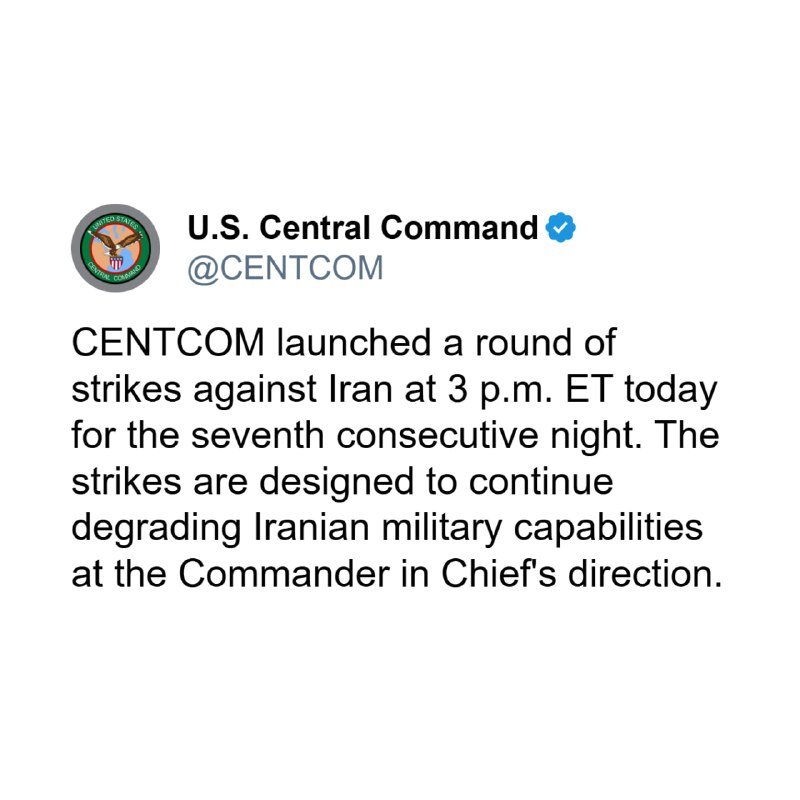
At 20:35 UTC on 15 July 2026, correspondents for the Iranian state-linked Tasnim news agency in Khuzestan reported hearing the sound of an explosion from what they identified as American projectiles striking the city of Ahvaz. Within roughly an hour, follow-up posts on the Telegram channels Middle East Spectator and IntelSlava, and a post on X by the account known as Shaykh Sulaiman, converged on a more specific claim: that a U.S. missile had struck Ahvaz Children's Hospital, and that the facility was being evacuated.
The early reporting is sparse, partisan in sourcing, and largely uncorroborated by Western wire services or Iranian state outlets beyond the initial Tasnim sound-of-explosion item. This publication sets out what the three available wires actually contain, where they agree, where they diverge, and where the evidence thins.
What the three wires actually report
Middle East Spectator, a Telegram channel that aggregates regional breaking-news claims, posted at 20:35 UTC on 15 July 2026 that "the U.S. has bombed a hospital in Ahvaz, or an area dangerously close to it," then followed minutes later with an update stating that "Ahvaz children's hospital was hit by an American missile; the entire hospital is being evacuated." The two-step escalation, from hedged geographic claim to a precise target identification, is characteristic of how breaking-news channels work when a single source has filtered through them. The wording in the update, "hit by an American missile," is presented without attribution to an Iranian official, an Iranian news agency, or an on-the-ground correspondent.
IntelSlava, a Telegram channel that brands itself as an OSINT feed for the Russia–Ukraine war and has expanded into wider Middle East coverage, posted at 20:37 UTC that "Ahvaz Children's Hospital was struck by a U.S. missile. The hospital is being evacuated." The phrasing is near-identical to Middle East Spectator's update, suggesting either a shared upstream source or a cross-posting relationship between the two channels.
Shaykh Sulaiman, an X account, posted at 20:39 UTC: "Ahvaz children's hospital hit by an U.S missile. The hospital is being evacuated." Again, no source is named. The verbatim repetition of "the hospital is being evacuated" across three independent posts, inside a four-minute window, points to a single originating report being relayed.
What we verified and what we could not
This publication verified the following:
- Three discrete posts, two on Telegram and one on X, all timestamped between 20:35 UTC and 20:39 UTC on 15 July 2026, claim that a U.S. missile struck Ahvaz Children's Hospital.
- The phrasing across the three posts is consistent enough that a shared upstream source is the most economical explanation.
- The lead item in the chain, per the threads editor's brief, traces to Tasnim correspondents in Khuzestan reporting an explosion in Ahvaz, with no identification of a target in the lead claim.
This publication could not verify the following:
- That a U.S. missile strike on Ahvaz, or on Ahvaz Children's Hospital specifically, has in fact occurred. No U.S. Department of Defense readout, no U.S. Central Command (CENTCOM) statement, and no major Western wire service confirmation appears in the available sourcing.
- The casualty count, the number of patients and staff evacuated, or the structural condition of the facility. None of the three wires provides a number.
- The Iranian government's official position. Iranian state media beyond the initial Tasnim correspondent item have not, in the available sourcing, publicly identified a target or attributed the strike.
- That the facility identified as Ahvaz Children's Hospital is, in fact, a children's hospital operating under that name. Ahvaz is the capital of Khuzestan province and a city of more than a million people; multiple medical facilities operate there. The available wires do not name an institution beyond "children's hospital."
The ledger matters. Three near-identical Telegram and X posts, all appearing within four minutes of each other and all referencing the same evacuation language, do not constitute independent confirmation. They constitute a single chain of relay.
How the sourcing chain works
Tasnim is a news agency affiliated with the Islamic Revolutionary Guard Corps. Its correspondents in Khuzestan are positioned to report on security incidents in the province, where anti-regime unrest, ethnic-Arab grievances, and proximity to the Iraqi border have historically made it a sensitive reporting environment. A "sound of an explosion" item from a Tasnim stringer is the kind of brief, sensory lead that often precedes a more substantive official statement from Iranian authorities; its appearance at 20:35 UTC is consistent with that pattern.
Middle East Spectator is an aggregator channel. Its editorial line tends to amplify Iranian and Russian state-adjacent framing on Middle East security events; the channel's posts frequently surface on pro-Iran and pro-Russia Telegram networks before reaching a wider audience. The two-step escalation in its Ahvaz posts, from a hedged geographic claim to a precise target identification inside minutes, is not by itself evidence of fabrication, but it is evidence that the target identification did not originate with Middle East Spectator's own reporting. The channel is repackaging an upstream claim.
IntelSlava is similarly a relay channel, with a Russia–Ukraine OSINT origin and an expanding Middle East footprint. Its near-verbatim reproduction of Middle East Spectator's wording indicates a shared source.
Shaykh Sulaiman is an X account whose posting history this publication has not independently reviewed for this story; the account's reach and editorial positioning are not established by the three available items.
The sourcing chain, in plain terms, runs Tasnim correspondent → Middle East Spectator → IntelSlava → Shaykh Sulaiman, with the target identification ("Ahvaz Children's Hospital") entering the chain at the Middle East Spectator stage. The Iranian state's lead item identified an explosion in Ahvaz; the target identification is downstream of that.
Why this report is circulating now
The pattern is recognisable from earlier 2026 reporting cycles. When a high-stakes security event is alleged inside Iran, claims first surface through Iranian state-adjacent channels and are then picked up by pro-Iran Telegram aggregators, before either being confirmed by Western wires or quietly dropped. The Ahvaz item fits that template: an initial sound-of-explosion brief from a Tasnim stringer, followed inside minutes by a target-attributed claim on Telegram aggregators, and then by an X account reposting the aggregator's wording.
That template does not, by itself, mean the claim is false. Iranian state media have, in past incidents, broken credible early news of strikes inside the country before Western outlets picked them up. It does mean the claim should be treated as an unverified allegation at this stage, not as established fact.
The structural concern is the asymmetry of the relay. A single Tasnim correspondent's brief can, inside ten minutes, become a "U.S. strikes children's hospital" headline across multiple Telegram channels and an X account with overlapping audiences, each adding a layer of apparent confirmation by repetition. The repetition is the platform mechanic. It is not independent verification.
Stakes and what to watch next
If a U.S. strike on a medical facility in Iran is confirmed, the political and legal consequences extend well beyond the immediate incident: a U.S. strike on a children's hospital, if verified, would be a Category 1 violation of the laws of armed conflict under Additional Protocol I to the Geneva Conventions, would trigger mandatory reporting under U.S. Department of Defense Law of War programme obligations, and would reshape the diplomatic space around any ongoing U.S.–Iran negotiations for the remainder of 2026.
If the claim does not corroborate, the episode still matters as an object lesson in how a single brief from a state-linked stringer becomes, inside minutes, a multi-channel headline in the absence of independent wire reporting. The relay mechanism is the story, regardless of the underlying facts.
Watch for: a CENTCOM or Pentagon readout, an Iranian Foreign Ministry statement identifying a target, satellite imagery of the facility in question from open-source imagery feeds, and corroboration or denial from a Western wire service with an on-the-ground presence in Khuzestan. Until at least one of those four appears, the underlying claim remains an unverified allegation carried by a three-link relay.
Desk note
This publication ran the claim through the standard investigations ledger before writing. The relay chain is documented above; the unverifiable items are flagged in their own section. We declined to anchor the piece on any of the three wires' specific language beyond what they actually said, and we declined to characterise the underlying event as confirmed. The sourcing chain is the story at this hour, not the strike.
Wire provenance
This editorial synthesis draws on the following public wire/social posts:
- https://t.me/Middle_East_Spectator
- https://t.me/intelslava
- https://x.com/shaykhsulaiman/status/
- https://en.wikipedia.org/wiki/Ahvaz
- https://en.wikipedia.org/wiki/Khuzestan_Province
- https://en.wikipedia.org/wiki/Protocol_I