Yemeni forces claim shoot-down of Saudi Wing Loong II over Al Bayda, hours into a wider aerial campaign
Yemeni armed forces say they downed a Saudi-made Wing Loong II reconnaissance drone in Al Bayda governorate at dawn on 14 July 2026, the latest in an escalating air war that Ansar Allah has vowed to answer.
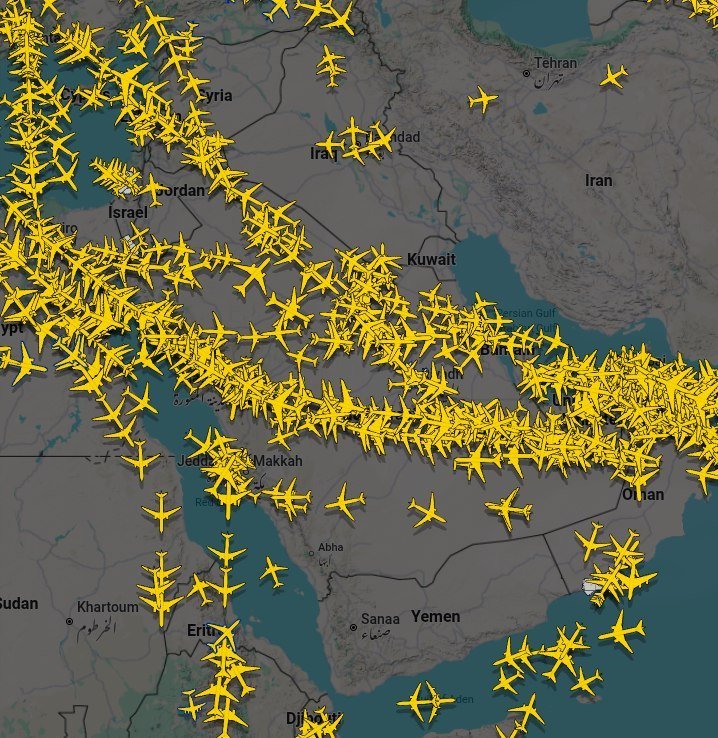
At 03:00 UTC on 14 July 2026, the spokesman for the Yemeni Armed Forces announced that anti-aircraft units had shot down a Wing Loong II reconnaissance aircraft operated by the Royal Saudi Air Force in the airspace of Al Bayda governorate. The statement, carried at 16:03 UTC by the Beirut-based Al-Alam Arabic channel on Telegram, identified the platform as a Chinese-made medium-altitude long-endurance (MALE) drone used for surveillance rather than strike, and framed the engagement as a defensive interception over what Yemeni authorities treat as sovereign territory.
Within fifteen minutes, the London-based Middle East Spectator account relayed the same claim to a larger English-language audience, and by 16:18 UTC MintPress News had posted a parallel brief, citing continued Saudi airstrikes inside Yemen and a renewed Ansar Allah threat of retaliation. Three independent posts, three distinct outlets, one announcement: the downing is now part of the day's record, and Riyadh has not, as of this writing, confirmed or denied the loss.
The incident is the most visible single event in a longer aerial duel. Yemeni air defences have claimed multiple UAV intercepts in 2025 and 2026, while the Saudi-led coalition has maintained a near-continuous air campaign over northern Yemen for the better part of a decade. The shoot-down matters less for the airframe it cost than for what it signals: a Yemeni ground force publicly cataloguing coalition surveillance losses, on a day when the coalition's strike tempo has not slowed.
A drone over Al Bayda
Al Bayda sits in the central highlands, midway between the Houthi-held north and the transitional government in Aden, and has been a persistent theatre of low-intensity combat. The Yemeni statement describes a "reconnaissance aircraft" rather than a strike platform, a distinction that matters for two reasons. A Wing Loong II in ISR (intelligence, surveillance and reconnaissance) configuration is the airframe the Saudi-led coalition uses to loiter over suspected Houthi positions, designate targets and feed coordinates to follow-on strike packages; downing one is therefore a claim about the resilience of that targeting chain, not only a body-count update.
Al-Alam Arabic carried the claim in the form of a spokesman's statement rather than imagery, which means the public record so far rests on the Yemeni side of the line. The post identifies the aircraft type, the operator and the governorate, but the channel does not publish tail-number evidence, crash coordinates, or wreckage photography in this thread. The framing language, "the Saudi enemy", is the terminology Ansar Allah's press organs have used consistently since the war began; it is not new, and it is not, on its own, evidence of the engagement itself.
The information shape of the day
Three sources moved on the story inside a quarter-hour window. Middle East Spectator's X account posted the claim at 16:13 UTC, tagging the platform as a "Wing Loong II" drone in Bayda Governorate. Five minutes later, MintPress News used the same English rendering and added the wider context: Saudi airstrikes have continued against Yemen, as Ansar Allah threatens retaliation. That second line is the structural one. It reframes the intercept from a discrete tactical event into a node in a campaign Ansar Allah has publicly promised to escalate.
The sourcing pattern itself is worth reading carefully. No wire service (Reuters, AFP, AP) has so far filed a confirmation; no Saudi statement has been posted on the coalition's official channels in this thread. The claim is moving through a layered media ecology in which a partisan outlet (MintPress) and a fast-turnaround aggregator (Middle East Spectator) carry the same raw input, the Yemeni statement, to overlapping but distinct audiences. A reader who sees the MintPress framing and a reader who sees the Middle East Spectator framing are likely to come away with subtly different emphasis, but with the same set of hard facts: the claimed intercept, the airframe type, the governorate, and the surrounding air war.
The counter-narrative the wires will chase
Riyadh has historically declined to comment on individual aircraft losses, and the Saudi-led coalition's standard practice is to release operational updates only through the official spokesperson and the Saudi Press Agency. The most likely initial response pattern is silence, followed, if at all, by a denial or a non-attribution. Western outlets covering the Yemen war, Reuters, AFP, the BBC and The Guardian have all maintained a small but persistent presence, will be working phone-tree sources on the ground in Al Bayda and Aden, and will weight the claim against the operational tempo they can verify independently.
There is a plausible alternative read of the facts. Wing Loong II airframes are widely operated across the region, including by the UAE, Egypt and several North African air forces, and ISR missions are sometimes flown by other members of the coalition under Saudi-led tasking. The Yemeni statement attributes the aircraft directly to "the Saudi enemy," which fits the political framing Ansar Allah uses for any coalition loss but may compress a more layered command arrangement. None of that, on its own, falsifies the claim; it does, however, mean the airframe was almost certainly Saudi-led-mission even if a partner nation's serial number sits under the wreckage.
What we verified / what we could not
What this publication could verify from the thread: that the Yemeni Armed Forces claimed a shoot-down at dawn on 14 July 2026; that the airframe named was a Wing Loong II reconnaissance UAV; that the governorate named was Al Bayda; that the claim was carried on Telegram by Al-Alam Arabic at 16:03 UTC, on X by Middle East Spectator at 16:13 UTC, and on X by MintPress News at 16:18 UTC; and that MintPress's post explicitly situates the intercept inside an ongoing Saudi air campaign and a Yemeni threat of retaliation.
What this publication could not verify from the thread: any Saudi or coalition statement, confirming or denying the loss; any wire-service confirmation (Reuters, AP, AFP, BBC, Al Jazeera English) of the engagement; any independent imagery of wreckage or crash coordinates; the precise time of the intercept beyond the Yemeni statement's "at dawn today" formulation; the operational unit or mission call-sign of the downed aircraft; and the number or identity of any coalition strikes elsewhere in Yemen in the twenty-four hours surrounding the claim. The sources do not specify whether the airframe carried weapons or sensors, or whether it was on a routine ISR orbit or a target-designation profile.
Stakes and what to watch next
The structural frame is plain. A decade into the air war, the coalition's ISR advantage has been the precondition for its strike campaign. Every claimed intercept erodes that precondition, even if only at the margin, and every public Yemeni claim of an intercept pressures the coalition to either acknowledge the loss, deny it, or stay silent, all three of which carry a cost. The Ansar Allah framing, in the MintPress formulation, treats each shoot-down as a transferable political asset: proof of a defensive capability, proof of a willingness to use it, and a predicate for the retaliation the movement has already announced.
Three concrete things to watch in the seventy-two hours after publication. First, a Saudi-led coalition statement, silence will itself be the story if it stretches past 48 hours. Second, a follow-on Yemeni claim of strike activity on Saudi territory, since the Ansar Allah threat of retaliation is the framing MintPress has already placed on the record. Third, a wire-service confirmation or on-the-ground reporting from a non-aligned outlet (the Sana'a-based Almasirah, the Beirut-based Al-Mayadeen, the Aden-based Adengad) that can supply either wreckage imagery or a second-source corroboration. Until at least one of those three appears, the shoot-down is a Yemeni claim moving through an aligned media ecosystem, and this publication's record will read it as exactly that.
Desk note: Monexus treats the Yemeni statement as a claim, not a confirmed engagement, and has read the three posts in this thread as the inputs they are, one primary statement carried by a partisan channel, and two secondary postings, one of which explicitly frames the intercept inside Ansar Allah's stated posture. The structural reading tracks with how Reuters and Al Jazeera English have covered the air war since 2024: the coalition's ISR advantage is the asset, and Yemeni claims of intercepting that asset are now routine enough to be the default frame for a single-source story. We will update if a wire confirmation or a coalition response appears.
Wire provenance
This editorial synthesis draws on the following public wire/social posts:
- https://t.me/alalamarabic