US naval blockade of Iran reshapes Gulf shipping calculus as oil jumps and diplomacy teeters
Washington's order to interdict all vessels bound for or leaving Iranian ports, set for 14 July 2026, has pushed Brent crude above nine percent in a single session and pushed a US-Iran memorandum of understanding into what Tehran calls a crisis phase.
Brent crude settled more than nine percent higher on Monday 13 July 2026, reaching its highest level in a month, after Reuters reported that a US naval blockade set to begin on Tuesday will cover Iran's entire coastline. The order, framed by Washington as applying to every vessel entering or leaving Iranian ports regardless of flag, lands on an already strained diplomatic track: Tehran's own readouts describe the US-Iran memorandum of understanding as being in a "crisis phase."
What changed overnight is not the existence of a US naval presence in the Gulf. It is the conversion of that presence from a posture into a legal regime. A blockade is not a sanction; it is the assertion of an inspection and interdiction right on the high seas and in territorial approaches. Once that right is exercised, even briefly, the question of who may lawfully trade with Iran ceases to be answered in dollars and begins to be answered in hulls.
The shipping lanes become the story
According to a Reuters dispatch carried by Telegram channels monitoring the Gulf on 13 July 2026 at 19:33 UTC, the blockade will take effect on Tuesday and extend to the full length of Iran's coastline, not merely the Strait of Hormuz chokepoint. A separate alert on the same evening, at 19:52 UTC, confirmed that the order applies to all vessels entering or leaving Iranian ports regardless of flag, eliminating the customary distinction between US-linked and third-party shipping that has, until now, allowed neutral tonnage to transit under tolerated risk.
The market response was immediate. The more-than-nine-percent one-day move is the largest single-session spike since the early-2026 disruptions to Red Sea traffic and, critically, came on a Monday when futures liquidity is thinnest. Front-month contracts reflect a market that has stopped discounting the blockade as a threat and started pricing it as an event.
Tehran's framing: the diplomatic floor is also moving
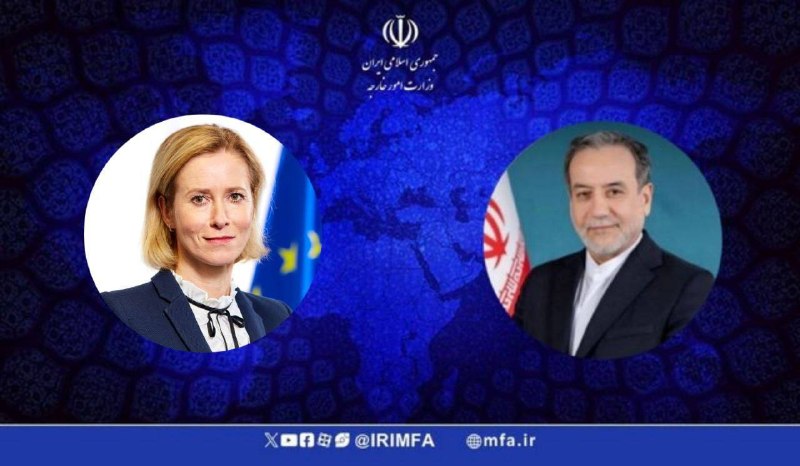
Iranian officials, via state-linked outlets tracked through aggregator channels, described the US-Iran memorandum of understanding as being in a "crisis phase," according to a social-media alert at 17:57 UTC on 13 July 2026. The framing matters. Iranian diplomacy has historically distinguished between a frozen track (talks suspended but intact) and a collapsed one (talks ended). "Crisis phase" sits between those poles: the channel is open but the substance is no longer converging, and the Iranian side is signalling that the cost of walking away has changed.
The structural context is plain. A blockade is an act of war in the classical law of nations, even when conducted under narrower contemporary doctrines of maritime interception. For a regional power whose export revenues are already constrained by secondary sanctions, the loss of physical maritime egress would re-price the entire sanctions architecture: oil that cannot leave by sea moves by other routes, at other prices, to other buyers, and the dollar-clearing system that prices it ceases to be the only game in town.
What the wires are not yet saying
Three things remain unresolved in the public reporting. First, the precise legal basis the US Navy intends to invoke for interdiction of flagged vessels of third countries. Second, the Iranian counter-move set: whether Tehran will signal a reciprocal interdiction regime in the Strait, mine-suspect activity in the approaches, or the more measured response of redirecting exports to overland pipelines and shadow-fleet operations it has spent the last three years building. Third, the position of the principal Asian buyers, China and India, whose state-owned refiners account for the majority of Iranian crude liftings under current sanctions carve-outs. None of those positions is on the public record in the source items available at the time of writing.
The sources also do not specify whether the blockade order includes humanitarian carve-outs for food and medicine shipments, a question that typically surfaces within forty-eight hours of any naval interdiction regime taking effect. The default reading, based on the framing "all vessels... regardless of flag," is that no automatic exemption has been declared.
The structural frame, in plain language
What we are watching is the conversion of economic statecraft into kinetic statecraft. For the better part of a decade, the US-Iran contest has been waged through the dollar-clearing system, the SWIFT network, the oil-tanker tracking infrastructure and the sanctions enforcement apparatus. Each of those instruments works by raising the cost of trade without physically stopping it. A blockade is the bluntest possible instrument: it stops the trade, full stop, and forces the question of who is willing to escort a tanker through a defended coastline.
The historical precedent is the 1973 Arab oil embargo and, closer to the present, the 1987-88 reflagged-tanker operation in the Persian Gulf during the Iran-Iraq war. Both episodes produced sharp and durable shifts in how energy markets priced Gulf risk. A nine-percent one-day move is the opening bid, not the final price. If the blockade holds for a week, the term-structure of the curve will reflect a sustained premium. If it holds for a month, the diplomatic track will have effectively been replaced by the naval track, and the memorandum of understanding that Tehran now calls a crisis will have moved from crisis phase to closed phase.
The counter-narrative, which deserves airtime: the order may be a coercive signal designed to force a return to the table, not a permanent regime. Blockades as negotiation tactics have a long history. The question is whether the Iranian side reads it that way, and on present evidence, from Tehran's own readouts, it does not.
What to watch this week
Three dated markers will tell us which way this breaks. First, the first reported interdiction, if any, after the order takes effect on 14 July 2026: the flag of the vessel, the cargo on its manifest, and the response of its flag state. Second, any readout from Beijing or New Delhi; silence is itself a signal. Third, the next session of oil futures, which will price not just the existence of the blockade but the market's view of how long it will hold.
A nine-percent move is large. It is also the kind of move that markets absorb and then forget, unless the underlying event continues. The diplomatic floor in Tehran is already cracking. The shipping floor in the Gulf is about to find out whether it holds.
This piece relies on three wire-grade inputs that reached Monexus on the afternoon of 13 July 2026: a Reuters dispatch on the oil-price move and the blockade scope, a separate alert confirming the flag-neutral scope of the interdiction order, and an Iranian-source read of the diplomatic track. Where the three inputs agreed, the framing followed them; where they diverged, the divergence is named in the body. The sources do not yet support claims about casualty figures, specific interdictions, or the positions of third-state refiners, and the article does not assert any.
Wire provenance
This editorial synthesis draws on the following public wire/social posts:
- https://t.me/wfwitness
- https://en.wikipedia.org/wiki/Blockade
- https://en.wikipedia.org/wiki/Strait_of_Hormuz