Trump orders third consecutive night of strikes on Iran as port blockade returns and oil jumps
CENTCOM confirmed a third consecutive night of US airstrikes on Iran, hours after the president announced he would reinstate a blockade on Iranian ports and warned of strikes that opponents, in his words, can do nothing about.
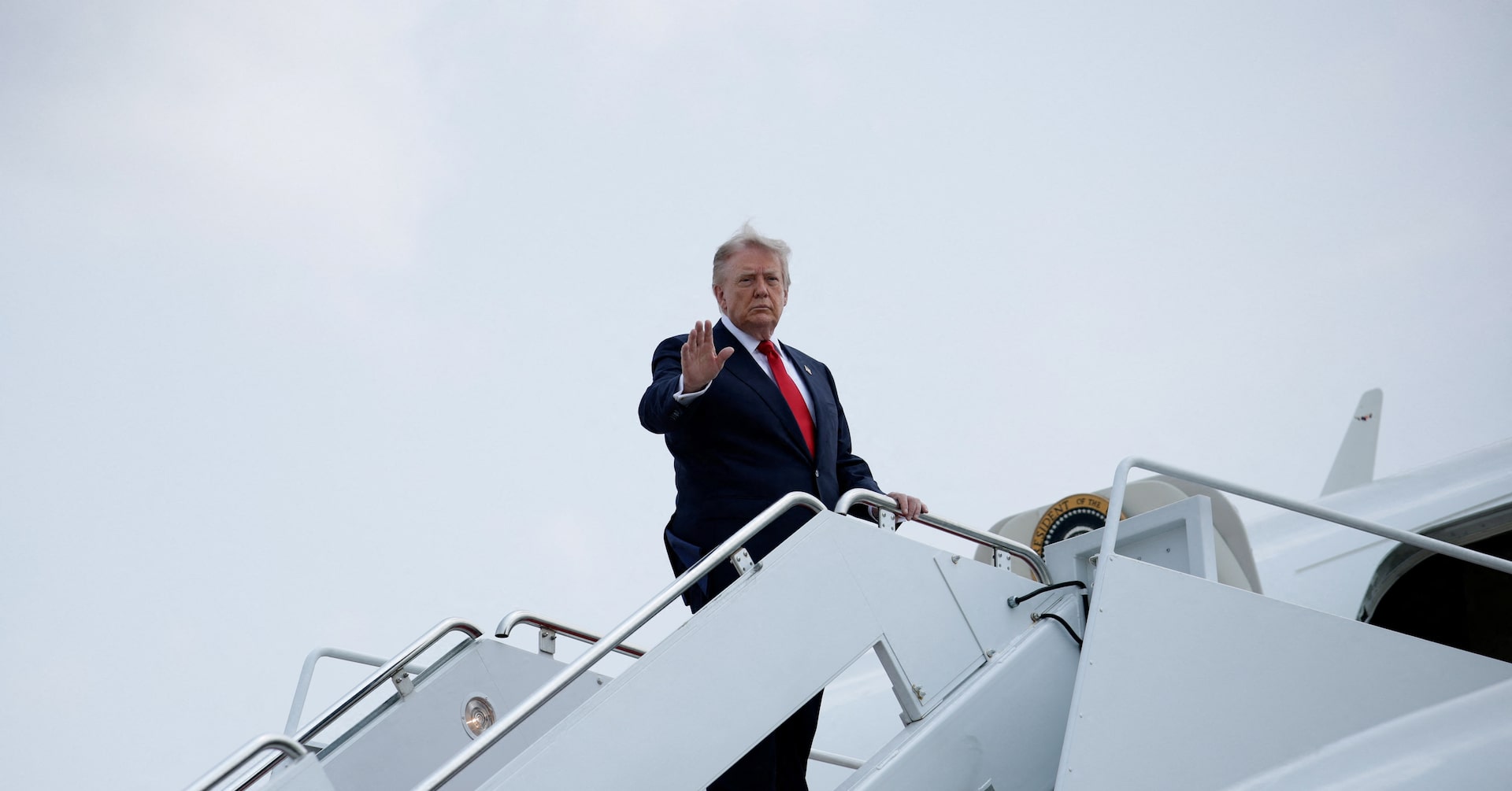
US Central Command confirmed at 00:05 UTC on 14 July 2026 that US forces had launched a third consecutive night of airstrikes against Iran at the order of President Donald Trump, hours after the president told reporters the United States would reinstate a naval blockade on Iranian ports. Oil prices rose on the announcement, and US equity futures turned lower, with technology shares leading the pullback.
The shape of the escalation is now straightforward. Strikes on three successive nights, a blockade announcement aimed at the same coastline those strikes are hitting, and a market response in which energy moves first and growth stocks absorb the second wave. The risk being priced is no longer a single retaliatory strike but a sustained campaign across the Persian Gulf, with all the disruption that implies for the Strait of Hormuz and the energy trade that runs through it.
What was announced, and when
The sequence began in the small hours of 14 July UTC. At 00:05 UTC, a CENTCOM statement carried on the command's official X account said that, at the order of President Trump, US forces had launched airstrikes against Iran for the third night in a row. Three minutes later, at 00:08 UTC, the president appeared on camera promising additional operations: "We will hit them very hard tonight, and we will hit them very hard tomorrow. And they can't do anything about it. They have nothing but loud words." That line sets the rhetorical temperature for the rest of the week.
By 00:40 UTC, Reuters reported that Trump had announced he would reinstate a blockade on Iranian ports, an escalation that has historically been the lever most likely to push a crisis from air to sea. Markets read it that way: equities fell, with the move concentrated in technology shares, while crude moved higher on the prospect of constrained Iranian exports.
That these three announcements landed inside a forty-minute window says something about coordination. The strikes are operational, the blockade is coercive, and the market-moving threat is rhetorical, and all three were queued up within an hour. The pattern mirrors, in compressed form, the dual-track US posture of the 2019 tanker crisis: a kinetic campaign paired with an economic stranglehold, calibrated to make the cost of continued Iranian activity visible in both barrels and share prices.
The blockade's actual logic
A blockade on Iranian ports is not a single instrument. It is a stack of effects layered on top of each other. Insurance premiums for tankers calling at Iranian terminals rise before any hull is touched. Re-routing cargoes through the UAE and Oman adds days and dollars to each voyage. Chinese, Indian, and Turkish refiners, the three largest customers for Iranian crude outside the sanctions perimeter, must either pay the new friction cost or accelerate the diversification they had already begun.
The pricing of the tanker market in late June and the first half of July had already drifted in that direction. A formal blockade announcement tightens it into a regime rather than a risk. The Reuters dispatch on the 00:40 UTC announcement makes that mechanical link the headline: equities and oil move together because traders are pricing a sustained reduction in seaborne flows, not a one-day headline.
This is also where the technology-share correlation sits. The energy trade is the only large Western exposure to any of this; the broader index moves on the second derivative. If a multi-week Gulf disruption adds even two dollars to a barrel of jet fuel and shipping, the input-cost effect compounds across the technology supply chain through freight, plastics, and the power contracts of the data centres that now run hyperscale AI workloads. The pullback in tech shares is not panic; it is the market computing a longer oil print.
Counterpoint from inside the room
The administration's framing is that Iran's capacity to answer is limited. The president's on-camera line that Iran "has nothing but loud words" is a deliberate downplaying of the asymmetric toolkit Tehran retains: ballistic missile strikes on Gulf bases, mine-laying in the Strait of Hormuz, harassment of commercial shipping through the IRGC Navy, and the activation of allied militias from Lebanon to Iraq.
Iranian state media, routinely cited with explicit caveats by regional desks, has framed the strikes as an act of war and promised retaliation. None of those outlets have, in the public reporting reviewed for this piece, claimed an Iranian operational response in the hours since the blockade announcement. That is the most telling absence. Either Tehran is choosing deliberate tempo restraint, or its command-and-control is still being compressed by the opening nights of the strikes. Either reading matters: in the first, a retaliatory move is a matter of when; in the second, the strikes are doing more damage than the public record currently captures.
A second, less comfortable counterpoint sits inside the United States itself. Three nights of strikes and a blockade are not a substitute for an off-ramp. The longer the campaign runs without a defined war aim on the public record, the more the administration invites the critique it cannot afford on energy prices: that escalation is being used as a market-mover rather than a strategy. The Reuters framing of equities falling and oil rising does not endorse that view, but the framing is consistent with it.
The structural frame, in plain language
What this episode sits inside is an old and unglamorous problem of dollar-era statecraft: how an incumbent power disciplines a regional adversary without paying the energy bill itself. The current answer is the same one the United States has reached for since the 1980s Gulf Tanker War. Punish the target's export capacity at sea, and let the allies absorb the price of any supply disruption in exchange for continued security guarantees. The mechanism is a blockade. The trade is that Gulf allies and Asian importers pay the premium and Washington collects the strategic dividend.
The complication in 2026 is that the share of Iranian crude flowing east has been rising for years, and the largest beneficiary of that shift is a Chinese refining system that is structurally short of heavy and medium-sour grades. Beijing does not have an obvious replacement supplier at the same price. Whether the new blockade is designed to tighten the screws on Tehran specifically by reaching for its largest downstream buyer is the unresolved question; whether it succeeds in doing so without entangling Chinese state-owned tankers in US enforcement is the unresolved risk.
A second structural pressure sits underneath all of this. The brief Assad-era interlude Trump referenced on camera at 00:04 UTC, where he said "the person who is currently in charge of Syria… is someone I brought there. We did this together with President Erdogan and others," is a reminder that the regional picture is being managed as a portfolio of client relationships, not as a series of standalone crises. How the Iran file and the Syria file interact in the coming weeks is one of the variables the market has not yet begun to price.
What to watch over the next seventy-two hours
Three concrete markers will tell us whether the third night was a peak or a plateau. First, whether the IRGC Navy or its allied militia nodes in Iraq announce any operation against US assets, shipping, or Gulf infrastructure before 17 July UTC; an attack anywhere in that window would suggest Tehran has chosen to escalate. Second, whether Chinese and Indian refiners disclose force majeure on Iranian liftings or quietly re-route, which would confirm the blockade is biting on the demand side rather than only on freight. Third, the price action in tanker rates and jet fuel: a sustained rise through the middle of the week would confirm that the market is now pricing weeks of disruption, not days.
What remains genuinely uncertain is the off-ramp. The administration's public messaging so far names a target of opportunity but not a definition of victory. Until that gap closes, every additional strike is also a tightening of the noose around Washington's own political timeline, because the energy bill compounds and the technology selloff compounds with it. The market has made the first move; the policy one is still pending.
Desk note: Monexus is leading with wire-reported operational confirmation (CENTCOM, Reuters) and the president's own on-camera framing, treating Iranian-state counter-claims as a developing story to be updated on the next wire cycle. The structural frame is drawn from Monexus's own reading of the energy-market mechanics and the regional client portfolio; it is not paraphrased from any one outlet.
Wire provenance
This editorial synthesis draws on the following public wire/social posts:
- https://x.com/reuters/status/1950277996675339814
- https://x.com/sprinterpress/status/1950274500849250618
- https://x.com/sprinterpress/status/1950274530651427059
- https://x.com/sprinterpress/status/1950274542860628235