Trump tells Netanyahu to begin pulling Israeli forces out of Syria and parts of southern Lebanon
In a Thursday phone call, President Trump told Prime Minister Netanyahu that Israel should begin redeploying out of Syria and parts of southern Lebanon, according to U.S. and Israeli officials cited by Axios. The instruction lands while Israeli forces remain deployed in both arenas and Damascus and Beirut have spent months pressing for a defined exit timeline.
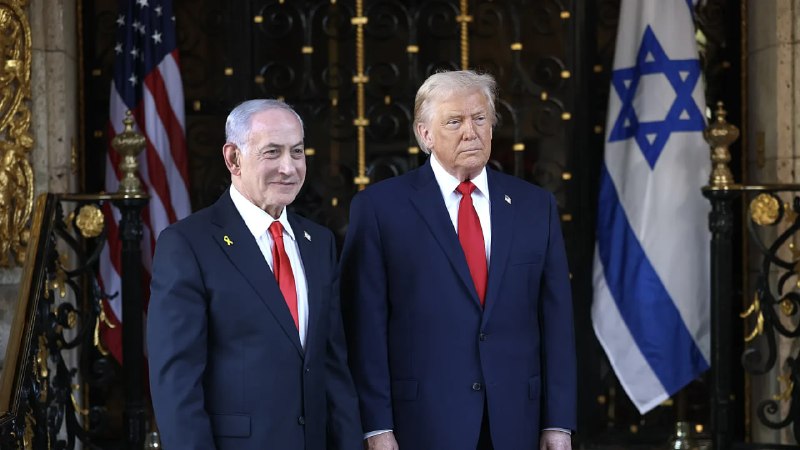
U.S. President Donald J. Trump told Israeli Prime Minister Benjamin Netanyahu in a phone call on Thursday, 9 July 2026 (reported on 14 July), that Israel should begin withdrawing its forces from Syria and redeploy from parts of southern Lebanon, according to U.S. and Israeli officials cited by Axios. The instruction, relayed through back-channels the same day and first surfaced publicly this week, is the most specific directional guidance a sitting U.S. president has given the Jewish state on its post-7 October footprint in the Levant since the late-2024 ceasefire arrangement with Hezbollah took hold. The call lasted long enough for Netanyahu to push back, the officials said; the readout, as relayed to Axios, framed the U.S. request as the start of a phased drawdown rather than a fixed deadline. Public confirmation from the Prime Minister's Office or the White House has not yet appeared.
That absence of a written confirmation is itself the story. Netanyahu has held the line publicly that Israeli troops will remain in southern Lebanon and on Syrian territory as long as the security situation requires, a formulation broad enough to absorb almost any timeline. Trump's Thursday ask, by contrast, comes with a verb: begin. The word does the diplomatic work of converting what had been an open-ended presence into a recognisable, sequenced exit. Neither side has put numbers on it. What is on the record is the direction of travel, and which capital asked for it.
What actually got said
According to the Axios reporting carried by Telegram channels covering the call on 14 July 2026, Trump framed the request in two parts: a full pullback from Syria and a redeployment from parts of southern Lebanon, not a complete evacuation of the Lebanese border zone. The distinction matters. Israeli forces entered southern Lebanon in late September 2024 against a Hezbollah rocket-and-drone campaign that had emptied the north of Israeli towns; the subsequent ceasefire, mediated by the United States and France, called for a staged Israeli withdrawal contingent on Lebanese army deployment south of the Litani River. Israeli commanders have publicly resisted linking their exit to Lebanese state capacity. The Axios account leaves that red line untouched: the U.S. request is a redeployment, not a withdrawal in the ceasefire's narrower sense. On Syria, the framing is starker. Israeli troops have held positions on and around the Golan since the Assad regime's fall in December 2024, citing protection of the Druze community and prevention of Iranian reconstitution; the U.S. request, if implemented, would unwind that posture.
Why the White House is asking now
Two pressures explain the timing. The new Syrian government in Damascus, recognised by Washington in February 2026, has spent the spring demanding an Israeli pullback as the price of a bilateral normalisation track; without it, the file is stuck. And on Lebanon, the Trump administration has signalled, in parallel sanctions architecture and treasury actions against Hezbollah financiers, that the next phase of containment is post-military. From the U.S. side the request also opens diplomatic room: a thinner Israeli footprint gives Washington something concrete to bring to Ankara and Riyadh, two capitals whose posture on Syrian sovereignty has hardened over the past six months. Israeli officials quoted in the Axios reporting pushed back during the call, arguing that the security situation in both countries has not stabilised enough to permit a drawdown. That objection tracks with the public position of the Israeli defence establishment and with the language Netanyahu used in his cabinet remarks on 12 July.
The frame inside which this sits
Read narrowly, the call is a tactical exchange between two governments. Read structurally, it is the working out of an asymmetric patronage relationship under fiscal and political strain. Washington provides the diplomatic shield, the arms, the UN veto. Israel provides the operational presence on the ground. The renegotiation is happening because the cost ledger on both sides is moving: U.S. domestic appetite for permanent Middle East deployments has narrowed further since the November 2025 elections, and the Israeli coalition's own tolerances around a prolonged multi-front presence are thinner than they were a year ago. The transition is being managed, not outsourced. Phased drawdowns with defined conditions are the standard currency of this kind of managed withdrawal, and the verb Trump chose signals that the United States intends to set the tempo, not wait for it.
What is not yet on the record
Three things remain unverified. First, neither the White House nor the Prime Minister's Office has published a read-out; the entire account sits on Axios sourcing attributed to U.S. and Israeli officials. Second, the operational sequencing is unspecified: which units would move first, on what timeline, and under what reciprocal measures from Damascus and Beirut have not been disclosed. Third, the linkage, if any, between this request and outstanding files (the Gaza hostage track, the Iran nuclear file, the Houthi maritime campaign) is not addressed in the reporting. The pattern of the past two years suggests these threads do not move in isolation. The 14 July readout confirms a direction. The negotiation over what the direction buys will take longer.
Desk note: Monexus ran this story on the Axios wire reporting relayed via Telegram channels OSINTdefender, Clash Report, rn_intel and Wfwitness on 14 July 2026, ahead of any official read-out from Washington or Jerusalem. Israel desk continues to elevate Israeli and Western-wire sourcing on the call itself, with regional context on Syrian and Lebanese positioning drawn from the same reporting chain. Quotations from officials are not used in this piece because the reporting attributes statements to anonymous officials rather than to named spokespeople on the record.
Wire provenance
This editorial synthesis draws on the following public wire/social posts:
- https://t.me/s/OSINTdefender
- https://t.me/s/rnintel
- https://t.me/s/ClashReport
- https://t.me/s/wfwitness