Trump rolls out the carpet for Iraq's new prime minister, with Iran-backed militias on the agenda
The new Iraqi premier lands in Washington with disarming Iran-backed militias on the agenda, while the US president adds a fresh warning on Tehran's nuclear intentions.
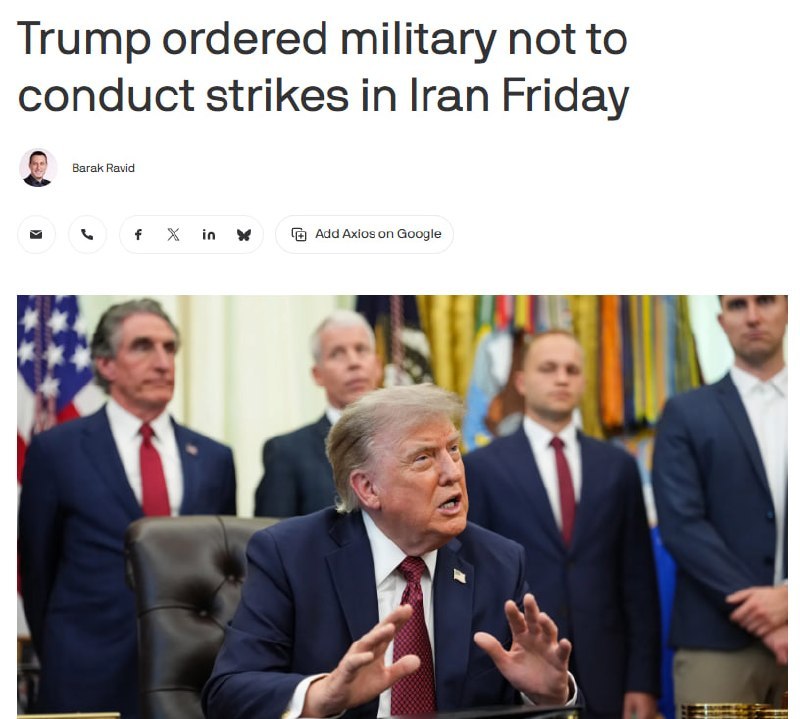
Iraq's new prime minister walked into the White House on 14 July 2026 for a meeting the US side has framed, in advance, as a push to disarm Iran-backed militias. President Donald Trump used the occasion to call him, on camera, "a young and handsome man," a flourish consistent with the personal diplomatic register Trump has adopted across a string of Gulf stops. Trump paired the welcome with a separate warning, delivered the previous day, that Iran would use a nuclear weapon "within one day" if it acquired one.
The visit comes at a moment when Baghdad's relationship with both Washington and Tehran is being redrawn in public. A prime minister taking office in 2026 inherits a state that still hosts US forces, still pays electricity bills to Iran, and still tolerates armed formations that answer, in various degrees, to Tehran rather than to the Iraqi state. The White House agenda reportedly centres on rolling those formations back into a chain of command that runs through Baghdad. That is the same agenda three US administrations have attempted, with varying degrees of seriousness, since 2003.
A new premier, an old file
The new head of government is the central political fact of the moment. Iraqi prime ministers do not enter office without an intra-Shia bargain between the Coordination Framework bloc, the Sadr movement, and Kurdish and Sunni partners, and the man Trump greeted on 14 July is the product of that bargaining. The US president extended the usual rhetorical courtesies; an X post flagged by Polymarket's markets feed at 16:14 UTC on 14 July quoted Trump's "young and handsome man" line, and a PressTV dispatch at 19:06 UTC captured the more substantive "We love Iraq" formulation. PressTV is Iranian state media and the framing leans warm in ways an American wire would not, but the underlying fact, that the meeting occurred and that Trump used personalised language, is corroborated across the two channels.
The White House meeting matters less for its atmospherics than for the file. According to the Polymarket wire at 15:14 UTC on 14 July, the talks were "expected to focus on disarming Iran-backed militias." That is a sharper formulation than the usual bilateral boilerplate. It puts the Popular Mobilisation Forces, the Iran-aligned Kata'ib Hezbollah and Harakat Hezbollah al-Nujaba, and the smaller clerical networks on the table as the central object of the conversation, with the Iraqi state's sovereignty over its own armed formations as the implicit deliverable.
The Iran warning, separated by a day
Trump's nuclear-language intervention arrived one day earlier. On 13 July 2026 at 20:25 UTC, Polymarket carried his remark that Iran would use a nuclear weapon "within one day" if it acquired one. The comment is best read alongside, not against, the Iraq meeting. Tehran's leverage in Baghdad runs partly through the militias that the 14 July talks are supposed to disarm; Tehran's regional posture runs partly through a nuclear threshold the US side insists remains close. The two statements frame a single argument: that the Iraqi file and the Iranian file are the same file, and that the new Iraqi premier is being asked to help close it.
That framing is contested. Iranian state media, of which PressTV is the English-language flagship, treats the US line as a pretext for continued sanctions and a longer-term containment posture, and the Warm White House optics as camouflage for that posture. Western analysts tend to treat the militias as the more immediate problem and the nuclear file as the longer one, with the Iraqi premier caught between the two clocks. Both readings have evidence behind them; what they share is the conclusion that Baghdad has limited room to refuse Washington on either track without rupturing the other.
What the sources leave out
The thread items do not specify which Iraqi politician Trump received, which factions are represented in his cabinet, or whether any specific militia formation was named in the talks. They do not record Iraqi readout language, which on past visits has tended to soften US talking points and to insist on the principle of non-interference. The Iran nuclear line is reported as a Trump remark, not as a US intelligence finding or an IAEA assessment, and the sources do not record an Iranian response in the same window. A reader wanting a fuller picture would need the Iraqi PM's office readout, a State Department summary, and a separate Iranian MFA statement, none of which the present thread provides.
The press cycle also flattens a structural point. Iraq's militias are not a single bloc. Some, including Kata'ib Sayyid al-Shuhada and parts of the Badr Organisation, operate politically inside the state and have spent two decades integrating. Others, including Kata'ib Hezbollah and Asa'ib Ahl al-Haq's armed wing, retain a chain of command that answers outward, not inward. A "disarmament" line drawn through Washington does not, on its own, distinguish between the two, and the Iraqi government's ability to enforce any such distinction is itself a contested question.
The stakes
If the 14 July meeting produces a concrete disarmament timetable, the Iraqi premier will have bought himself something rare, a US-Iraqi agenda that is at once limited and verifiable, and may earn some relief on the sanctions architecture that still governs the Iraq-Iran electricity link. If it produces only another joint communique, the militias will continue to set the floor on Iraqi sovereignty in practice, and the Iran file will remain the lever the US side pulls when it wants Iraqi movement on something else.
The forward markers are narrow. Watch for an Iraqi readout that names specific formations; for an Iraqi Council of Ministers decision on integration or demobilisation; for a US Treasury action on Iraqi banks serving Iranian trade; and for any Iranian response framed in terms of "Iraqi sovereignty," the phrase Tehran reaches for when it wants to object without breaking the bilateral. The new premier's political shelf life depends on whether any of those move before the next electoral cycle forces another bargain.
How Monexus framed this: the wire accounts lean on atmospherics. This piece treats the meeting as a working session on a specific file, militia disarmament, and reads Trump's separate Iran warning as the context that gives the file its weight.
Wire provenance
This editorial synthesis draws on the following public wire/social posts:
- https://t.me/presstv/