Trump opens the throttle on Iran, refuses to ground the option
Three statements inside forty minutes on 14 July 2026: open-ended strikes, no exclusion of a ground campaign, and a blanket dismissal of Tehran's messaging. The escalation is no longer rhetorical.
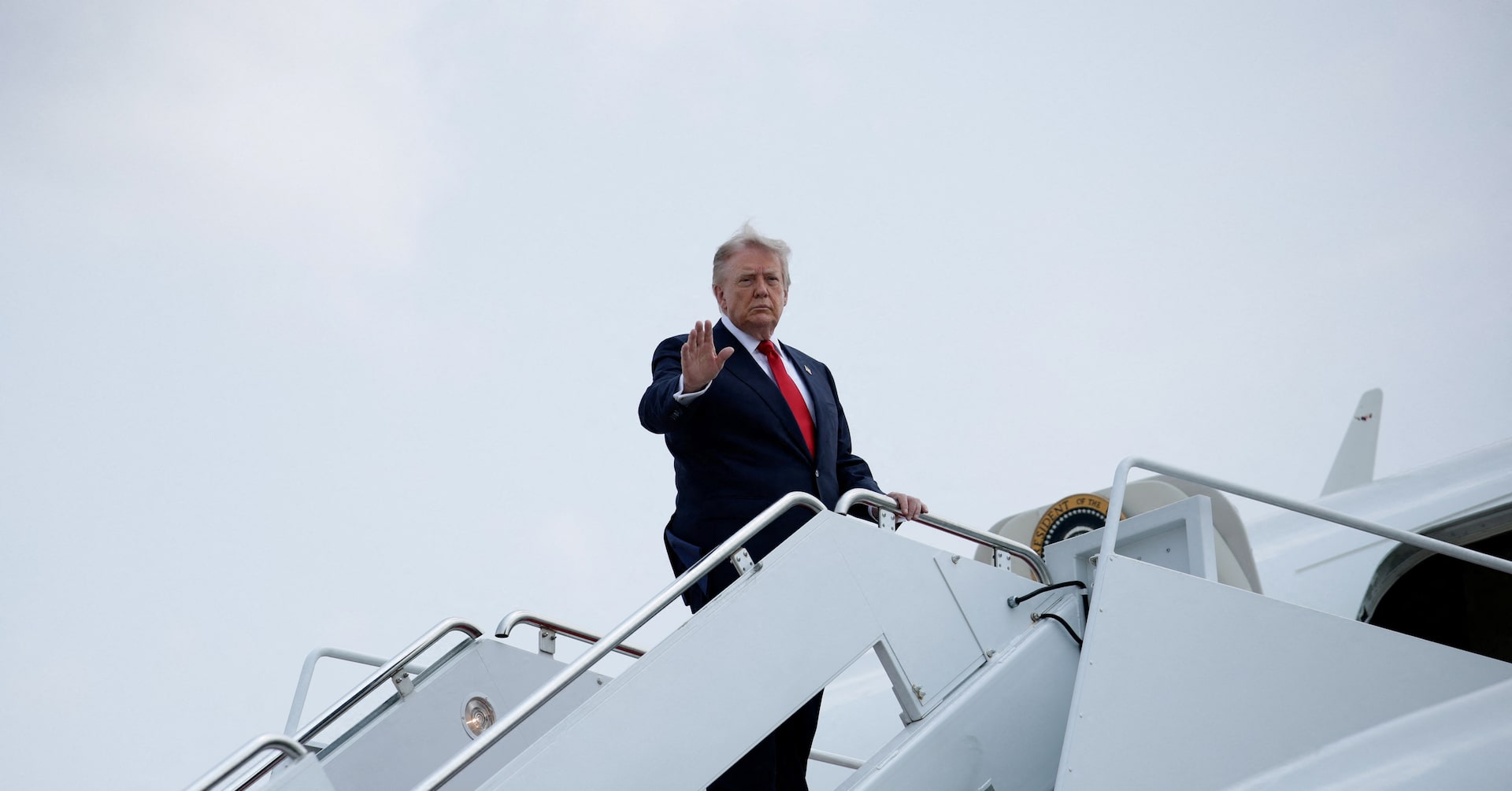
Donald Trump told reporters on 14 July 2026 that the United States will keep striking Iran "until I say it's enough," in remarks captured by the Insider Paper wire at 22:15 UTC. Forty minutes later, at 22:49 UTC, a Polymarket breaking-news bulletin recorded the president declining to rule out a ground campaign against the Islamic Republic. By 22:58 UTC, the ClashReport wire had Trump on camera dismissing Iranian statements wholesale: "Everything they say is a lie. I've never seen anything like it."
Three statements inside forty-three minutes, and they amount to a single decision: the air campaign is open-ended, the ground option is on the table, and Tehran's diplomatic signalling no longer registers as input. The escalation has stopped being rhetorical.
The campaign that won't name its end-state
The first statement, delivered in Trump's characteristic run-on syntax, does something more consequential than posturing. It converts a punitive strike package into a discretionary war, with the off-ramp held entirely in the president's hands. The framing of "until I say it's enough" is not the language of a defined military objective, the destruction of a specific facility, the degradation of a named capability. It is the language of mood.
That matters for two reasons. First, the absence of a stated end-state makes it harder for allied governments in the Gulf and in Europe to calibrate their own public positions. The pattern in Washington in recent rounds of Iran coercion has been for the White House to brief partners on a finite, technically bounded action set, then expand the set quietly. The 14 July framing inverts that: the action set is now declared infinite, the only variable is the president's judgement of "enough." Second, it removes the political cost of continuation. A war with a stated objective can be judged a failure when that objective is unmet. A war with no stated objective can only be judged by whether the man running it has decided to stop.
The ground option, openly on the table
The Polymarket capture of Trump's refusal to rule out a ground campaign is the more consequential of the three statements, because it relocates the centre of gravity of US force posture. Air and missile strikes, however sustained, are politically consumable in the United States when framed as a substitute for the much costlier option of putting American service members on Iranian soil. The moment a sitting president declines to take that option off the table, the substitution argument collapses.
Two things follow. The Iranian command, which has spent three decades planning around the assumption that Washington would not absorb the casualties that a ground invasion would entail, now has to plan against the possibility that it will. And US Central Command, which has spent the same period optimising for standoff strikes, Iranian proxy containment, and Israeli-led ground manoeuvre, now has to revisit the force-flow assumptions that underpinned every deployment order since the 2003 Iraq drawdown. Neither of those recalibrations is visible to the public yet. Both will surface, in deployment orders, in Congressional notification letters, or in the movement of pre-positioned stocks.
Why the dismissal of Iranian messaging matters
The third statement, the flat denial that anything Tehran says can be taken at face value, looks like the throwaway line of the three. It is the most informative.
A negotiation requires a counterparty whose statements the other side treats as data. Once Washington publicly treats Iranian statements as a uniform liar field, the negotiation track becomes a domestic-political prop rather than a substantive channel. The White House can continue to receive Iranian messages through back-channels, and probably will, but it cannot publicly credit them without contradicting the president's own characterisation. That forecloses a class of de-escalatory moves that previous administrations, including Trump's first term, used to compress the cycle of strikes and counter-strikes: the tactical ambiguity that lets both sides claim they got something without admitting the other side's framing.
The structural reading is straightforward. The administration has decided, for the moment, that the political value of projecting unpredictability inside Iran outweighs the value of any specific concession Tehran might offer. The gamble is that visible unpredictability will harden Iranian elite paralysis. The risk is that the same unpredictability hardens, instead, the Iranian elite's conviction that there is no deal-shaped off-ramp available at any price.
What remains genuinely uncertain
The wire items captured on 14 July record three statements. They do not record a target list, a casualty figure from either side, a Congressional notification, or a coalition posture. The Polymarket bulletin in particular is a market-feed capture of a comment, not a deployment order, and ground-campaign rhetoric from this White House has, in prior Iran cycles, not always been followed by ground-campaign preparation.
The sources available to Monexus at the time of writing also do not specify which Iranian facilities have been struck in the most recent round, whether Iranian retaliation has been observed beyond the messaging track, or whether Gulf state partners have been formally consulted on the open-ended framing. These are the next data points to watch: an Iranian retaliatory strike with attribution, a Congressional notification letter naming expanded authorities, or a public statement from a Gulf capital either backing or distancing from the open-ended framing. Any of those will move the structural reading materially.
The honest summary at 23:00 UTC on 14 July 2026 is that the United States has publicly committed to an open-ended strike campaign against Iran, declined to take a ground operation off the table, and pre-emptively delegitimised Iranian diplomatic output. What it has not yet done, in the material available to this publication, is tell its own public, its allies, or its adversaries what would count as enough.
Desk note: Monexus read three wire captures from the evening of 14 July 2026 and stuck to what each one actually recorded. The story will move quickly; the next filings to watch are Congressional notification letters, Iranian retaliatory action with attribution, and any Gulf state distancing from the open-ended framing.
Wire provenance
This editorial synthesis draws on the following public wire/social posts:
- https://t.me/insiderpaper
- https://t.me/ClashReport