Trump's power-plant ultimatum: Tehran has days, not weeks, to make a deal
On 14 July 2026 the US president said Iran will lose its power grid within a week unless it signs, framing a campaign of strikes as a deal-making instrument rather than a war aim.
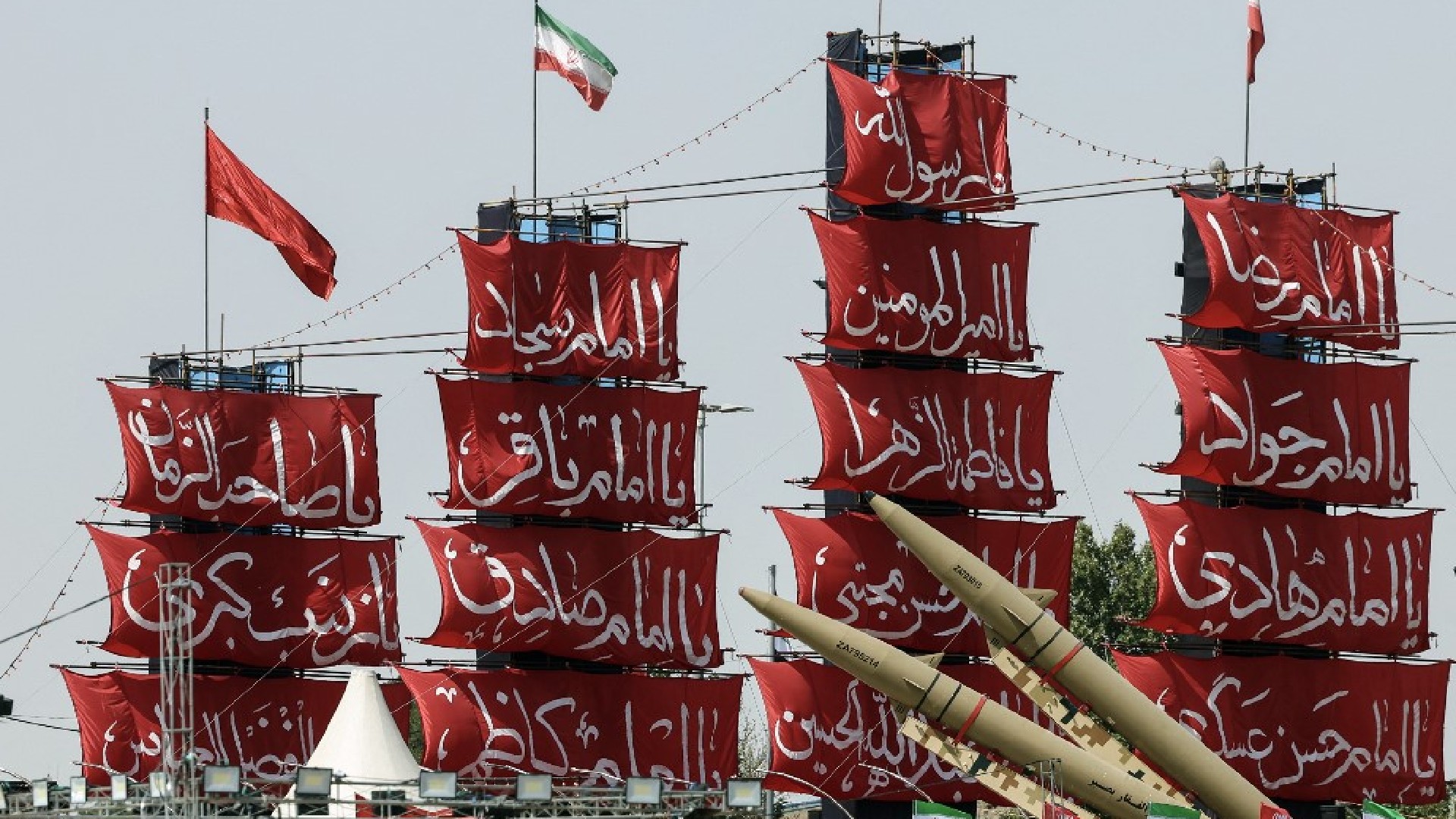
At 22:30 UTC on 14 July 2026, channels carrying the president's live remarks lit up with a single line: the United States would hit Iranian power plants within a week if no deal materialised. By 23:24 UTC, Deutsche Welle had put a longer quote on the record, with the president saying US strikes on Iran would continue "until I say it's enough." Between those two timestamps the public message hardened twice: first, that the bombing would not stop; second, that it would expand to key infrastructure, with the notional end-state being a signed agreement rather than a battlefield outcome.
The episode is less a fresh war decision than the latest iteration of a coercive pattern that has defined US-Iran dealings for decades. What changes the calculation in July 2026 is the public fusion of a deadline, a target list, and a self-assigned off-ramp held entirely in the White House. The combination reframes the campaign: the strikes are no longer a means to degrade capacity in service of a negotiation, they are a means to make a refusal of negotiation intolerable. That is a different military instrument, with different humanitarian accounting, and it deserves a different name.
The two-clock ultimatum
The first clock is the headline threat. The president told reporters on 14 July that the United States would strike Iranian power-generation facilities next week if Tehran does not agree to a deal. The message was repeated across the president's own messaging channels, then propagated by Telegram accounts including BRICS News (22:39 UTC) and the Megatron aggregate (22:30 UTC), and surfaced in raw video posted to X (formerly Twitter) by @shaykhsulaiman at 22:46 UTC. The framing of the deadline is short and binary: a deal, or the grid.
The second clock is the open-ended one. Deutsche Welle's 23:24 UTC write-up records the president saying strikes would continue "until I say it's enough" and would escalate to key infrastructure if negotiations do not produce results. Read together, the two statements are a layered threat: a defined near-term action (power plants, within roughly seven days) gated on a defined behaviour (signing), underwritten by a discretionary, unconstrained campaign that runs at the sole judgement of the US president. The deal is the off-ramp; the absence of a deal is not.
The asymmetry is the point. The threat is calibrated so that the cost of refusing is presented as larger than the cost of accepting, but the cost of accepting is itself opaque. The administration has not put the contours of a deal on the public record in the same window. Tehran is asked to sign against a moving backdrop, and to do so before the next category of target is added to the list.
What the wire says, and what it does not
Reporting across the public record converges on the threat, the deadline and the open-ended nature of the campaign. Beyond that, the available material is thin. The president's quoted language is consistent across channels and the Deutsche Welle write-up; what is missing is any official Iranian response in the public sources reviewed here, any specific target list, any pre-conditions on the table, and any independent verification of the deal-or-strike binary.
The sourcing base is also narrow. The statements propagated through BRICS News and the Megatron aggregate are channels of convenience, useful for the timestamped record but not primary documents. The closest thing to wire confirmation is the Deutsche Welle piece, which frames the remarks in the same conditional logic. The X video by @shaykhsulaiman is a raw on-the-record clip, valuable for the president's own words but not for context. What the public record does not yet show, in the items available to this publication: any read-out of a parallel diplomatic channel, any statement from the Iranian foreign ministry, any OPEC-side commentary, or any insurance-market reaction in the Strait of Hormuz. The absence is itself a story.
Two structural cautions follow. First, the remarks sit inside a long pattern of escalating public deadlines that have not, to date, produced a finalised nuclear arrangement. Treating the latest threat as a definitive pivot risks under-reading the pattern. Second, "power plants" as a category is broader than nuclear sites. Striking civilian electrical generation is a step with documented humanitarian consequences in other recent conflicts, and is qualitatively different from striking hardened nuclear infrastructure. The framing on the record is the first; the targeting list, if it ever becomes public, is the test that matters.
The strategic logic: coercion without commitment
Read as strategy rather than theatre, the ultimatum borrows from a familiar playbook. Set a public, dated, narrow demand. Attach a pain threshold that the adversary cannot publicly absorb. Hold the off-ramp unilaterally. Repeat until the adversary either signs, breaks, or finds a sponsor willing to underwrite refusal. The instrument is not new; the open-ended second clock is what makes this version distinctive, because it converts a defined military action into a discretionary permission structure.
The corollary, often under-discussed, is the cost of acceptance. A deal on these terms is not a settlement, it is a surrender-averting instrument. The Iranian state's incentive to sign in the next seven days depends on its internal political economy, its read of US follow-through after a signed agreement, and the cost of a power-grid strike relative to the cost of an unfavourable deal. The public record reviewed here provides no purchase on those variables. Tehran's own framing of the ultimatum, when it surfaces, will set the next round of the story.
The second structural point is the role of the "until I say it's enough" language. It places the conflict's duration inside a single office, with no external arbiter and no documented sunset. In a contest between two states with no supranational referee, the rational move for the side holding the discretionary lever is to keep using it. That is a description, not a moral claim. It is the same logic that critics of US posture have warned about for two decades, and the administration is now operating inside it openly.
A counter-read: pressure, not war
A plausible alternative reading is that the language is a negotiating instrument calibrated to produce a deal, not a campaign plan. Under that reading, the power-plant threat is the most extreme line item on a list intended to bring Tehran to the table on terms short of capitulation. The "until I say it's enough" phrase, in this read, is a posture statement rather than a war plan, and the next week will be filled with shuttle diplomacy and back-channeled terms rather than with target packages.
The reasons to take that read seriously are the pattern of prior episodes, in which public deadlines have been extended, narrowed or quietly walked back, and the fact that a grid strike without a deal on the table is a humanitarian intervention of a kind the US has historically been reluctant to own, particularly in a pre-election cycle. The reasons to doubt it are equally real: the second clock is discretionary, the target category is not, and the absence of a parallel diplomatic public record suggests the pressure track is the main track, not a parallel one. The honest answer is that the public material reviewed here cannot distinguish the two reads; the next 48 to 72 hours of Iranian official statements and any US Treasury or State Department action will.
Stakes, by category
If the threat is carried out, the first-order cost falls on Iranian civilians: grid loss in summer heat, with downstream effects on water treatment, hospitals, and the refrigeration chain that underpins food and medicine distribution. Reporting has not yet specified which facilities are in scope, what redundancy the Iranian system has, or whether any pre-conditions have been communicated through the IAEA or through intermediaries. The Iranian state can absorb strikes; the population cannot absorb them in silence.
The second-order cost falls on the oil market and on the global energy architecture. The Strait of Hormuz sits within range of the conflict zone, and any Iranian response that touches that chokepoint propagates instantly into gasoline, diesel and LNG pricing. The third-order cost is diplomatic. Allies and partners asked to underwrite a campaign framed as a presidential prerogative will weigh the precedent: that US force can be calibrated, escalated, and terminated at the discretion of one office, with no allied consent embedded in the decision chain. The fourth order is the non-proliferation regime itself, which has been weakened by a decade of declared-and-undone deals, and which does not benefit from a process whose end-state is signature rather than verification.
The forward markers worth watching are concrete. First, an Iranian foreign ministry statement, expected within hours if the threat is taken at face value. Second, any IAEA read-out touching Fordow, Natanz or Isfahan, which would clarify whether the "power plant" target set is civilian generation or hardened nuclear infrastructure. Third, Treasury OFAC movements, which would indicate whether the secondary-sanctions track is being widened in parallel with the kinetic one. Fourth, market behaviour in Brent and in the freight derivatives that price the Strait. Fifth, the next 72 hours of named-source reporting, which will be the test of whether the ultimatum is the opening bid of a settlement or the first line of a longer campaign.
What this publication can say, on the record as of 14 July 2026 at 23:59 UTC, is limited. The president has set a dated threat against a defined target category. The threat is underwritten by an open-ended second clock with no external limit. The Iranian response on the public record is not yet visible in the items reviewed. The structural frame is coercion by deadline, in a contest with no arbiter other than the office that set the deadline. The rest is a question the next week will answer, one target list or one diplomatic channel at a time.
Desk note: Monexus is treating the 14 July 2026 statements as coercion framed in deal-making language, not as a declared war aim. The article weights the president's own remarks and the Deutsche Welle summary as the primary record, and reads the Telegram aggregates as timestamped carriers of those remarks rather than as independent reporting. Where the public material is thin, the piece says so. Future coverage will hinge on the Iranian response, any IAEA read-out, and the next round of named-source reporting that moves the story from threat to action.
Wire provenance
This editorial synthesis draws on the following public wire/social posts:
- https://t.me/megatron_ron
- https://t.me/BRICSNews
- https://t.me/BRICSNews
- https://t.me/bricsnews
- https://t.me/megatron_ron
- https://x.com/shaykhsulaiman/status/2077162452228177920