Trump turns the screws on Iran's grid as blockade, aid bill and ground-war talk collide in a single 24-hour window
Within hours on 14 July 2026, the US announced a 4 PM ET blockade of Iran, the President threatened strikes on Iranian power plants 'next week' without a deal, and Senate Democrats froze a $1.15 trillion defense bill tied to the operation.
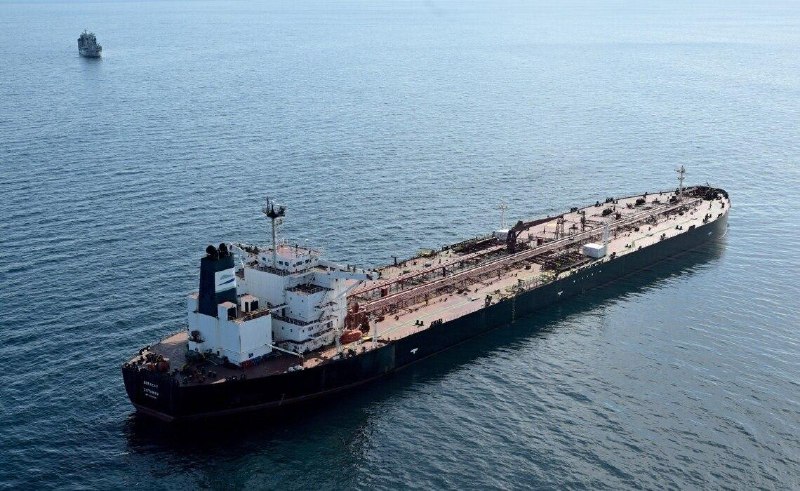
At 4 PM Eastern Time on 14 July 2026, the United States formally activated a maritime blockade of the Islamic Republic of Iran, the operational start time announced by the U.S. military earlier in the evening. In the same 24-hour window, President Trump told reporters he has already ordered strikes tonight and tomorrow and will hit Iranian power plants next week if there is no deal, according to two independent Telegram posts tracking the comments. On Capitol Hill, Senate Democrats moved to block debate on a $1.15 trillion defense authorisation bill written to fund the Iran operation and deeper U.S.-Israel military cooperation. Three escalatory levers have been pulled at once, on a single day, with no public negotiating track left open. The administration's leverage strategy has begun to look less like a pressure campaign than an opening move in a campaign plan.
What is on the table is no longer a faster sanctions regime. It is the deliberate targeting of Iran's civilian electricity grid, the physical closure of the Strait of Hormuz to sanctioned traffic, and a trillion-dollar military supplemental built around the assumption that the operation will continue into the next fiscal year. The clue that this is being run as a single integrated posture, not a series of coincidences, is the synchronisation. The blockade start time, the threat of strikes on Iranian energy targets, and the funding fight on Capitol Hill were all out in the open within roughly two-and-a-half hours.
What the administration actually ordered
The blockade announcement was the cleanest of the three signals. In a post timestamped 19:52 UTC on 14 July, the U.S. military formally notified that the Iran blockade would go into effect at 4 PM ET on 14 July. The framing was administrative, almost bureaucratic, which is itself part of the signal: a blockade is a law-of-the-sea operation that runs continuously, and naming the exact go-live hour tells Iran, its oil customers, and shipowners globally that the U.S. Navy intends to maintain a presence rather than choreograph a one-day stunt.
The energy-target threat came in two parts, both from President Trump. The first, captured on Telegram by channel Megatron_ron at 22:30 UTC on 14 July, was the open-ended line: 'I am going to hit Iran power plants next week if no deal.' The second, captured on the wfwitness channel at 22:23 UTC, was that the President said he had ordered strikes tonight, tomorrow and would ultimately order strikes on energy targets in Iran if negotiations do not progress. Both tracks of reporting converge on the same escalation: civilian-grid infrastructure on the table, with a one-week fuse.
The Polymarket signal on a ground campaign went up shortly after. At 22:49 UTC on 14 July, a market-line feed carried the headline that Trump is refusing to rule out a ground campaign against Iran. That claim is, strictly, a forecast and not a confirmed order; but as a temperature reading of where the administration wants the conversation to sit, it is telling. Polling markets on this cluster of questions do not move when governments are bluffing in a routine sanctions dispute. They move when operators with privileged information believe the distribution of outcomes has shifted.
The defense bill is the third piece. Senate Democrats moved to block debate on a $1.15 trillion defense authorisation bill connected to the Iran operation and 'deeper U.S.-Israel military cooperation,' per a Polymarket wire at 20:39 UTC on 14 July. The dollar figure is large enough to cover a multi-year, multi-theater reorientation: ground force sustainment, naval stockpiles, munitions replenishment, Israeli coordination lines, basing access. Blocking debate is not a vote against the war; it is a procedural move that keeps the bill alive and the pressure on Majority Leadership while signalling to the administration that the domestic political runway is finite.
The blockade's energy logic
A naval blockade of Iran is, materially, an energy-supply intervention before it is a military operation. The Persian Gulf carries roughly a fifth of global seaborne oil and a meaningful share of LNG. Even a partial, well-publicised interdiction reroutes cargoes, lengthens voyages, drives insurance rates, and forces Tehran's customers to find alternative barrels. That price pressure runs two ways: up for everyone who buys Gulf crude, up for Iran because its discount must widen to compensate for war risk.
When you stack a Hormuz interference on top of an explicit threat to Iran's power plants, the combined effect is to threaten the two commodities that the Iranian state's revenue and the Iranian street depend on. Oil pays the budget. Electricity keeps the cities lit and the cooling towers running. Target both, and you are not asking Tehran to negotiate; you are engineering the conditions under which its domestic coalition faces the choice between concessions and rationing.
This is the logic on which the strategy turns. The blockade does the diplomatic work by raising the cost of waiting for everyone. The power-plant threat sets a hard, dated deadline. The defense bill signals that Washington intends the campaign to last longer than a single news cycle. Read together, they describe a posture closer to the 1991 Gulf War's sequencing than to a sanctions-plus posture. That is not a normative judgment; it is a description of what the public record on 14 July supports.
What is not yet on the table
Three big uncertainties sit underneath the day's announcements. The first is Iranian response options. Tehran retains a missile and proxy inventory that can reach U.S. regional bases, Israeli cities, and Gulf tanker traffic. None of the thread items reviewed here addresses how Iran has calibrated its response; the public reporting in this window is almost entirely U.S.-side. The second is oil-market reaction. The Polymarket and Telegram material reviewed here carries no commodities print; reliable reporting on whether Brent or the relevant dated benchmarks moved will need to come from a wire outside the cluster we read today. The third is Congressional mechanics. A block on debate is a delay tactic, not a defeat, and Majority Leadership can reroute the bill through other procedures. Whether the bill resurfaces this week, next week, or after the August recess is the variable that determines how durable the authorisation is.
A plausible alternative read is that the three announcements are a coordinated coercive offer rather than the opening of a hot campaign: the blockade and power-plant threats as the stick, the defense bill and continued diplomacy as the table. That reading is consistent with the rhetoric but in tension with the explicit dating in the President's own comments ('tonight,' 'tomorrow,' 'next week'), which sounds more like a checklist than an offer. The dominant framing, on this evidence, is that the administration is conducting escalation in compressed intervals and watching how the Iranian negotiating position compresses in response.
The next seven days
The date that matters now is 21 July 2026. That is the back end of the 'next week' window in which President Trump has publicly committed to striking Iranian energy targets if there is no deal. Whether that date holds or slips will be the single most informative data point about whether 14 July was the high-water mark of a pressure campaign or the first day of something longer. In the interim, the naval operation runs continuously; oil customers and shipowners will price the Strait daily; Iran will signal, formally or otherwise, whether it intends to tolerate a sustained interdiction of its export routes.
For the United States, the runway is shorter than the dollar figures suggest. A $1.15 trillion defense bill held up by a procedural block is a bill that the administration wants but cannot yet pass. The political clock and the operational clock are now visibly misaligned, and the next test is whether the President treats the deadline he set himself as binding or as opening gambit. On the evidence of 14 July alone, he has not closed that ambiguity, and the rest of the strategy depends on which way he closes it.
Wire provenance
This editorial synthesis draws on the following public wire/social posts:
- https://t.me/megatron_ron
- https://t.me/wfwitness