Sixty Days and Counting: Trump's Iran Notification Quietly Resets the War Clock
The administration frames a single letter as a 60-day authorisation for force against Tehran. The financial reaction was immediate; the constitutional one is still being written.
At 02:50 UTC on 14 July 2026, Reuters moved a wire that landed like a quiet tremor on Capitol Hill: President Trump had formally notified Congress that hostilities against Iran resumed on 7 July, a letter the administration reads as opening a fresh 60-day window for the use of military force in the region (Reuters, 14 July 2026, 02:50 UTC). Less than two hours earlier, the same wire had carried the price tag for that letter: US tech shares slid after Trump announced the reinstatement of a blockade on Iranian ports, the latest escalation in a US-Iran confrontation that pushed crude prices sharply higher (Reuters, 14 July 2026, 00:40 UTC).
The pattern is familiar, but the paperwork is new. A formal War Powers-style notification is not a declaration of war; it is an assertion that the executive believes it already has the authority to keep striking, and wants Congress on the record as having been told. The 60-day clock is what hawks in previous administrations have used to convert a not-quite-authorised bombing campaign into something functionally indistinguishable from one. Whether that conversion holds depends on whether the legislative branch chooses to read.
The third night
By the time the notification was filed, CENTCOM had already published its third straight night of strike orders. On 14 July at 00:05 UTC, the command's official account posted: "At the order of President Trump, we have launched airstrikes against Iran for the third night in a row." Three minutes later, the same broadcast pool carried the President's own framing of the campaign: "We will hit them very hard tonight, and we will hit them very hard tomorrow. And they can't do anything about it. They have nothing but loud words" (sprinterpress wire, 14 July 2026, 00:08 UTC). The cadence of presidential rhetoric matches the cadence of CENTCOM releases, which is itself a kind of authorisation.
Earlier open-source reporting on the night described the operation as a "coordinated, heavy bombardment campaign targeting key Iranian military infrastructure situated across the country," with imagery attributed to a Visioner account circulating on Telegram (OSINT Live, 13 July 2026, 19:43 UTC). The phrase "military infrastructure" does a lot of quiet work. It positions Iran's nuclear, missile, and command-and-control sites inside a frame that justifies both the blockade and the air war without requiring a named target list for the public.
The market read
The financial reaction was the first verdict, and it was unambiguous. Reuters reported that the port-blockade announcement pulled tech shares lower and pushed oil up (Reuters, 14 July 2026, 00:40 UTC). A blockade on Iranian ports is a supply-side shock in the same family as the 2024 Houthi disruption of Bab el-Mandeb traffic, but with a critical difference: the shipping lane in question is the Strait of Hormuz, through which roughly a fifth of seaborne oil moves on any given day. Even a partial disruption ripples through diesel, jet fuel, and Asian refining margins before it touches equities.
Tech's particular sensitivity is worth flagging. US semiconductor and platform names are heavily exposed to Gulf-state sovereign wealth as anchor investors; a sustained risk premium on regional crude tends to redirect that capital toward domestic oil, gas, and defence names, away from long-duration growth. The leadership of the market response tells you who the financial system thinks pays for this war and who profits from it.
The constitutional question nobody is asking yet
A War Powers notification is a peculiar document. It does not ask permission; it informs. The clock it starts is the one on which Congress is meant to act if it intends to compel a withdrawal or pass an authorisation. In practice, since the 1973 resolution passed, that clock has run out only once (the 1973 act itself, in 1975, via concurrent resolution vetoed and overridden), and the executive has consistently treated silence as consent.
The structural read is plain: the executive branch has learned, over five decades, that a notification is cheaper than a debate. A 60-day window turns a contested bombing campaign into a routine operation that Congress can interrupt only at the cost of voting against the troops. That is not a bug of the system; it is the system, working as the executive wants it to work.
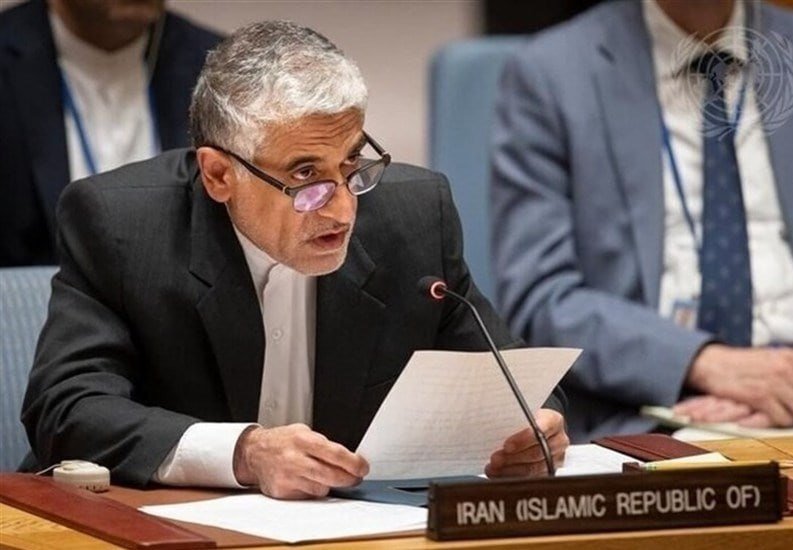
Iran's read, predictably, is the inverse. Tehran frames US action as a violation of sovereignty and a continuation of a long sanctions-and-strike regime that has run, on and off, for the better part of half a century. Without an Iranian outlet in the immediate thread, the line sits as the structural counter-frame: any escalation that does not include a Tehran return-channel is not de-escalation, however the White House packages it.
Stakes, on a longer clock
The 60-day window is the next inflection point, but the deeper question is what comes after it. If Congress allows the clock to expire without acting, the next administration inherits a precedent that a presidential letter to the speaker is sufficient grounds for sustained regional bombing. If Congress passes an authorisation, the war is no longer an executive project but a legislative one, with all the floor votes and committee hearings that implies. If Congress passes a withdrawal mandate and is overridden, the constitutional centre of gravity shifts visibly toward the executive.
For now, the immediate horizon is shorter and more legible. Crude markets will price the Strait of Hormuz risk for as long as the blockade holds. Tech leadership will trade with oil. Iran's retaliation, when it comes, will be asymmetric and timed for maximum political cost in Washington. The next data points to watch are the next CENTCOM strike release, the next Reuters wire on the oil tape, and whether any member of Congress introduces a privileged resolution before the August recess. Three legible signals in a conflict where most of the action is meant to be opaque.
The sources do not specify casualty figures on either side, the exact list of targeted sites, or any Iranian official readout. That silence is itself a fact about how the war is being reported from Washington: the legal scaffolding is published; the human cost is not.
Desk note: Wire coverage led on the notification itself; we treat the 60-day clock as the news, not the airstrikes it launders.
Wire provenance
This editorial synthesis draws on the following public wire/social posts:
- https://x.com/reuters/status/2076817757354840064
- https://x.com/reuters/status/2076813996917669888
- https://x.com/sprinterpress/status/2076821014340632576
- https://x.com/sprinterpress/status/2076817757354840064
- https://t.me/osintlive