Trump pulls back from Hormuz tolls, turns the squeeze on Gulf capitals
Within hours of floating a 20% transit fee on Hormuz shipping, the US president reversed course and asked Gulf monarchies for 'investments' instead, leaving Iran untouched and shippers still paying wartime premia.
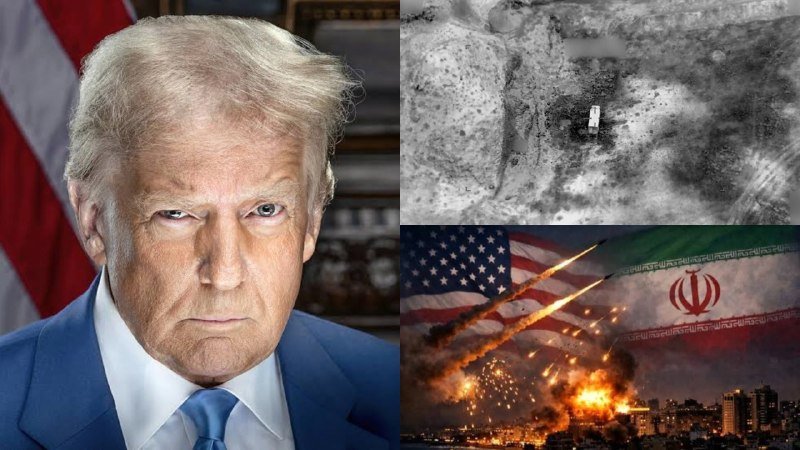
At 15:10 UTC on 14 July 2026, three Telegram channels monitoring Middle East wire traffic began carrying the same AP-sourced line: US President Donald Trump had abandoned his plan to charge ships a 20% fee for transiting the Strait of Hormuz, and would instead ask Gulf monarchies for "investments." Within the next six minutes, two more channels confirmed the reversal, one citing a Truth Social post declaring the waterway "open to all commercial shipping except vessels travelling to or from Iran," another restating the pivot from tolls to bilateral deal-making.
The sequence matters more than the substance of any single post. A US administration had publicly floated, then retracted, a unilateral toll on one of the world's two most strategic maritime chokepoints, all inside an afternoon. The retreat is not a concession to international law. It is a redirection of the same extractive impulse, from shippers to sovereigns.
What changed, and what didn't
The original proposal, reported earlier in the week and discussed across Gulf diplomatic circles, would have seen Washington collect a 20% transit levy on commercial shipping moving through the strait that connects the Persian Gulf to the Gulf of Oman. The idea tracked with the administration's transactional instinct: if global commerce depends on a corridor the US Navy guarantees, why not price the guarantee? Per the Telegram aggregator Middle East Spectator, Trump confirmed on 14 July that he "won't charge 20% fees from ships transiting the Strait of Hormuz" and would pivot toward "'investments' from Gulf states instead."
The carve-out for Iran-bound and Iran-departing tonnage, embedded in the Truth Social text relayed by the War and Foreign Witness channel, is the surviving enforcement mechanism. The naval blockade announced earlier this year remains in force. Iranian-flagged vessels, and any commercial ship judged to be servicing the Islamic Republic, are still subject to interdiction. Everyone else now sails free of the new toll, at least on paper.
The shift is best read as a swap of counterparties, not a softening of posture. Washington is moving from taxing the global merchant fleet to soliciting checks from Riyadh, Abu Dhabi and Doha.
The Gulf is being asked to pay for a security it already bankrolls
Gulf monarchies have financed the US military presence on their soil for decades, hosting the Fifth Fleet in Bahrain, the Al Udeid air base in Qatar, and pre-positioned US armour across the Saudi interior. The Strait of Hormuz is not a neutral waterway the US Navy began patrolling in 2025. It has been the operational centre of gravity for CENTCOM since the Iran-Iraq war's Tanker War phase in the late 1980s.
Asking those same states for additional "investments", the word Trump used across both AP-sourced and aggregator channels, at a moment when Brent has been trading with a wartime risk premium, reads as a renegotiation of the existing arrangement rather than a new one. The pitch is straightforward: Iran is contained, your tankers are safe, your refineries are running, the blockade is doing the work, now write the cheque.
Gulf capitals have reasons to engage and reasons to resist. On one side, the assurance of free Hormuz transit for non-Iranian commerce is exactly what their export-dependent economies need from Washington right now. On the other, the same Gulf states are pursuing diplomatic re-engagement with Tehran through Chinese-mediated channels, signing security compacts with Moscow, and welcoming BRICS+ partners whose preferred settlement currency is not the dollar. A visible US shakedown, even one repackaged as partnership, complicates a hedging strategy that has served them well.
Shippers caught the relief, traders did not
The immediate market reaction, to the extent the day's Telegram traffic captures it, is a hedge. Energy traders and tanker owners had spent the prior 48 hours pricing in a 20% transit surcharge, modelling its pass-through into delivered crude prices across Asia, and rerouting charter decisions around the assumption of friction. The reversal unwinds the surcharge expectation but not the underlying blockade or the Iran-specific interdiction risk.
That distinction is the article. A shipper moving Saudi crude to a refinery in India or a petrochemical terminal in South Korea now has clarity: the corridor is open, no toll. A shipper moving Iranian crude, or any cargoes routed through Iranian refining or insurance arrangements, is still in the crosshairs. The shadow price on Iran-touching tonnage, already elevated by Lloyd's-listed war-risk underwriters and P&I clubs, does not ease with this announcement.
For the wider market, the relief is partial. The risk premium attached to any cargo that might be adjudicated Iranian, even tangentially, persists. Insurance markets will keep war-risk premia wide until the naval blockade is formally lifted or until Iran reaches the kind of nuclear-monitoring arrangement Washington has signalled it would accept.
The structural read, without the slogans
This is hegemonic transition expressed in transactional terms. The incumbent order cannot, in 2026, simply declare a toll on a global commons and expect acquiescence. Shippers, flag states, and the Gulf host governments would have litigated, legislated, and rerouted around it within weeks. The pivot to bilateral "investments" is the same economic logic, routed through a smaller set of counterparties who cannot easily refuse.
The dollar dimension is the unstated backdrop. Gulf "investments" denominated and deployed in US Treasuries, US defence procurement, and US infrastructure funds recycle petrodollar surpluses back into the chassis of the order that secures their export routes. A formal transit toll would have extracted the same value once and visibly; an investment stream extracts it on a rolling basis, quietly, and with bilateral political cover on both sides.
The asymmetry is who bears the cost. Under the toll proposal, the cost fell on shippers globally, with downstream effects on importers from Tokyo to Lisbon. Under the investment pivot, the cost falls on Gulf sovereign balance sheets, which have the deepest reserves and the most leverage to absorb it, but which are also the same actors hedging toward Beijing and Moscow. Washington is pricing the hedge.
What remains unresolved, and what to watch next
The Telegram traffic does not specify the size, instrument, or duration of the "investments" the administration is seeking. It does not name which Gulf states are being approached first, nor does it indicate whether the ask is calibrated to current oil prices, volumes, or political alignment. The channels reporting the reversal are aggregators relaying AP and the president's own posts; they do not, at this hour, contain a Gulf counter-offer or a formal diplomatic readout.
What is visible is a deadline function. The administration's leverage peaks when the blockade is newsworthy and the wartime premium is fresh. Every week that passes without an Iranian accommodation, Gulf capitals have more time to organise a coordinated counter-offer, or to wait out the cycle. Watch for two signals in the next fortnight: a Treasury or State Department readout naming a specific Gulf capital that has agreed to a new instrument, and any change in the language used by Saudi or Emirati officials about the blockade's "temporary" character. Either would tell you whether the pivot is sticking.
Wire provenance
This editorial synthesis draws on the following public wire/social posts:
- https://t.me/Middle_East_Spectator
- https://t.me/wfwitness
- https://t.me/WarMonitors