Trump floats Hormuz opening to all shipping except Iran as Friday Geneva signing nears
US president says the Strait of Hormuz will be open to all shipping except Iran, hours after Tehran and Washington confirmed a Friday signing in Geneva and as Iraq's Hezbollah battalions pledged immediate action if war breaks out.
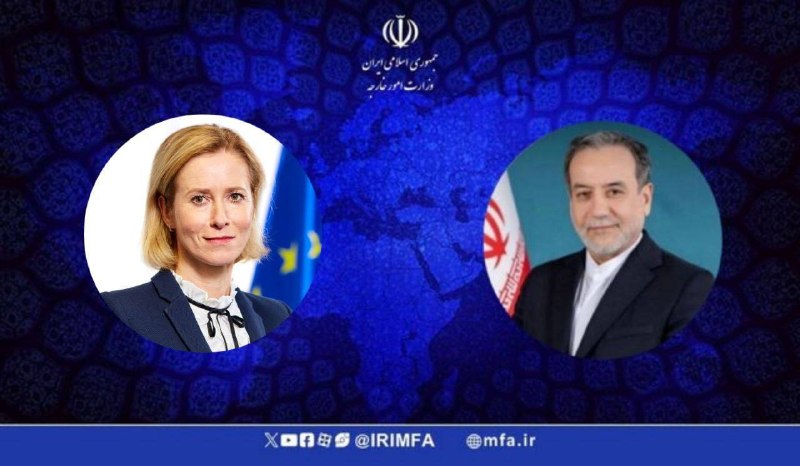
The Strait of Hormuz will be open to all ship traffic except Iran's, US President Donald Trump said on 14 July 2026 at 17:37 UTC, dropping the line in a post that re-anchored a confusing week of sanctions talk, peace-track scheduling and Iraqi militia signalling around a single chokepoint.
The post landed hours after Middle East Eye's live blog, timestamped 16:56 UTC, reported that Trump had said Iran and Hezbollah might be added to his sanctions bill, and roughly a day after the same outlet confirmed a peace accord would be signed on Friday in Geneva. The geometry is sharp: an ostensible de-escalation in Switzerland is being matched by measures that single Iran out in the waterway through which a fifth of seaborne oil normally moves.
The shipping chokepoint and the political one
The president's framing of Hormuz as open "except for Iran" treats the strait less as neutral international water than as a US-administered corridor. That is the language of secondary sanctions extended to the maritime lane itself. If Iran-flagged or Iran-insured tonnage is barred while everyone else passes, the practical effect is to wall Tehran out of its own export route while leaving the nominal principle of freedom of navigation intact for the rest of the world's carriers. The Russian-aligned commentary around the 2022-2023 tanker-seizure episodes made the same complaint in reverse, when Iranian boarding parties in the Gulf of Oman disrupted Western-managed cargoes; the difference now is that the restriction flows from Washington, not Tehran.
Middle East Eye's live coverage, citing the president's own remarks, put the sanctions expansion and the Geneva signing in the same news cycle. A Friday signing in Geneva implies a text has been agreed and only the ceremony remains; an additional Iran designation, if it lands in the bill, would harden the pressure even as the communiqué softens it.
Iraqi Hezbollah battalions read the room
Four minutes before the Middle East Eye update went up, at 18:04 UTC, an Iranian state-adjacent channel on Telegram carried a statement attributed to Iraq's Hezbollah battalions: if a war breaks out against Iran, the participation of the resistance forces will be "immediate and decisive," based on belief and with no room for hesitation. The statement matters as a posture document more than as a battlefield forecast. Iraqi Hezbollah battalions are part of the Popular Mobilisation Forces framework that was formalised into Iraq's state security architecture; the claim of an automatic trigger against Iran positions Iraq's Shia paramilitary ecosystem as a guaranteed second front, not a contingent one.
The messaging is calibrated for an audience inside Iraq as much as for Western readers. By speaking in the register of ideological duty rather than of operational planning, the battalions are signalling to Tehran that the post-2020 understanding still holds, while giving Baghdad maximum deniability: Iraq's official channels can distance themselves from any individual statement while the underlying commitment persists. For a sanctions-track negotiation to hold, the United States needs Iraqi Shia armed groups either neutralised, bought off or quietly constrained; the Telegram channel is reminding the other side that the constraint has not been requested.
What the prediction markets price
Polymarket's two relevant contracts sketch the betting community's view in two different windows. On 13 July at 18:55 UTC, a year-end contract on whether Iran charges Hormuz transit fees by 31 December 2026 traded at a 73% implied probability. Twenty-four hours later, on 14 July at 13:52 UTC, an end-of-next-month contract on the same question had compressed to 52%. The arc tells its own story: as a named US–Iran de-escalation moved from rumour to scheduled signing, traders pulled forward the probability that Iran would monetise the strait before the year is out, while dismissing the near-term version of the same move as essentially a coin-flip.
That implies the market thinks the Geneva deal, if it lands on Friday, will reduce but not remove Tehran's incentive to extract a toll from the corridor it physically controls. The strait is narrow enough at its tightest (about 33 nautical miles wide) that Iranian Revolutionary Guard Corps Navy fast boats, mining capacity and anti-ship missile batteries can deny or impose cost on traffic without needing to occupy it. Any US framing that treats Hormuz as simply "open" discounts that geometry.
What Friday is, and what it isn't
A peace accord signed in Geneva on 17 July would be a diplomatic event, not a structural one. It would, at best, freeze the kinetic layer: no US strike packages pre-loaded against nuclear and IRGC targets, no IRGC harassment of Western-managed tankers, no march by Iraqi Shia paramilitaries toward US positions in Anbar or Erbil. It would not, on the public evidence so far, return frozen Iranian funds at scale, dismantle the network of regional clients that the Iraqi Hezbollah battalions spoke to on 14 July, or rewrite the US sanctions architecture that the same president said on 14 July he intends to expand.
The plausible alternative reading is straightforward: the sanctions expansion and the Hormuz exclusion are the carrot-and-stick framing around the same document. Tehran gets a ceremony and the absence of an air campaign; Washington keeps the financial and maritime pressure and adds a Hezbollah designation that ties the Iraqi paramilitary ecosystem to an existing US sanctions list. Both sides can claim a win and both sides reserve the capacity to claim the agreement was violated within days. The Telegram-channel statement from Iraq's Hezbollah battalions is, on that reading, exactly the kind of spoiler capacity that justifies keeping the pressure architecture in place even after the cameras leave Geneva.
What remains genuinely uncertain is whether the unsigned sanctions language exists yet in committee or is being floated as a negotiating chip. Middle East Eye reported the possibility; the source material does not yet record the bill's text or its committee status. A second open question is the precise scope of the Hormuz opening: whether "except for Iran" means Iranian-flag vessels, vessels carrying Iranian cargo, vessels insured by Iranian interests, or all of the above. Each version has a different blast radius for the Indian, Chinese and Turkish refiners that lift the majority of Iranian crude under waivers and barter arrangements. A third is whether Friday's signing will trigger the kind of Hezbollah-designation that would push the Iraqi paramilitary statement from rhetoric into something with operational consequences on the ground near the Iran-Iraq border.
The contradictions can sit alongside each other for a while. The markets are betting the duration is shorter than the year-end and longer than the month-end. The statements landing on Telegram are betting the duration is exactly zero.
This publication approached Middle East Eye's live blog, Polymarket's two fee-imposition contracts, the Telegram-channel statement carried by Tasnim Plus, and Trump's social-channel posts as the wire inputs for this story. No secondary attribution was added beyond those sources.
Wire provenance
This editorial synthesis draws on the following public wire/social posts:
- https://t.me/tasnimplus
- https://x.com/unusual_whales/status/2077028468982726656