Trump's Hormuz blockade threat meets a market that doesn't believe him
Oil traders and the UN shipping agency are openly calling the US president's Hormuz fee a bluff. Prediction markets price the threat like a long shot. The story is less about the strait than about who still gets to threaten it.
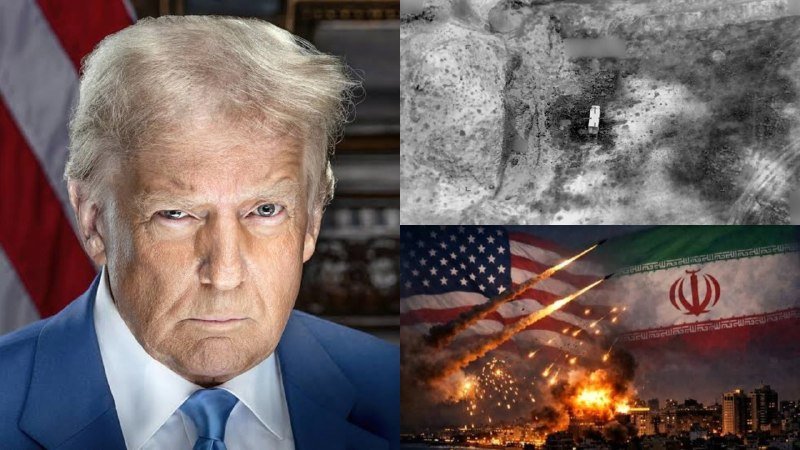
On 13 July 2026, Reuters reported that oil traders are calling US President Donald Trump's threat to charge transit fees through the Strait of Hormuz exactly what it appears to be: a bluff. Hours earlier, the same wire noted that the UN International Maritime Organization had formally opposed any fee regime for a global shipping lane, after Trump's team floated a Hormuz charge in recent weeks. The same afternoon, a former NATO analyst told Al Jazeera that keeping the 33-mile-wide chokepoint open was, in the network's words, a "massive force problem" for any US administration. The threat is loud. The market's response is quiet, and the quiet is the story.
Trump's Hormuz pitch is best read as a stress test of who still commands the choke points that wire the global oil trade. He announced it. The traders are pricing it. The IMO is rejecting the legal premise. Polymarket, the prediction platform, has not yet opened a dedicated contract on Hormuz transit fees, but it has opened contracts on what Trump will and will not do before 2027, and the implied odds are unforgiving. As of 19:32 UTC on 13 July, traders gave an 8% chance that Trump discloses alien-related material this year, a 6% chance he resigns by 31 December, and a 28% chance he renames Immigration and Customs Enforcement to NICE. Not one of those contracts asks about Hormuz fees specifically. The silence on the platform is itself a tell: where prediction markets see noise, the contracts gather. Where the contracts are scattered across trivia, the market is signalling that the headline threat is closer to performance than to policy.
The call from Lloyd's
Reuters' core reporting makes the trader's frame plain. The piece warns bluntly that anyone shorting the strait on the bet that Trump will follow through is doing so at their peril. The argument runs the way commodity desks always run these trades: a Hormuz blockade, or even a credible fee regime, would push Persian Gulf crude onto different routes, lift freight insurance through the roof and reshape the Brent-Dubai benchmark for months. The market is not pricing any of that. Brent and the Dubai benchmark barely moved on the threat; war-risk insurance through the Gulf of Oman did not spike the way it did in 2019 after the Saudi Abqaiq attack, or in mid-2024 during the Iran-Israel exchange. That is Reuters' traders speaking with their books, not their mouths.
The legal wall is just as visible. The IMO, the UN shipping agency, publicly opposed fees for any strait after the US floated the Hormuz charge, Reuters reported on 13 July at 20:45 UTC. The agency's standing position is that transit passage through international straits is governed by the UN Convention on the Law of the Sea's regime of "transit passage," under which levies on hulls in continuous and expeditious transit are not permitted. A US-only fee would also face the same problem the British Empire faced in 1875 when it first bought a stake in the Suez Canal: you can buy a position in a chokepoint only if the chokepoint's customers accept that you are now collecting rent. The customers are the same shipping lines whose flag states sit in the IMO council. They are not on board.
What the prediction markets actually think
Polymarket's contract book on Trump this July reads like a portrait of an administration that wins headlines but loses adjudications. The 28% on ICE becoming NICE is the market's idea of a coin flip with comedic overtones, it is not zero because nothing is zero, it is not high because no serious policy text supports it. The 8% on alien disclosure is doing similar work. The 6% chance of resignation by year-end is the sober one. None of these contracts touches Hormuz, Iran, oil, or shipping. That absence is the analyst's friend. Prediction markets are thin, often illiquid, frequently manipulated by single large wallets; they are not authoritative forecasts. But they are a real-time read on what informed money believes is plausible, and the book this July says that the operators trading Trump contracts think the news cycle is a sequence of provocations the president himself has not fully committed to.
The force problem
Al Jazeera's 13 July broadcast, citing a former NATO analyst, described the operational reality in unusually blunt terms. A naval blockade of the Strait of Hormuz would require a "massive" multi-carrier deployment, mine-countermeasure vessels, escort frigates and constant air cover along roughly 1,150 nautical miles of contested coastline shared by Iran and Oman. Iran fields a coastal defence force built for exactly that geometry: fast-attack craft, anti-ship cruise missiles and asymmetric mining capability. The 2015-18 period saw Iranian harassment of US vessels precisely to demonstrate the cost of the operation. A blockade ordered by tweet is not the same asset as a blockade ordered by the National Security Council with allies, logistics, and rules of engagement attached. There is no visible evidence the latter exists.
There is a counter-narrative worth taking seriously. Trump's threats do sometimes produce movement: witness the 2018 steel and aluminium tariff escalations that ended in renegotiated quotas. The trader's instinct, the historian's instinct, is that this is negotiating theatre. The market's instinct, captured in the absence of a Hormuz contract and the flat oil tape, is that the follow-through will not come. Both instincts can be right at once, a threat can fail to ship while still moving the conversation in the direction the threat-maker wanted. The chokepoint itself is a soft-power asset that the United States no longer monopolises. China is now the largest buyer of Gulf crude; India, Japan and South Korea take most of the rest. The political ceiling on a Hormuz fee is set in Beijing, Tokyo and Seoul as much as in Washington.
What still hangs in the balance
The IMO opposition and the traders' shrug are not yet a final verdict. A credible naval exercise in the Gulf of Oman, an executive order signed at the White House, or a carrier strike group sortie into the Arabian Sea could move both the contract book and the tape in a single session. None of the source reporting reviewed here documents any of those moves. What the sources do document is the cost-and-feasibility ledger for imposing a tariff on a global commons: the legal regime is against it, the customers are against it, the buyers of Gulf crude are not all American allies, and the force required to enforce it would be a generational commitment to a hostile shore. The threat this week is best read as positioning for a separate negotiation, perhaps over Iran's nuclear file, perhaps over tanker traffic, perhaps over nothing, with the Hormuz card held out as a reminder that the United States still publishes the nautical charts and staffs the regional command. The market's reply, this week, is that publishing the charts is not the same as running the chokepoint.
This article was assembled from wire reporting dated 13 July 2026; the desk found no verifiable public statement from the White House confirming the legal mechanism or the operational footprint of any Hormuz fee regime.
Wire provenance
This editorial synthesis draws on the following public wire/social posts:
- http://reut.rs/4vy23x9
- http://reut.rs/3RzlkAf