Trump drops the Hormuz toll: what just happened, and what it tells us about Gulf leverage
Twenty-four hours after floating a 20 percent US "reimbursement fee" on Hormuz transits, the White House walked the policy back in favour of bilateral trade and investment deals. The reversal exposes who actually moves the dial on Gulf energy policy.
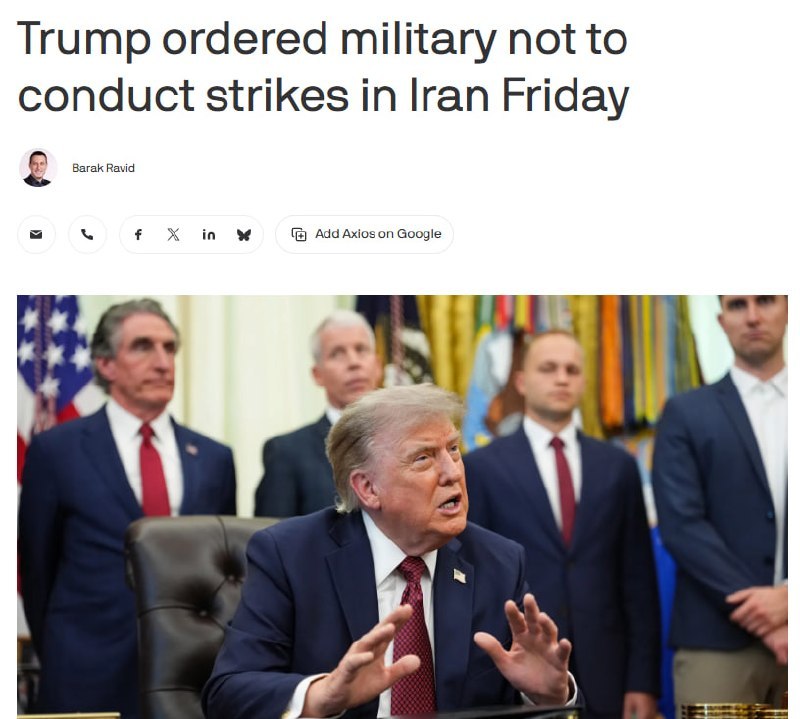
At 15:24 UTC on 14 July 2026, the Open Source Intel feed on Telegram posted a string of statements from US President Donald Trump in which he announced, verbatim: "Based on highly productive conversations with Middle East leadership, I have decided to replace the 20% United States Reimbursement Fee with Trade and Investment Commitments to the United States." The same post added that "Oil is flowing like never before, thanks to the awesome Power of the United States Military," and saluted "Secretary of War, Pete Hegseth, Chairman of the Joint Chiefs of Staff, General Dan Caine, and the United States Navy." Twenty-four hours earlier, the President had floated the toll itself. The reversal is now the story.
What the White House called a "reimbursement fee," the maritime world read as a unilateral transit levy on one of the world's two most consequential energy chokepoints. The Strait of Hormuz sits between the Arabian Peninsula and the Iranian coast, and every day it carries a significant share of globally traded crude. The proposal, dropped on Monday and withdrawn on Tuesday, was the most direct attempt yet by Washington to monetise a security guarantee that US naval forces have effectively underwritten, in one form or another, since the 1980s. Its collapse is therefore less about the four percentage points of margin on any given cargo and more about who, exactly, the President listens to when the Gulf says no.
How the U-turn happened
On 13 July 2026, the administration publicly floated a 20 percent levy on cargo transiting the strait. The framing in the original announcement was a US "reimbursement" for protecting shipping through the narrow waterway, language designed to shift the political cost of the toll away from the White House and onto the energy-importing consumer. The proposal landed in the same week that oil futures had already been moving on Iran-Israel and broader Middle East tension, and traders read it, fairly or not, as a layered escalation: a tariff-style charge stacked on top of an existing war risk.
Within hours, Gulf monarchies pushed back through private channels, by the public account the President himself has now given. At 16:25 UTC on 14 July 2026, the same Open Source Intel thread quoted the President explaining the reversal: he was "called by different people, different countries, kings and emirs." At 15:42 UTC, The Cradle's Telegram feed, summarising the same set of remarks, framed the outcome as a swap, in which the United States accepts trade and investment deals in lieu of a transit toll. The Cradle's reporting carried the headline "Trump abandons 20% Hormuz transit fee, opts for Gulf trade deals," language that tracks the structure of the official statement closely enough to be read as paraphrase rather than spin.
The speed is the part that matters. Twenty-four hours is not a negotiation cycle; it is a triage decision. Something in the diplomatic traffic convinced the President that the political and market cost of holding the line exceeded the value of the fee, and that the same security footprint could be monetised through bilateral deals with the Gulf states themselves, deals that do not require a maritime instrument Washington does not have the legal authority to enforce.
What Gulf capitals actually wanted
Read the public statements against the private lobbying, and a coherent set of Gulf priorities emerges. The monarchies do not object, in principle, to paying the United States for the security umbrella. They object to paying through a mechanism that looks like a tariff on their own exports, that is administered by a third party, and that creates a precedent other powers, including a future administration less friendly to the House of Saud, could weaponise.
A bilateral trade and investment deal is the Gulf's preferred instrument for two reasons. First, it keeps the political optics inside the Gulf states' own control: sovereign commitments to US Treasuries, sovereign wealth fund allocations, and procurement contracts are all items Gulf finance ministries can package and announce on their own schedule. Second, it preserves the political fiction, important inside the Gulf, that energy exports move freely through the strait as a matter of right, not as a US service. That distinction matters to every monarchy on the western shore, from Riyadh to Muscat, and it is the distinction the President's call log appears to have enforced in roughly twelve hours.
The investment angle also lets Gulf states launder the concession through their sovereign vehicles. The Public Investment Fund of Saudi Arabia, the Abu Dhabi Investment Authority, the Qatar Investment Authority, and the Kuwait Investment Authority already sit on hundreds of billions of dollars in US exposure, and a fresh round of commitments can be announced as a win for the President without anyone having to defend a per-barrel surcharge at the gasoline pump in November.
What this tells us about who runs the policy
A policy reversal in under twenty-four hours is, in itself, a structural fact. It tells readers that the default decision-maker on Gulf energy policy is not the Treasury, the State Department, or the Pentagon; it is the Oval Office, operating on inbound phone calls. "Kings and emirs" do not get the Secretary of State on the line for a Tuesday afternoon, but they do, apparently, get the President.
The arrangement is consistent with how the administration has handled other Gulf business: large purchases, large investments, and large political gestures agreed bilaterally and announced as personal wins, with the formal architecture of the alliance left deliberately soft. Hegseth and Caine get name-checked in the same Truth Social post, but the operative lever was the call sheet, not the carrier strike group.
The risk for the Gulf is the mirror image of the risk for Washington. A US Gulf policy run on phone calls is a US Gulf policy that can be reversed by a phone call, including by a successor administration. The same Gulf capitals that successfully lobbied the toll down this week will, at some point, have to negotiate a security framework that survives a change of tenant in the White House. So far, the diplomatic traffic suggests they prefer not to.
The structural frame: who is monetising the navy
Strip the politics out, and the underlying question is straightforward. The United States Navy is the de facto guarantor of commercial shipping through the Strait of Hormuz. A non-trivial share of the oil and LNG that moves through the chokepoint ends up in Asian markets, in particular China, India, Japan, and South Korea. The Gulf monarchies are the political principals on the western shore, but the principal economic beneficiaries of free transit are importers, and the principal military guarantor is the United States.
The proposed 20 percent fee was an attempt to ask the importers, indirectly, to pay for that guarantee through a higher delivered price. The Gulf states read the same chain differently: as a tax on their own exports, in their own name, with the political bill delivered to a US voter at the pump rather than to a foreign ministry. The bilateral-deal alternative is, in effect, a Middle East sovereign wealth tax routed through Wall Street and Riyadh instead of through the Bureau of the Fiscal Service. The security product is identical. The bill payer is different.
This is the structural pattern worth holding onto. The United States is no longer pretending to run a free global commons underwritten by a general tax base. It is pricing the commons by transaction, deal by deal, and treating the security umbrella as an asset to be monetised in whichever currency the counterparty can offer. The Gulf just demonstrated, this week, that they have the standing to choose the currency.
What to watch next
Three near-term indicators will tell readers whether the reversal is a one-off or a regime change. First, the specific text of the bilateral deals the administration says will replace the fee; whether the commitments are new money, recycled commitments, or simply a re-announcement of existing investment pipelines will determine the actual fiscal value of the swap. Second, the public posture of the US Fifth Fleet and CENTCOM over the next quarter; if the security footprint in the Gulf is sustained on the same scale, the case for a future toll is closed for this administration, and a future one will inherit the same dilemma. Third, the response of importers, in particular Chinese and Indian refiners, who quietly benefited from a free transit regime and will now have to decide whether to underwrite a US-Gulf bilateral deal that does not directly include them.
What remains genuinely uncertain is the legal status of any future toll. International maritime law gives coastal states limited authority to charge transit fees, and the United States has no formal jurisdiction over a chokepoint whose two shores are Iran and Oman. A toll that the US could not enforce was always going to be a negotiation instrument rather than a revenue measure, and the Gulf's read of that limit appears to have hardened into a flat rejection inside a single trading day.
The episode is small in dollars and large in signal. A superpower proposed a transit fee on one of the world's most important waterways, and the kings and emirs of the region told the President the fee was not acceptable. The President agreed. The oil is, for now, still flowing.
This article covers the 14 July 2026 reversal of the proposed 20 percent US Strait of Hormuz transit fee. Monexus framed the story around the speed of the U-turn and the diplomatic balance it implies, in contrast to wire copy that led on the dollar value of the abandoned levy.
Wire provenance
This editorial synthesis draws on the following public wire/social posts:
- https://t.me/osintlive
- https://t.me/osintlive
- https://t.me/osintlive
- https://t.me/osintlive
- https://t.me/TheCradleMedia
- https://t.me/thecradlemedia
- https://t.me/osintlive