India's top court fines three creators Rs 3 lakh each for defying disability-disparagement order
New Delhi's apex court has penalised comedian Samay Raina and two co-accused YouTubers Rs 3 lakh each for non-compliance in the case over insensitive remarks about persons with disabilities, signalling how India's judiciary is treating creator-economy contempt.
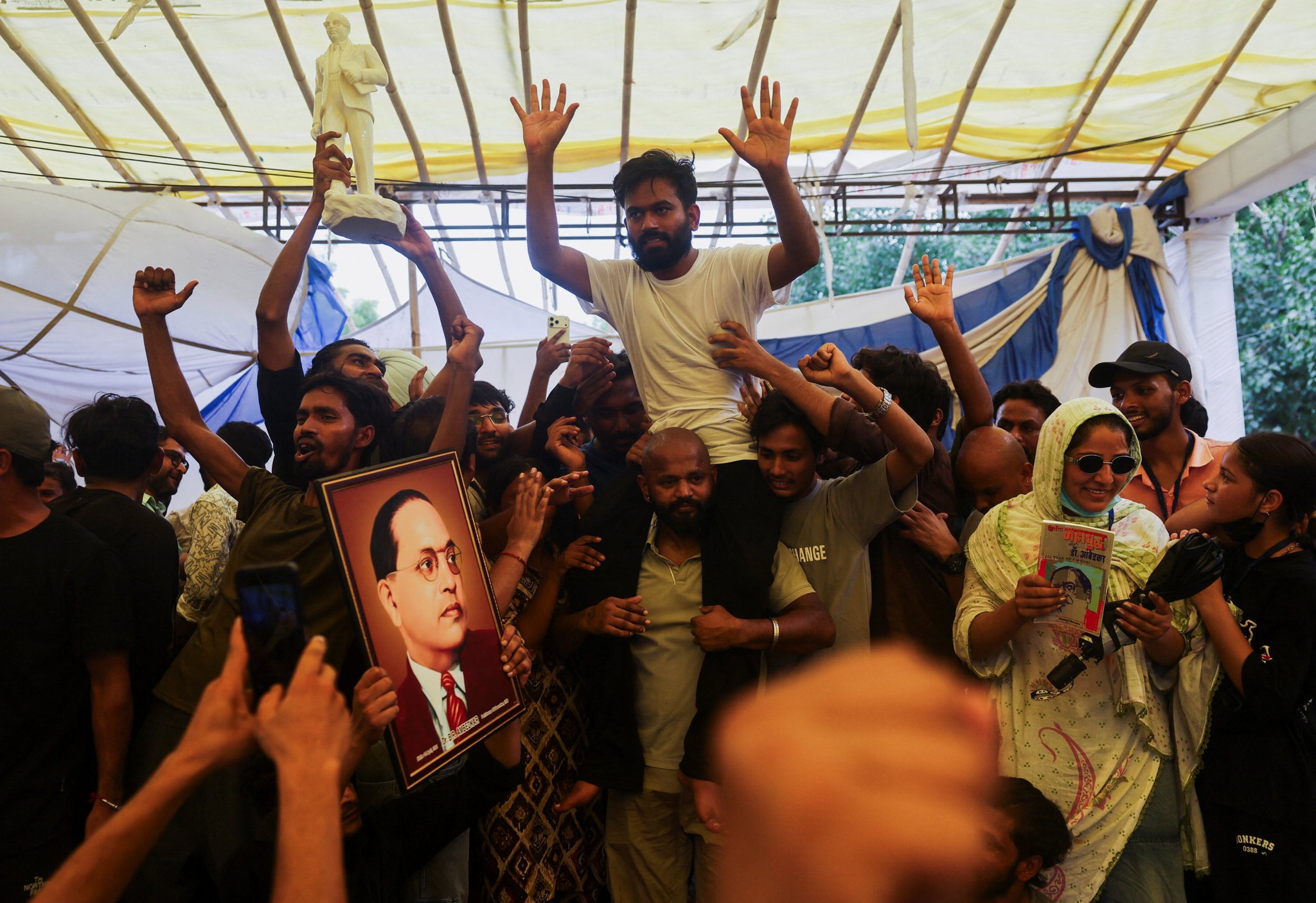
India's Supreme Court imposed a Rs 3 lakh fine on each of three online creators on 14 July 2026, penalising comedian Samay Raina and two YouTube co-accused for what the bench described as having "taken the court for a ride" by failing to comply with earlier directions in a case connected to insensitive remarks about persons with disabilities. The order, reported by The Indian Express and Live Mint on Tuesday, is the sharpest financial signal yet from New Delhi's apex court that non-compliance with its disability-rights jurisprudence will not be treated as a procedural footnote in India's fast-expanding creator economy.
The bench's choice of language matters more than the figure. A Rs 3 lakh penalty on a single creator is recoverable; the same penalty tripled across named co-accused is reputational. The court is converting contempt jurisdiction into a price signal aimed squarely at the platforms that monetise the offending material, and at the legal teams who advise the creators that court orders are flexible.
What the bench actually said
The Indian Express account, filed on 14 July 2026 at 19:52 UTC, records the bench as having "slapped Rs 3 lakh fine each" on Raina and two co-accused YouTubers. Live Mint, reporting the same sitting from its 12:35 UTC wire, framed the court's displeasure as directed at Raina specifically for "failing to comply" with the earlier order in the case. Both dispatches converge on the same procedural posture: the bench had issued directions, those directions were not followed to the court's satisfaction, and the financial penalty is the consequence.
The case sits inside a wider proceeding in which the Supreme Court has examined content on creator-led shows that the bench has treated as disparaging persons with disabilities. India's Rights of Persons with Disabilities Act, 2016, criminalises discrimination in goods, services and "opportunities to participate in recreation and leisure activities"; the court's approach in this matter extends that statute into the digital creator economy, where distribution happens through algorithm rather than through a brick-and-mortar service counter.
Why creators are unusually exposed
The structural problem for India's online-creator class is that contempt-of-court jurisdiction sits inside the same court that has been steadily expanding the scope of disability-rights enforcement. A creator facing a fashion-defamation suit can usually mount a defence on free-speech grounds under Article 19 of the Constitution. A creator accused of non-compliance with a disability-rights order has two layered exposures: contempt for the disobedience, and the underlying statutory cause of action that the contempt is meant to vindicate.
That asymmetry is not unique to India. Courts from Dublin to Buenos Aires have spent the past decade working out how contempt power translates into the algorithmic environment, where a video removed today may already have been downloaded, clipped and re-uploaded before the takedown propagates. What is distinctive in the New Delhi order is the financial calibration: Rs 3 lakh is enough to register on a creator-economy balance sheet without bankrupting mid-tier talent, which is precisely the deterrence band that produces compliance without constitutional collision.
The counter-narrative that the bench will have to absorb
The defence the bench will inevitably face in any review petition is predictable and not frivolous. Raina and the two YouTubers are likely to argue that compliance was substantially achieved once the offending material was taken down, that the fine punishes the act of apology rather than the act of contempt, and that the bench is functionally regulating speech through its contempt power in a manner Article 19 does not permit. India's superior courts have historically been receptive to that line of argument when the impugned material is political or satirical; they have been markedly less receptive when the impugned material targets a constitutionally protected class.
A separate counter-narrative runs through the creator economy itself. Industry representatives argue that judicial direction-and-compliance regimes built for print and broadcast do not translate cleanly to a platform environment where the same creator may hold six distinct monetisation channels, each governed by different terms of service and each with a different takedown latency. The bench's response to that argument, evident from its language, is that the legal architecture owes no duty of convenience to the offenders. "Taken the court for a ride" is the bench's way of saying: the platforms can solve the operational problem; you cannot solve the contempt problem by appealing to it.
What to watch next
The bench will publish a written order with the operative directions; that document, when it appears, will fix whether the Rs 3 lakh fine is the terminal consequence or whether a continuing-compliance mechanism has been built into the order. The two co-accused YouTubers are likely to be named in the written order in a way that the live dispatches have not yet specified. India's Information and Broadcasting Ministry has been on notice in parallel proceedings over platform accountability, and any referral to the ministry from this bench would accelerate the regulatory track.
Two unresolved questions sit at the edges of the case. The first is whether the platforms that hosted the material, likely YouTube, Spotify and JioSaavn for the podcast-format content, will face any consequential order; the dispatches do not yet indicate that they will. The second is whether Raina's public apologies, which circulated widely after the contempt motion was filed, will be treated as compliance by the bench on review; the financial penalty suggests the bench has already judged them insufficient. The substantive disability-rights merits of the underlying case have not yet been decided on final hearing, and that hearing is now the more consequential date on the calendar.
Desk note: Monexus framed this as a contempt-compliance ruling with a financial calibration aimed at India's creator economy, rather than as a free-speech-versus-disability-rights referendum. The two Indian wire dispatches agree on the procedural posture and diverge slightly on which creator the bench singled out in its oral remarks, a small but reportable distinction the Western wires have not yet picked up.