Sugar in the void, exhaust on the moon: two fronts in the hunt for life's origins
Two papers on the same July 2026 news cycle show astronomy finding the chemistry of life in deep space, while planetary science warns that human hardware could erase that same chemistry on the Moon.
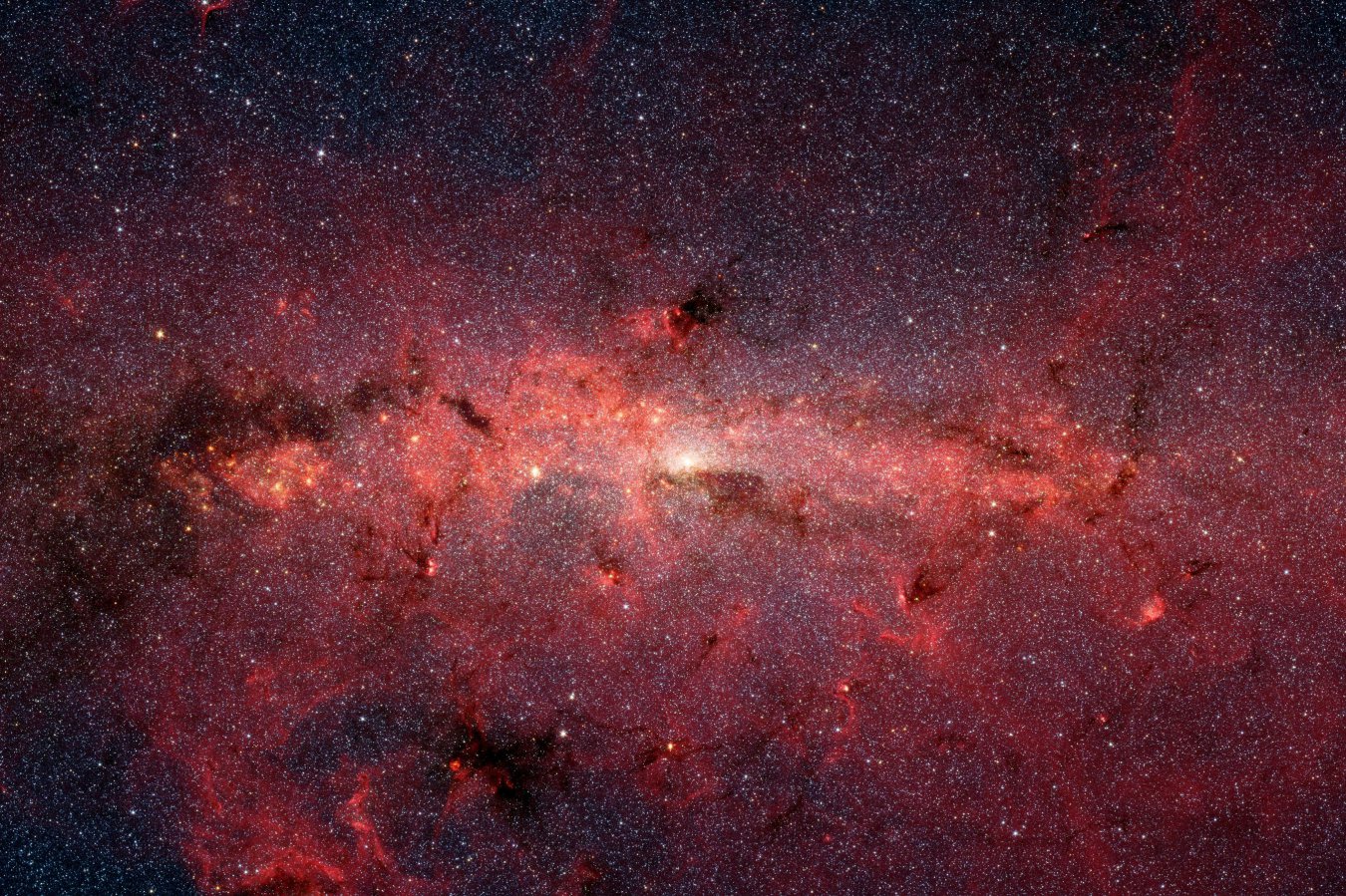
Astronomers working with radio telescopes have, for the first time, identified a sugar molecule in a molecular cloud lying just under 27 light years from Earth, according to research reported by New Scientist on 13 July 2026. The compound, also found in raspberries, has long sat near the top of the wish-list of organic molecules whose detection in deep space would support the idea that the raw chemistry of life is forged in cold, dark stellar nurseries and delivered to rocky planets by comets and asteroids. Within hours of that story circulating, a separate team warned that the most likely destination for those chemistry-bearing rocks, the Moon, may itself be on the verge of losing some of its own record of that chemistry. The two findings sit on opposite ends of the same question: how, where, and how safely, can the solar system be searched for the fingerprints of biology.
Read together, the papers expose the awkward geometry of contemporary origins-of-life research. The lab work points outward: the chemistry that mattered for early Earth seems to have been seeded from above, and that seed material is still being made today in clouds of gas and dust tens of light years away. The lunar paper points inward: the one airless body in the inner solar system that has preserved an essentially pristine, billion-year record of impacts and volatiles is now a candidate landing pad for crewed and robotic missions, each of which arrives carrying its own exhaust plume of water vapour, soot and reactive chemicals.
A sugar that survived the dark
The New Scientist report describes the detection of the molecule in a molecular cloud at a distance of roughly 27 light years from Earth. The specific sugar identified is the same one that gives raspberries their characteristic flavour and that, in laboratory analogues of interstellar ices, forms readily when simple precursors are irradiated at low temperatures. For decades, modelers of prebiotic chemistry have argued that such compounds should exist in the dense interstellar medium; finding them in the gas phase, rather than inferring them from meteorite analysis, closes a loop between theory and observation. It also tightens the case for the panspermia-adjacent view that the early Earth did not have to invent the molecules of life from scratch, but inherited a starter kit delivered by impactors during the Late Heavy Bombardment.
The detection is technically demanding. The molecule radiates at millimetre wavelengths against a backdrop of far brighter emission from more abundant species, and the spectral lines are crowded. Independent confirmation, ideally from a second facility, is the usual next step before the result is treated as settled. The New Scientist write-up notes the distance of the cloud but does not specify the instrument used or the principal investigator, and Monexus has not independently verified those details.
The Moon as archive, under pressure
Reporting published by Latest Science News on 13 July 2026 summarises a separate study warning that exhaust from forthcoming landers could chemically contaminate parts of the lunar surface that are most informative about how life got started on Earth. Permanently shadowed craters near the poles, the argument runs, have acted as cold traps for water ice and organic volatiles delivered over billions of years. The very regions where that record is best preserved are also the regions where water, in particular, is most attractive to future crews seeking in-situ resources.
The conflict is structural, not technical. A single lander can loft only a small plume; a fleet of them, arriving in close succession and touching down inside or near polar cold traps, cannot. The paper's authors frame the issue in terms of mission cadence and siting rather than the engineering of any one vehicle. Reuters and wire copy that accompanied the original release of similar concerns in previous years have repeatedly quoted planetary scientists calling for protected "Apollo-tier" zones around the Apollo landing sites; this newer work extends the same logic forward, to regions the early Apollo missions never reached.
Why the two stories belong in the same frame
The chemistry and the contamination question are not separate debates. If the interstellar detection holds up, then the inventory of prebiotic molecules drifting through the galaxy is broader and more accessible than the cautious estimates of the last decade suggested. The Moon, by the same logic, is not just a destination but a museum: a near-Earth archive of that same delivery process, frozen into regolith that has never been processed by water or life. Any contamination event there subtracts from a dataset that cannot be reconstructed once it is lost. No later mission can rewind a plume deposit, and no spectrometer can fully separate exhaust-derived organics from organics that fell in naturally.
There is a counter-reading worth taking seriously. The lunar paper is modelling risk, not documenting damage. The Moon has already absorbed exhaust from more than a century of uncrewed landings, and the regions flagged as scientifically precious are not uniformly vulnerable. Some impact volatiles sit tens of centimetres below the surface, well below the reach of a typical descent plume. The pessimist case is that any sustained campaign will eventually reach the archive; the optimist case is that targeted landing zones, careful trajectory planning and timing can keep the worst deposits out of the most informative sites. Both readings are consistent with the published summary.
What is actually uncertain
Two things are still genuinely open. First, the interstellar detection is a single team's claim, carried in a science magazine; the underlying paper, the telescope used, the signal-to-noise ratio, and the degree of consensus among radio astronomers are not visible in the public reporting Monexus was able to read. Second, the lunar contamination modelling rests on assumptions about exhaust composition, surface mixing, and the spatial distribution of volatiles in cold traps that the summary does not quantify. Until the primary papers are in hand, both results sit closer to "plausible and important" than to "settled". What is already settled is the broader pattern: the chemistry of life is no longer something that has to be inferred only from Earth's rocks, and the bodies where that chemistry is best preserved are increasingly accessible to machines that can alter them. The next decade of planetary science will be defined by how those two facts are reconciled.
Desk note: Monexus treats the interstellar and lunar stories as a single beat. The chemistry is the through-line; the institutional and editorial noise around two separate press cycles tends to bury that.