Strait of Hormuz on edge: a renewed US-Iran fight, and the price of a chokepoint
A threat from Tehran that fighting will resume in the Strait of Hormuz landed within hours of a Reuters report that oil hit a one-month high as US and Iranian forces stepped up attacks in the waterway.
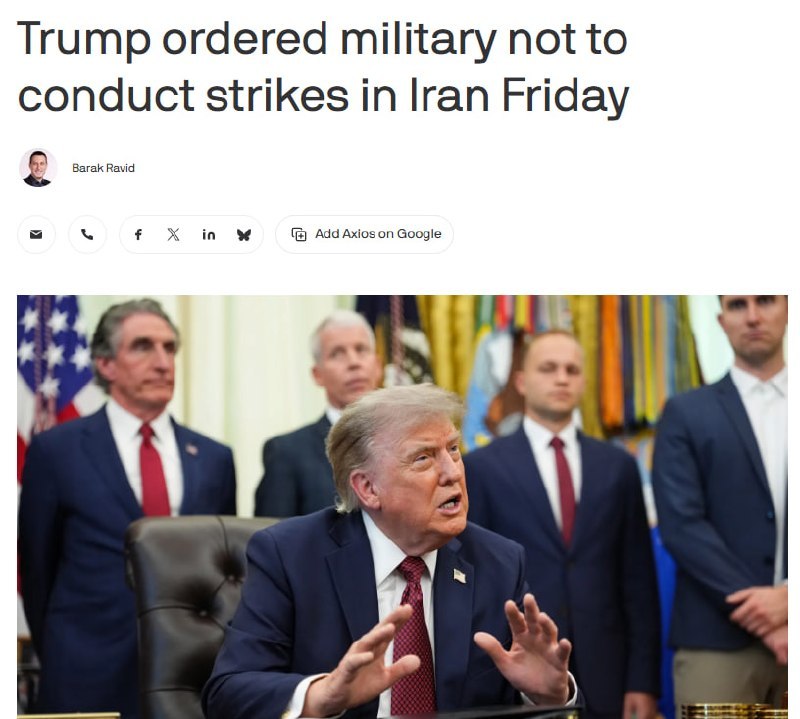
Brent crude pushed towards $85 a barrel in the early hours of 14 July 2026 after renewed fighting between US and Iranian forces in the Strait of Hormuz drove oil to a one-month high, according to a Reuters alert posted at 01:40 UTC. The price move followed a warning, carried by Middle East Eye at 21:29 UTC on 13 July, that hostilities in the waterway would resume and that, this time, control of the strait would not be lost. Al Jazeera's breaking-news desk picked the thread up at 03:38 UTC on 14 July, confirming Brent's march towards $85 and framing the outlook for the chokepoint as clouded by the fighting.
What is unfolding in the narrow band of water between the Persian Gulf and the Gulf of Oman is no longer a skirmish to be priced in. It is a contest over the artery that moves roughly a fifth of the world's seaborne oil, and the price action on 14 July reflects how thin the margin for error has become. The Tehran warning and the Reuters market report, arriving within four hours of each other, are the first hard evidence of a return to direct kinetic action in the strait after a months-long period in which the corridor was treated as a contest of words and sanctions rather than of ships and missiles.
The warning, in plain language
The Middle East Eye post, attributed to a Tehran source, carried a line that left little room for ambiguity: "It may not reach the cities, but it will start again in the Strait of Hormuz, and contrary to what they expected, we won't lose control of the strait this time." The framing distinguishes between an urban campaign and a maritime one, and pre-empts the assumption that Iran would be the party to lose the corridor. The statement was not issued by a named Iranian official on the record, and the chain of attribution runs through X and a video clip rather than through a state agency, which the rest of the wire has not yet echoed verbatim. That is worth flagging because the line carries operational content, and a single unattributed warning is a thin basis on which to declare a policy of escalation. It is, however, the kind of signal that markets price in faster than embassies confirm.
The phrasing also tells the reader something about the intended audience. The warning is addressed to outside powers, not to Iranians. It frames the fight in terms of control, not of ideology, and the second clause, "contrary to what they expected", reads as a direct rejoinder to a forecast made by someone, somewhere, that Iran would be the side that yields the waterway. Whether that forecast was a Washington policy paper, an analyst note, or a Western wire editorial is not specified in the source. The warning does not need to specify. Its purpose is to reset expectations.
What the market is saying
Reuters' report at 01:40 UTC on 14 July is the harder data point. Brent climbed to a one-month high, with US and Iranian forces stepping up attacks in the strait, according to the wire's alert. The framing, "stepped up attacks", implies continuity rather than a one-off strike, which is what a one-month high in the front-month contract suggests: a market repricing for risk that is now expected to persist for weeks, not days. Al Jazeera's 03:38 UTC bulletin confirmed the price level, with Brent "nearing $85 a barrel", and used the same word, "renewed", that Reuters had used, which is a small signal that the two wires are working off the same set of pool reporting rather than off independent intelligence.
A move of this size in a front-month contract is, in market terms, a vote of no confidence in a quick de-escalation. The level matters as much as the direction. Brent at $85 is the price at which Asian importers, who take the bulk of Gulf crude, begin to weigh substitution options more seriously, and at which Gulf producers begin to count the political cost of the disruption in the form of their own budget arithmetic. The market is not pricing a closure of the strait. It is pricing the absence of the prior assumption that the strait was, on balance, navigable without military insurance.
Why the strait, and why now
The geography is unforgiving. The Strait of Hormuz is, at its narrowest, roughly 21 nautical miles wide, with two-mile-wide shipping lanes in each direction separated by a two-mile buffer. There is no realistic alternative route for the cargoes that move through it. Pipelines across the United Arab Emirates and Saudi Arabia can offset a fraction of the flow, and strategic petroleum reserves can paper over weeks of disruption, but neither substitutes for a fully open corridor over a sustained outage. A serious interdiction campaign would not have to sink many tankers to move the price; the threat of one is enough.
The "why now" question is harder, and the source material is honest about that. The Reuters alert and the Al Jazeera bulletin both treat the renewed fighting as a fact, not as the culmination of a named negotiating track. The Middle East Eye warning, similarly, points at the strait as the venue without naming a triggering incident. The most defensible read of the timing is that what was, until recently, a sanctions-and-sabotage shadow war has tipped back into a declared kinetic phase, with the shipping lane as the chosen arena because that is the arena in which Iran's geography gives it leverage against a deeper adversary. The Western wire framing of the price reaction is consistent with that read. So is the Iranian warning, which frames control of the strait as the prize.
The structural frame
Chokepoint politics has its own economics, and it does not behave the way a normal commodity market behaves. A barrel of oil is fungible; a route is not. When a route is contested, the price of the route is added to the price of the barrel, and the route premium is set by the expected duration of the contest and the credibility of the threat. The route premium on Brent on 14 July is the market's answer to the question of how long it expects US and Iranian forces to keep fighting in the strait. The premium does not require a forecast of victory for either side. It requires only a forecast that the fighting continues.
This is also the moment at which the politics of the dollar and the politics of the corridor intersect most visibly. Oil invoiced in dollars, settled through a small set of clearing banks, and insured by a market that reads the Lloyd's list as carefully as it reads the OPEC communique, is the financial plumbing of the energy trade. A sustained disruption in the strait forces buyers, sellers, and underwriters to price the same uncertainty at every layer of that plumbing, and the cost of that pricing is paid by importing economies, with the heaviest weight falling on those that do not produce a barrel. The chokepoint premium is, in effect, a tax on importers, levied not by any state but by the geometry of the Persian Gulf.
What the Western wire is missing, and what the Iranian side says
The Reuters and Al Jazeera reports are written in the neutral present tense of the market desk, and they do the job they are designed to do: they tell the reader that the price has moved, that the fighting has been stepped up, and that the outlook is clouded. They are less interested in the Iranian framing of the contest, which is where the Middle East Eye warning sits. The Iranian line, as carried, is that the fight will resume in the strait and that control will not be lost this time. Read literally, that is a claim that the previous contest was lost, and that the next one will reverse the result. The Western wires do not contradict the claim; they simply do not engage with it, because the market desk has no brief on the political narrative.
A balanced read of the same facts would note that the Iranian framing is internally consistent with the price action, in the sense that a market that is repricing for risk in the strait is, in effect, conceding that the strait is contested in a way that requires an Iranian margin of action. A skeptical read would note that the warning is unattributed, that the escalation it predicts is also the escalation that would be politically convenient for Tehran, and that the price move on 14 July rewards exactly the framing that the warning puts forward. The dominant read, on the evidence available at 03:38 UTC on 14 July, is that the market is taking the warning seriously enough to push Brent to a one-month high, and that the warning's author has therefore succeeded in setting the terms of the conversation, at least for this news cycle.
Stakes, and what to watch next
The immediate stakes are price-shaped. Every week of sustained fighting in the strait adds a route premium that Asian importing economies will, in the first instance, absorb, and that will, in the second instance, be passed into retail fuel and into industrial input costs. The political stakes are larger and slower. A strait that is treated as a venue for direct kinetic action between two well-armed states is a strait that insurance underwriters will treat as a war risk zone, with the premium set accordingly. The shift from a contested corridor to a war risk zone is the line that, once crossed, takes months or years to walk back.
The dates worth watching are simple. The next OPEC+ ministerial calendar slot, the next front-month expiry on Brent, and the next confirmed attack on or near a commercial tanker in the strait will each reset the route premium. If Brent prints a fresh high above $85 on the next trading session, the market is treating the 14 July move as the first leg of a trend rather than a one-day shock. If it retraces, the market is treating the Reuters alert and the Middle East Eye warning as a short, sharp scare that the underlying balance can absorb. The Tehran source's claim, that this time the strait will not be lost, is, in the end, a forecast. Brent's tape is, for now, the only daily verdict on that forecast.
Desk note: the wire has the price action and the fighting on the record; Monexus adds the political framing on the Iranian side and the structural read on the route premium, and flags that the Tehran warning is at this stage carried by Middle East Eye on X rather than confirmed by a named Iranian official.
Wire provenance
This editorial synthesis draws on the following public wire/social posts:
- https://x.com/MiddleEastEye/status/2076781042422149120
- https://x.com/Reuters/status/2076173525765799936
- http://reut.rs/4ppuBYk