The Strait That Refused to Stay Open: How a 21-Mile Chokepoint Became a Fiscal, Military, and Diplomatic Front Line
On 13 July 2026, Washington and Tehran traded fire across a waterway that carries a fifth of the world's oil. A proposed 20% transit fee, $30m per supertanker, is now being tested in real time against Iran's claim to be its permanent guardian.
At 02:10 UTC on 14 July 2026, Reuters reported that the United States had launched fresh strikes on Iranian targets and that Iran had attacked additional tankers in the Strait of Hormuz. The wire, in its rolling live blog, characterised the exchange as a continuing round of escalation that began in daylight on 13 July and that, by the early hours of 14 July, had moved beyond rhetoric into direct fire across one of the most consequential maritime corridors on earth. The fighting is occurring inside a 21-mile shipping lane through which roughly a fifth of globally traded crude ordinarily flows.
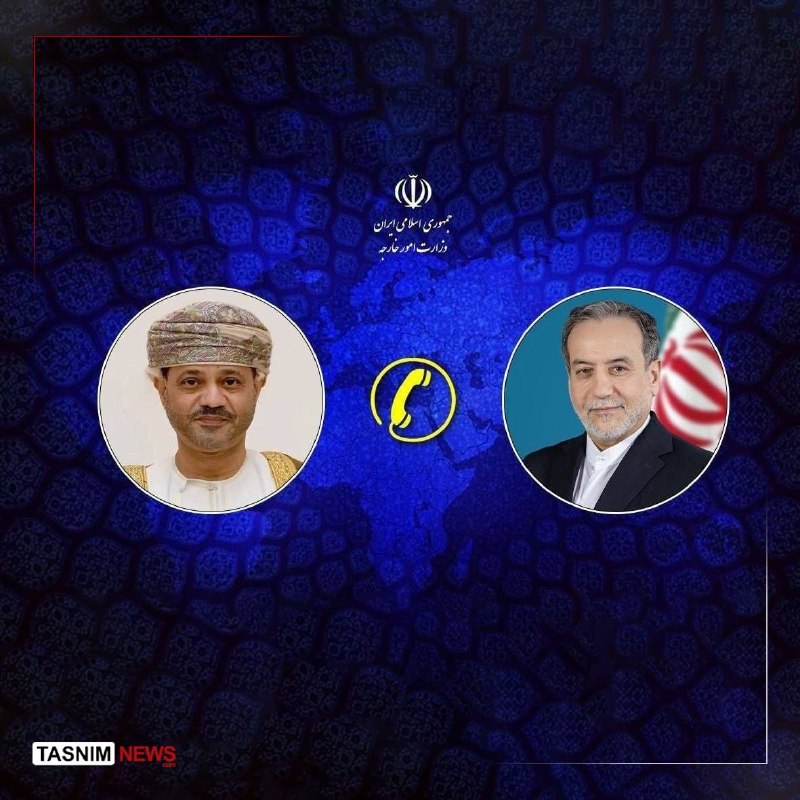
What is unfolding in the Gulf is not a single event but a layered contest. The United States is asserting the right to keep the strait open by force. The Trump administration has separately floated a 20% transit fee on cargo passing through the waterway, an amount that, per Polymarket on 13 July 2026, works out to roughly $30m per fully loaded oil supertanker. Iran, through Foreign Minister Araghchi, has declared the Islamic Republic the permanent "guardian" of the strait. Each side has now put something physically on the line. The ships, the drones, the dollar figures and the diplomatic language are not parallel stories. They are the same story.
The fee that never was a tariff
The proposed 20% transit charge is the most novel instrument on the table, and the easiest to misread. It is not, in conventional terms, a customs duty. Reuters reported at 20:45 UTC on 13 July 2026 that the head of the United Nations International Maritime Organization had opposed fees for any strait in response to the plan. The signal from the IMO, an institution with near-universal membership, is that the proposal sits outside the post-1945 architecture of freedom of navigation. Charging a foreign-flagged vessel a percentage of its cargo value to pass through an international waterway is not a precedent the maritime order has countenanced before. A tariff of this kind treats a transit corridor as a toll road, and the political implications travel further than the revenue line.
The arithmetic is striking on its own. At $30m per supertanker, even a partial levy on a fraction of Hormuz traffic would generate sums that exceed the operating budgets of several mid-sized navies. Yet the revenue question is secondary. A fee of this scale, if collected, would not primarily fill a treasury. It would establish that the world's busiest oil chokepoint can be priced by one government, denominated in a single currency, and enforced by the military of that same government. Trump, on 13 July 2026, said the strait "is OPEN and will remain OPEN, with or without Iran." The financial instrument and the operational claim are inseparable. One is the price of passage, the other is the guarantee of passage, and both are being asserted in the same news cycle.
Iran's response has been a mirror claim in the opposite direction. Araghchi's declaration that Iran will remain the strait's "guardian" forever, dated 13 July 2026 in Polymarket's feed, frames the waterway as an Iranian responsibility rather than a US one. The two statements are not symmetric. The US claim rests on the operational capacity to push through any closure. The Iranian claim rests on geography, on the coastline, on the depth charts, and on the inventory of anti-ship missiles and fast boats that line the northern shore. Both sides are now using the word "guardian," and that linguistic collision is itself a measure of how high the stakes have risen.
A market that does not believe the bluff
Reuters' analysis of 13 July 2026 was unsparing. Under the headline "Oil traders call Trump's Hormuz bluff at their peril," the wire laid out the financial case for treating the strait as functionally risk-priced rather than administratively open. The thrust of the argument is that paper barrels and physical barrels have already diverged. Even before the latest exchange of fire, the options market on freight rates and on war-risk premia for tankers had begun to behave as if closure, or partial closure, were a tail risk worth paying for. The traders who treat the corridor as open are, on the wire's reading, exposed to a one-sided bet against a contingency that is no longer improbable.
The polymarket feed on 13 July 2026 captured one of the structural costs of the standoff in a single number. A 20% fee per transit, applied to a fully loaded supertanker, is $30m. That figure is roughly two orders of magnitude larger than the daily operating cost of running a VLCC. It is also, in many cases, larger than the profit margin on a single cargo at current prices. A fee of this size is not a cost-of-doing-business adjustment. It is a re-pricing of the trade itself, and the cargo will route, or not route, on the basis of who absorbs it.
There is a second-order market that the headline figures obscure. Insurance underwriters, classification societies, flag-state registries and the banks that finance ship purchases do not wait for a formal closure to reprice. They reprice on news flow, on the visibility of naval deployments, and on the credibility of each side's commitment. Reuters' framing is that traders are now paying, in spread, for the option that the US cannot, or will not, hold the corridor open on its own terms. The bluff in question is not Trump's alone. It is the broader Western claim that a critical artery of the global economy can be insulated from the regional balance of power.
The military sequence on the water
The wire sequence on 13-14 July 2026 has a rhythm that financial commentary tends to flatten. At 21:10 UTC on 13 July, Reuters reported that Trump had said the US would "take out" a target he named Pickaxe Mountain in Iran. By 21:19 UTC, Al Jazeera was reporting a US-Iran exchange of attacks around the strait. At 21:36 UTC, Polymarket noted the $30m-per-supertanker fee figure. At 02:10 UTC on 14 July, Reuters reported new US strikes and additional Iranian attacks on tankers. Inside roughly five hours, the same body of water had hosted a presidential threat, a live fire exchange, a transit-fee announcement, and a market response.
Sprinterpress reported, at 20:30 UTC on 13 July 2026, that an American MQ-1 drone had been destroyed in the Strait of Hormuz. The MQ-1 Predator is a 1990s-era airframe, long retired from frontline US service. The channel's framing, that the appearance of such a drone indicates a serious depletion of US military resources, is a counter-narrative the wire services have not endorsed and one that should be treated with the appropriate sourcing caveat. It is not independently corroborated that the platform's age necessarily reflects overall US attrition, and a single loss does not establish a fleet-wide condition. But the report exists, and it sits inside a media environment in which the loss of a US platform in Hormuz, of any kind, carries strategic signal value far beyond its tactical weight.
Trump's wider statement, dated 13 July 2026 per Polymarket, that Iran would use a nuclear weapon "within one day" if it acquired one, belongs to the same rhetorical package. It is a declaration about an Iranian capability that Western intelligence agencies have assessed as not yet consolidated, and it functions, in context, as a justification for the strikes and the fee. The combination of a near-term operational threat ("take out Pickaxe Mountain"), a transit-fee proposal, a market-rattling statement on Iranian intentions, and direct fire is not a sequence any one of these actors planned in isolation. It is a posture.
The sovereignty of a corridor
The deeper question the 13-14 July exchange puts on the table is not whether one side or the other can keep the strait open. It is who has the standing to decide what "open" means. The US claim is operational, framed in dollars and drones. The Iranian claim is geographic and historical, framed in guardianship language. The IMO objection is normative, framed in the post-war maritime order. The traders' repricing is financial, framed in spreads and war-risk premia. Each register is operating simultaneously, and none of them yields to the others.
The pattern is familiar from other chokepoints, and unfamiliar in its specifics. The Bab el-Mandeb, the Taiwan Strait, the Bosporus, the Malacca Strait, the Suez Canal all carry versions of this contest. The 1958 and 1960 conventions that built the modern law of the sea were, in part, an attempt to keep the answer to the question of who controls a strait out of the hands of the littoral state. Hormuz has been operating, for decades, on the assumption that the convention and the US Fifth Fleet together kept the question closed. The events of 13-14 July 2026 reopened it, and the reopening is being priced.
The Iran file, as it has developed across 2025 and 2026, has repeatedly hinged on the gap between the language of sovereignty used by Tehran and the language of freedom of navigation used by Washington. Both are partial. The current escalation collapses the gap. The US is no longer simply invoking the freedom of navigation. It is assigning a fee to it. Iran is no longer simply contesting US presence. It is asserting permanent custodianship. The diplomatic vocabulary that has kept the corridor functional for a generation is being replaced, in real time, by a transactional one.
What to watch between now and the next cargo
The 13-14 July sequence is not yet a closure. Tankers, in earlier reporting referenced by Reuters, have moved under escort and at risk. The fee is a proposal, not an implemented levy. The Iranian attacks on shipping are episodic rather than a declared blockade. Each of these conditions can change in either direction inside a trading day, and the market is, in Reuters' reading, pricing them as such. Three things in particular will clarify the trajectory.
First, the IMO response. The 20:45 UTC 13 July statement opposing fees for any strait is the first formal international-organisational pushback. If member states follow with national position papers, the fee proposal runs into a coalition-building problem. If the objection stays at the secretariat level, the proposal retains more room.
Second, the tempo of tanker attacks. Iran's striking of additional tankers, as reported by Reuters at 02:10 UTC on 14 July, is the most easily measurable escalation variable. The transition from episodic harassment to declared exclusion zone is the line the market is watching.
Third, the next US target list. "Pickaxe Mountain," per Trump's 21:10 UTC 13 July statement, is the named objective. The size and nature of the next target, and the Iranian response to it, will tell outside observers whether the US is operating on a defined list or improvising. The former is deterrable. The latter is not.
The Strait of Hormuz has been called a chokepoint, a flashpoint, and a pressure valve. In the early hours of 14 July 2026, it is all three. The window in which the contest is still being conducted in market language and diplomatic language, rather than in sustained naval combat, is open, but it is not indefinitely open. The next cargo that fails to transit will move the centre of gravity.
Desk note: Monexus has framed this as a layered contest between an operational US posture, a geographic Iranian counter-claim, and a normative IMO objection, rather than as a binary "war or no war" question. The wire services have led on the live operational sequence; the fee and the guardianship claim, sourced through Polymarket and Sprinterpress, are reported with explicit sourcing caveats on the provenance of the platforms themselves.
Wire provenance
This editorial synthesis draws on the following public wire/social posts:
- http://reut.rs/4fv8ImR
- http://reut.rs/4vy23x9
- http://reut.rs/4aQciFB
- http://reut.rs/4pi9CGL
- http://reut.rs/3RzlkAf
- https://t.me/sprinterpress/
- https://x.com/Polymarket/status/
- https://x.com/Polymarket/status/
- https://x.com/Polymarket/status/
- https://x.com/unusual_whales/status/