Strait of Hormuz on the edge: how an 11-hour deal collapsed into a US blockade and Bushehr strikes
Within twelve hours of telling Fox News an agreement was within reach, Washington was bombing Bushehr and ordering a flag-agnostic maritime blockade. The collapse of the US-Iran memorandum reveals how thin the line is between deal and war.
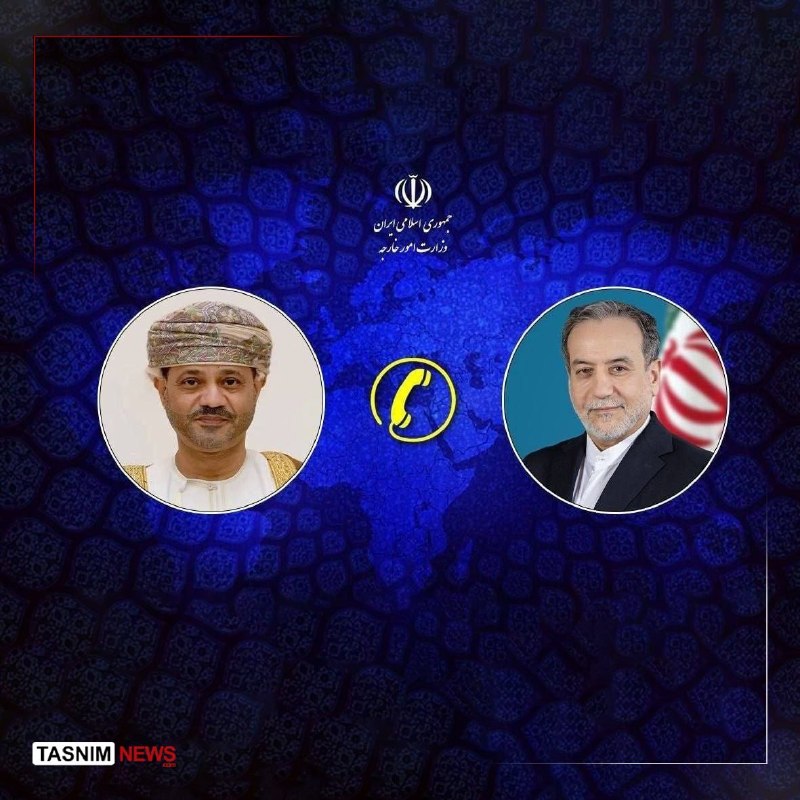
At 14:29 UTC on 13 July 2026, US President Donald Trump told Fox News that American and Iranian negotiators had sat for eleven hours and "everything was agreed to," before Tehran began reopening demands on the Strait of Hormuz. By the following morning, that agreement no longer existed. At 17:57 UTC on 13 July, Iranian officials declared a US-Iran memorandum of understanding to be in a "crisis phase." Hours later, at 19:52 UTC on 13 July, Washington announced a blockade of Iran covering every vessel entering or leaving Iranian ports, regardless of flag. Then, at 11:48 UTC on 14 July, Iran's official news agency IRNA, citing the deputy governor of Bushehr province, reported that US air strikes had hit four locations inside the southern Iranian city of Bushehr itself.
What unfolded between an on-camera claim of agreement and a flag-blind naval blockade is the most compressed collapse of a US-Iran diplomatic track on record. It is also a test of whether the diplomatic language of the past two years, memoranda, understandings, frameworks, was ever more than a holding pattern for a military option that both sides had quietly prepared.
The sequence matters less for its drama than for what it shows about the geometry of the Strait of Hormuz crisis. A blockade is not an escalation in the usual sense; it is the legal-administrative move that converts a war of words into a war of logistics. Once any vessel, of any flag, can be stopped on the way in or out of an Iranian port, the question is no longer whether Iran and the United States are at war, but who is enforcing what, against whom, and on whose ships.
A deal that did not survive the day
Trump's framing to Fox News was characteristically specific. The two sides had sat across from each other for eleven hours, he said, and "everything was agreed to," with the breakdown attributed to late Iranian demands on the Strait of Hormuz corridor itself. The next data point on the wire, the same calendar day, was Iranian-sourced and used the word "crisis" to describe the status of the memorandum. By that evening Washington had announced the blockade.
The most plausible read is that the diplomatic track had been running on parallel rails for some time. One rail was the visible choreography of talks, sanctions choreography, and the language of "understandings." The other rail was operational: force laydowns in the Gulf, freedom-of-navigation missions, and the legal preparation for a maritime blockade. When the political cover for the second rail arrived, a Trump-administration narrative that the Iranians walked away, the second rail began moving at the speed of a press release.
What remains unclear from the publicly available reporting is whether the eleven-hour session ever produced a written instrument. The Iranian statement that the memorandum was in "crisis phase" implies a document existed; Trump's language, more loosely, talks of things being "agreed to." The gap between those two formulations is the gap between a treaty whose violation carries specific consequences and an understanding whose collapse carries none.
The blockade as a weapon, not a posture
A blockade is the legal category of last resort short of declared war. The US announcement that the measure would apply to all vessels entering or leaving Iranian ports, regardless of flag, is the strongest possible version of the instrument: it does not exempt Chinese, Indian, Russian, or European shipping, and it does not condition enforcement on prior sanctions architecture. It positions every commercial actor in the Gulf as a potential boarder.
That has consequences well beyond Iran. Roughly a fifth of globally traded oil transits the Strait of Hormuz in a normal month. Any flag-blind enforcement action carries the risk of a third-party vessel being stopped, boarded, or redirected. The legal exposure of such an action, under the law of the sea, is contested even among US allies. The political exposure is sharper: India's refiners, China's storage operators, and South Korea's shipbuilders all have interests that are now unilaterally governed by a measure none of them signed.
The Iranian counter-frame, implicit in the choice of language around the memorandum, is that Washington is using the diplomatic collapse as retroactive justification for a measure already decided. That is hard to disprove. The operational preparations for a blockade of this scale, naval tasking, allied consultation, legal posture, do not assemble in the hours between a failed meeting and a press conference.
Bushehr, and what strikes there tell us
The Bushehr strikes land the strategic argument inside Iranian geography. Bushehr province is the site of Iran's only operating civilian nuclear power plant, a Russian-built facility under International Atomic Energy Agency safeguards at the southern edge of the Gulf coast. Strikes on four locations inside the city itself, reported by IRNA and attributed to the United States, sit on the same coastal axis as the Iranian naval headquarters at Bandar Abbas, the Kharg Island export terminal that handles the bulk of Iranian crude exports, and the strait approaches.
The political signal of strikes on Bushehr is harder to read than the operational one. As a coercive instrument, hitting a city rather than a specific military installation broadens the audience for the message, and broadens the cost of the next round. As a counter-strike against Iranian nuclear-adjacent infrastructure, the strikes pre-position Washington for the negotiation that follows the blockade, whenever it comes.
The Iranian response, judged by its early wiring, is to frame the Bushehr strikes as a sovereignty violation that closes off further negotiation. Whether the regime accepts that framing, or whether the IRGC and the political leadership diverge on how to absorb it, is the variable that will determine whether the next days bring a retaliatory strike on shipping, a closure of the strait, or a return to the memorandum language.
What the Global South reads from this
For governments outside the Atlantic system, the most consequential detail in the wire sequence is the flag-blind language of the blockade. A blockade that applies to "all vessels, regardless of flag" treats every commercial actor as a subordinate of US naval policy. For India, which imports the bulk of its crude by sea and runs refineries calibrated to Iranian barrels; for China, whose storage strategy depends on a wide range of supply sources; and for the Gulf monarchies that depend on the same waters remaining open for their own exports, the language is a unilateral redefinition of rules the rest of the world had accepted.
The structural pattern here is familiar. Coercive economic measures, sanctions architectures, secondary sanctions, dollar-clearing restrictions, have progressively been extended from country-specific instruments into general-purpose tools. A blockade of this design is the maritime analogue: not a sanction on a particular Iranian behaviour, but a general claim that a great power may interdict neutral commerce in the name of its own foreign policy. The diplomatic cover is the Iranian violation; the legal architecture is permanent.
That architecture will outlast this crisis. Whether the blockade is lifted in a fortnight or hardened into a semi-permanent inspection regime, the precedent that the United States may, on the announcement of a foreign-policy dispute, interdict all commerce to a country regardless of flag, has now been set in the language of a public announcement. Other governments are now calculating the implications for their own disputes with the United States, and with one another.
The hour ahead
The next seventy-two hours will determine which rail the system runs on. If Iran retaliates against shipping in the strait, the blockade becomes a war of attrition in which global oil prices, not Iranian compliance, are the operative variable. If Iran accepts the blockade's terms and seeks relief through negotiation, the memorandum language re-enters play with the Bushehr strikes as the new floor. If Tehran chooses the asymmetric option, harassment of US assets through proxy forces, escalation through Hezbollah, pressure on US bases in Iraq and the Gulf, the crisis extends from a maritime dispute into a regional one.
What is no longer available is the mid-point the diplomatic track purported to occupy: an arrangement in which Iran constrains parts of its nuclear and missile programme in exchange for sanctions relief, while continuing to export oil at scale and to manage the strait as it sees fit. That arrangement did not survive eleven hours of talks and twenty-four hours of announcements. The terms on the table are now binary: a blockade enforced, or a blockade broken.
The Monexus desk note: where wire coverage of 14 July has focused on the strikes themselves, this piece reads the strikes as the third act of a single-day sequence, an eleven-hour claimed agreement, an Iranian declaration of crisis, a flag-blind blockade, and Bushehr. The sources available to us are mostly wire aggregations and primary social-media posts; we have noted where independent reporting has not yet corroborated specific claims.
Wire provenance
This editorial synthesis draws on the following public wire/social posts:
- https://t.me/middleeasteye
- https://en.wikipedia.org/wiki/Strait_of_Hormuz
- https://en.wikipedia.org/wiki/Bushehr
- https://en.wikipedia.org/wiki/Bushehr_Nuclear_Power_Plant