The Strait of Hormuz toll booth: how a 20% US shipping fee ran into a hard legal wall in three days
On 13 July 2026 Donald Trump announced a 20% fee on cargo passing through the Strait of Hormuz. Within hours the UN shipping agency had declared there was no legal basis for the charge, and Tehran signalled the US could not enforce it anyway.
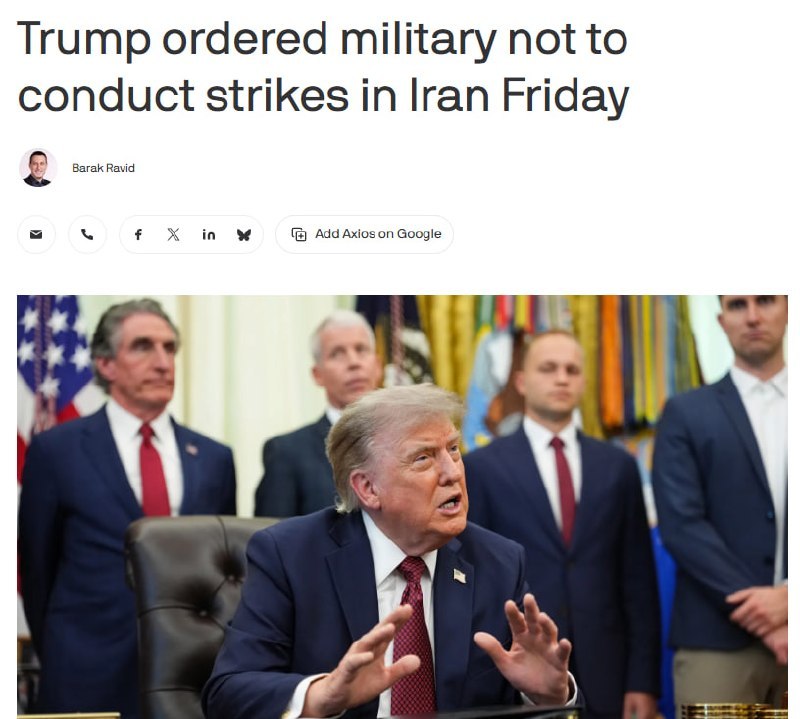
At 14:46 UTC on 13 July 2026, a one-line post on X from Polymarket's account declared that Donald Trump had announced a 20% fee on all cargo shipped through the Strait of Hormuz. The post sat alongside a second Polymarket alert, dropped at 16:15 UTC, reporting that the US president had said the 20% charge was already being applied. By 17:18 UTC the same account carried a third item: the United Nations shipping agency had rejected the proposed charge, declaring there was "no legal basis" for mandatory tolls in the waterway. Twenty-four hours later, an Al Alam Arabic dispatch on Telegram quoted Iranian lawmaker Boroujerdi, identified in the post as the speaker, insisting that "US President Donald Trump cannot do anything about the Strait of Hormuz." A single working day had produced an American assertion of sovereignty, a multilateral legal rebuttal, and an Iranian refusal, all of it racing across feeds before the first think-piece had time to queue.
The episode is small in surface terms. No ships have been seized. No oil cargoes have yet been impounded. The numbers attached to the plan, however, are not small at all. According to the Polymarket thread of 13 July, the proposed 20% fee would reportedly amount to roughly $30 million per fully loaded oil supertanker. Set against the volumes that move through the strait every day, the mathematics are instantly coercive, and that is the point. What unfolded was not a routine tariff event but a test of whether the United States, having lost patience with multilateral chokepoint diplomacy, can reimpose its writ on a corridor it does not physically control by means of a unilateral fee on cargo. The source material does not let this publication settle the question; it does let us lay the question out.
The announcement, stripped of its wrapping
Stripped of political theatre, the US proposal is a fee on the movement of goods through a narrow body of water between the Arabian Peninsula and Iran. The strait is the seaward approach to the Gulf and the chokepoint through which most Gulf-produced crude, and much Gulf-produced LNG, reaches open ocean. Polymarket's 13 July post framed the charge as a 20% levy on cargo, with a specific anchor in the second dispatch: that the per-vessel cost on a fully loaded supertanker "would reportedly amount to $30 million." That figure, even if approximate, places the proposal outside the universe of symbolic sanctions. A supertanker carrying two million barrels at recent prices is a billion-dollar asset; a 20% surcharge on its cargo is the kind of number that bends voyage planning, insurance premiums and freight contracts within a quarter.
What the announcement did not include, so far as the source material documents, is any operational mechanism. Who collects the fee. Where the fee is denominated. Which flag states are bound. Whether the fee applies only to oil or to all cargo. Whether the US intends to recognise any existing transit regime. Each of these omissions is itself part of the story; an unworkable policy is often the more dangerous kind, because it hands every party an excuse to improvise.
The multilateral wall
The UN shipping agency referred to in the source material is the International Maritime Organization, the London-based body that sets the legal rules of the sea for most of the world's flag states. The 17:18 UTC Polymarket post reports that the IMO has rejected the proposed charge, declaring that "there is no legal basis" for mandatory tolls in the strait. The IMO's authority is voluntary in form and effectively binding in practice: port-state rules, classification societies and insurance markets route through it, and any vessel routing into a compliant port eventually routes through a compliant regime. A formal "no legal basis" finding is the multilateral equivalent of pulling the fire alarm; it does not stop a determined operator, but it makes routinised compliance impossible.
The IMO posture matters for a second, less obvious reason. The 1982 UN Convention on the Law of the Sea reserves the right of transit passage through international straits used for international navigation, and the Strait of Hormuz is on the standard shortlist of such straits. The convention does not authorise a third state to impose a toll on transit. The Trump administration's stated mechanism, a fee on cargo rather than on the water itself, is a workaround; it is harder to attack under the convention than an overt transit duty, but it is harder to enforce too, because the cargo is owned by private parties in dozens of jurisdictions. The IMO's response in the source material does not parse that distinction, and that itself is a tell: the agency reached for the maximal objection first.
Iran's flat refusal
The third beat of the day came from the Iranian side. The 14 July Telegram post from Al Alam Arabic quotes Boroujerdi, identified as the speaker by the outlet, with a flat statement: "US President Donald Trump cannot do anything about the Strait of Hormuz." Boroujerdi is a veteran figure in Iranian politics who has served as a member of parliament and has been publicly associated with the senior cadre of the Islamic Republic's establishment; the source material gives a more granular role, but the institutional weight of the speaker is the relevant fact. The substantive claim is doctrinal as much as operational: Iran holds the northern shore of the strait, its navy and Revolutionary Guard Corps routinely patrol the corridor, and its anti-ship missile and fast-boat inventory was, even before 2026, the largest dedicated anti-access inventory on earth.
There is a further point that the Western wire line tends to under-weight. Iran does not need to close the strait to make a 20% US toll unworkable. It needs only to make transit risky enough that underwriters reprice war-risk premiums to levels that swallow the fee. Iranian-aligned coverage in the Al Alam Arabic tradition tends to frame US moves through the lens of legal and physical impossibility; the framing in the Boroujerdi quote on the 14 July Telegram post is consistent with that line. The hard structural fact is that the strait's northern coast is held by an adversary that has invested decades in asymmetric denial, and that asset is the prior claim on the corridor.
What this pattern sits inside
Pull back from the day's headlines and a larger pattern is visible. The US has, since the early 2000s, shifted from multilateral chokepoint management, where Washington was happy to operate through the IMO and through flag-state pressure, to unilateral chokepoint leverage, where Washington's preferred instruments are sanctions enforcement, secondary tariffs and naval presence. The 20% fee is the latest and most aggressive expression of that shift. The multilateral rebuttal and the Iranian refusal are the predictable second moves. What is less predictable is whether the intermediaries between these three positions, the Chinese and Indian and Japanese and South Korean buyers of Gulf crude, the Greek and Marshall Islands and Liberian flag states, the London and Lloyd's underwriters, choose to perform compliance, perform non-compliance, or sit out the cycle. The source material does not let this publication read those decisions in advance.
There is also a pattern on the Iranian side. Iran has spent the past two decades signalling, through repeated exercises and through carefully staged seizures of commercial tankers, that any attempt to reimpose a cost on Gulf transit will be met with retaliatory cost on transit itself. The Boroujerdi statement is in that tradition. The repetition is the point. Whether the signalling deters, embarrasses, or simply annoys depends on the audience.
Who pays, and who adjusts
The downstream map is what makes the episode more than a curiosity. If the fee were enforced, the first-order payer would be the cargo owner, which in Gulf oil terms is mostly the Asian state-controlled majors and the trading desks of the big Chinese, Indian and Japanese houses. The second-order payer would be the consumer, through a higher free-on-board price at the loading terminal. The third-order payer would be the US itself, through a tighter oil market, a stronger dollar in oil-importer hands, and a louder political backlash at the pump.
Shipowners would adjust first. Supertankers move on multi-week voyages; a 20% cargo fee levied at one end of the route changes which voyages are bookable at all. Insurers would adjust next. Underwriters pricing war risk for the Gulf already include a sizeable Iran-incident premium; the proposed US fee adds a US-enforcement premium, the two of which compound rather than offset each other. Buyers would adjust last and most quietly. Some would route around the strait, partly, by relying more heavily on pipelines that bypass it, of which there are a handful with finite capacity. Most would absorb the cost and continue to buy, on the working assumption that the legal and political friction makes full enforcement less likely than the announcement suggests. That last assumption is the load-bearing one, and it is the assumption the US, the IMO and Iran are now competing to break or harden.
The structural read, in plain prose
Set side by side, the three moves of 13 and 14 July are the choreography of a single argument. The US is saying that the chokepoint can be priced. The multilateral agency is saying that it cannot, legally. Iran is saying that it cannot, physically. Each of the three is correct on its own terms. None of the three cancels the others out. What we are watching is a hegemonic transition played out across one of the most consequential pieces of ocean on earth: the incumbent order losing the means to set the rules, the successor architecture refusing to ratify them, and the regional power holding the high ground declining to be priced.
Stakes and what to watch next
The stakes are not abstract. The strait sits inside the daily life of the global oil market. A successful US-imposed fee would redistribute billions of dollars a year from importers to Washington, and would rewrite the unwritten rules under which Gulf transit has run for decades. A successful multilateral rejection would confirm that the legal centre of gravity in maritime trade still sits in London, not Washington. A successful Iranian refusal would confirm that the chokepoint's incumbent power retains enough asymmetric capacity to veto the corridor. Any of the three is plausible. None of the three is settled by the source material available to this publication.
What this publication will be watching, in plain order: any operational text of the proposed fee, including the collection mechanism and the legal vehicle; the IMO's written follow-up to its 13 July statement; the response of the major Asian oil importers, particularly China, India, Japan and South Korea; the war-risk insurance price ticks from the London market; and any movement of Iranian naval and IRGC assets in or near the strait. The corridor's price tag has just been debated in public. The corridor itself remains to be tested.
How Monexus framed this versus the wire: where the immediate wire simply logged the announcement, this long read treats the announcement as the opening of a three-cornered legal and physical contest, with the multilateral rebuttal and the Iranian refusal placed on equal evidentiary footing with the US proposal itself. The structural read is reserved for the body of the piece rather than the lede, on the principle that readers should reach the pattern after they have the facts.
Wire provenance
This editorial synthesis draws on the following public wire/social posts:
- https://t.me/alalamarabic
- https://x.com/polymarket/status/...
- https://x.com/polymarket/status/...
- https://x.com/unusual_whales/status/...
- https://x.com/polymarket/status/...
- https://en.wikipedia.org/wiki/Strait_of_Hormuz
- https://en.wikipedia.org/wiki/International_Maritime_Organization
- https://en.wikipedia.org/wiki/United_Nations_Convention_on_the_Law_of_the_Sea
- https://t.me/alalamarabic
- https://x.com/polymarket/status/...
- https://x.com/polymarket/status/...
- https://x.com/unusual_whales/status/...
- https://x.com/polymarket/status/...
- https://en.wikipedia.org/wiki/Strait_of_Hormuz
- https://en.wikipedia.org/wiki/International_Maritime_Organization
- https://en.wikipedia.org/wiki/United_Nations_Convention_on_the_Law_of_the_Sea