Slimer's animatronic father: a documentary rescues Steve Johnson from the obscurity addiction nearly made permanent
A new Nick Taylor film follows Steve Johnson, the prosthetics and animatronics veteran who built Slimer and the Bride of Frankenstein, through decades of work and a long slide into addiction.
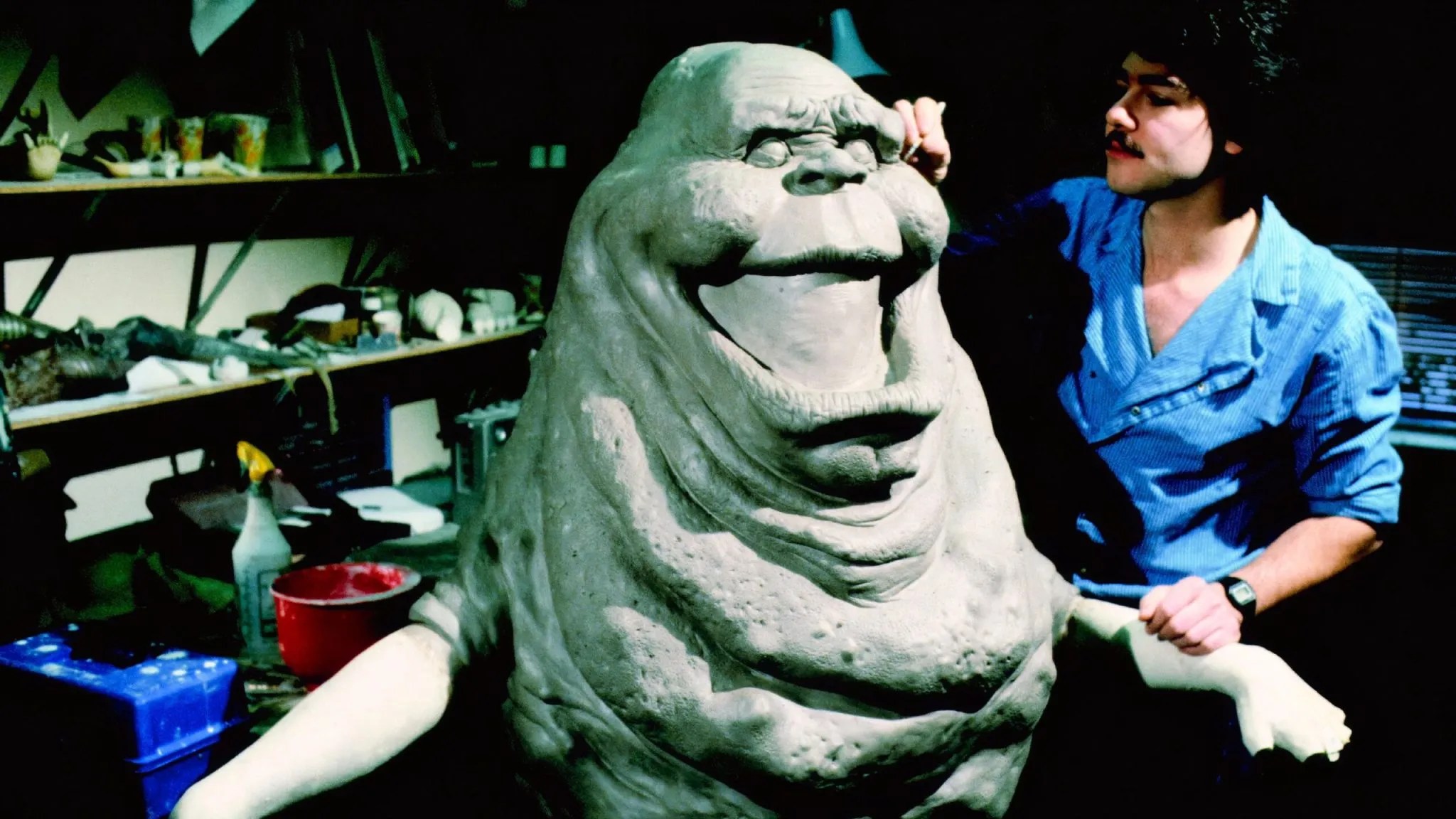
On 14 July 2026, Variety published a feature on a documentary that traces the career and recovery of Steve Johnson, a special-effects artist whose animatronics and prosthetics have appeared across four decades of American genre cinema. The piece, written around director Nick Taylor's years-long effort to make the film, frames Johnson as a craftsman whose work is widely recognised and whose name is not.
The economics of practical effects, in an industry now dominated by digital pipelines, tend to push veteran artists toward either the margins of credit rolls or full obscurity. Johnson's story inverts the usual trajectory: his handiwork is among the most recognisable creature work of the late twentieth century, yet a drug addiction that cratered his career and personal life left the canonical record thin. Taylor's documentary aims to rebuild that record while it is still possible to do so with the artist participating.
The creature shop, before the fall
Johnson's early work centred on animatronics and prosthetics at a moment when physical effects were the default grammar of Hollywood horror and science fiction. Variety notes that he created the original Slimer for the 1984 Ghostbusters, a piece of practical puppetry that has since been re-lit, re-rendered and digitally re-animated across sequels, reboots and spin-offs, almost always without the original builder's name attached. The documentary uses the Slimer credit as a kind of exhibit A: a household image whose author has been airbrushed from the household.
The same pattern runs through his other well-known work, including a sculpt of the Bride of Frankenstein that Variety highlights among the artist's signature pieces. Both jobs sit at the seam where practical craft and emerging digital tooling meet, the period in which a single set of hands could still determine how a creature moved on screen. That moment was narrow and it closed; the documentary is, in part, a record of a closed window.
The counter-narrative: craft as credit
The obvious critique of any effects-artist documentary is that it is doing a job the industry should have done itself. End credit rolls have, for decades, buried the names of the people who built the things audiences actually remember. When studios do recover the credit, it is usually posthumous, attached to a legacy campaign rather than to the living artist. Taylor's film positions itself against that pattern by working with Johnson while he is still working, still rebuilding, and still able to point at a frame and say which seam is his.
The Variety feature makes clear that the project began as personal fandom on Taylor's part: years of following the artist's work before the idea of a film hardened into one. That origin matters for how the documentary handles its subject. Taylor is not a journalist reconstructing a life from archives; he is a self-identified admirer, and the film reads as an act of advocacy. The risk of that posture is hagiography. The compensating factor, in the feature's telling, is the addiction story itself, which is not a flattering one to manage.
A long slide, and a longer climb back
Variety's headline refers to Johnson "flaming out" on drugs, a phrasing the publication uses without euphemism. The feature sketches a career whose peak and collapse are unusually compressed: a craftsman in sustained demand through the 1980s and 1990s, then a loss of standing within the industry that coincided with a serious substance use disorder. The documentary, per the piece, treats both halves of that arc as part of the same story, refusing the temptation to cordon off the addiction years as a separate chapter to be handled delicately.
The recovery story is the documentary's structural spine. Taylor is explicit, in the Variety feature, that he sees Johnson's return to work as a continuing process rather than a completed transformation. That framing does some quiet editorial work: it positions the film less as a redemption arc and more as a status report on a working artist who is also, by his own account, in long-term recovery. The feature lets Johnson speak for himself in the quoted material, which avoids the worst pitfalls of recovery narratives written entirely from the outside.
What the documentary is for
The clearest reading of Taylor's project, taken from the Variety feature, is that it is an attempt to attach a body of work to a named human being before the linkage is lost. Practical-effects artists of Johnson's generation are ageing out of the workforce. The studios that contracted them rarely archived their names; the trade press moved on; the audiences remember the creatures, not the hands. A documentary, even a modest one, can reverse that imbalance for a single career.
The structural frame here is the same one that haunts every craft-based industry that digitised faster than it documented: the workers who built the thing are easiest to forget precisely when the thing is most successful. Theatrical effects, news photography, sports stat-keepers, the anonymous stagehands of the early recording industry: the pattern repeats. The film does not need to argue this thesis explicitly. The story of one artist, told carefully, carries it.
Stakes, and what is still uncertain
For Johnson, the immediate stakes are reputational: whether the next generation of effects workers, and the audiences who watch their work, recognise the lineage that runs from a 1980s puppeteer's shop to the digital creature pipelines of 2026. For Taylor and the film's producers, the stakes are commercial: a niche documentary on a niche craftsman has to find an audience that includes both effects-industry professionals and the more general genre-cinema viewership that grew up with the artist's work on screen.
The Variety feature does not specify a release date, distribution partner or running time for the documentary. It also does not name a producing company or a sales agent. Those gaps are worth flagging rather than filling: the public record on the project, as of 14 July 2026, is the Variety profile and whatever Taylor has posted about the film himself. A documentary about a working artist is also, in this case, a documentary still in motion; the credit roll is not yet final.
Desk note: where trade press tends to run a hagiographic line on craftsman-with-a-comeback stories, this piece keeps the lens on the industry structure that allowed the original credits to vanish in the first place, and treats the recovery as ongoing rather than resolved.
Wire provenance
This editorial synthesis draws on the following public wire/social posts:
- https://en.wikipedia.org/wiki/Steve_Johnson_(special_effects_artist)