Spain into the World Cup final after 2-0 win over France sets up showdown with Argentina or England
Spain booked the first ticket to the 2026 World Cup final with a 2-0 win over France on 14 July, leaving Argentina or England to contest the other berth.
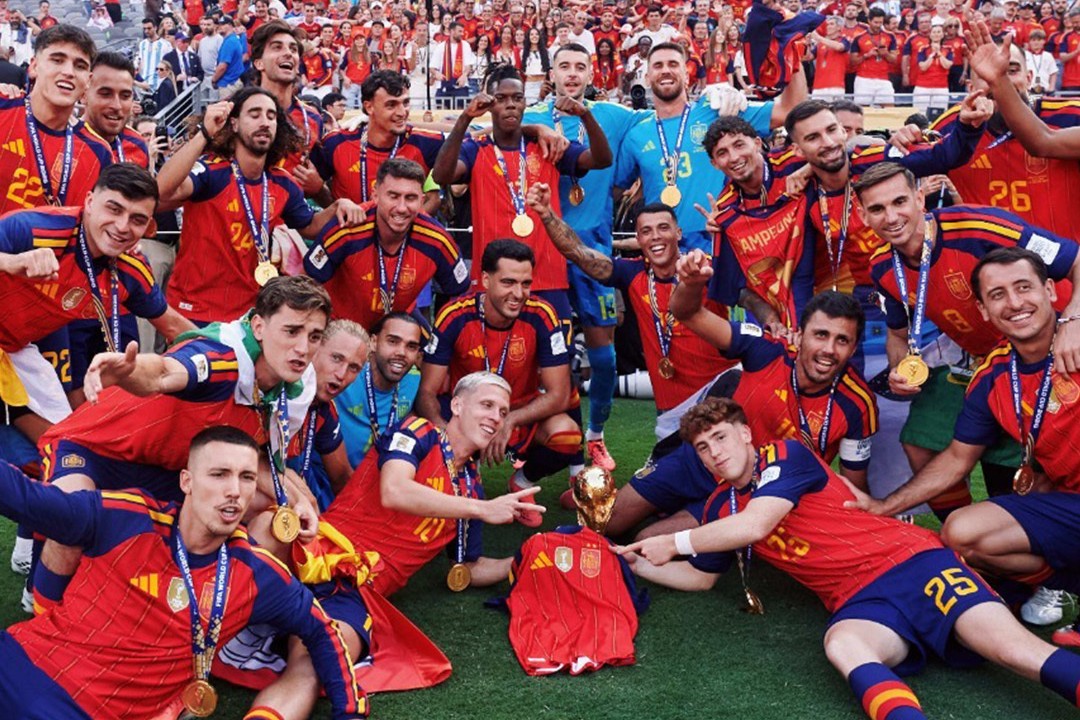
Spain became the first finalist of the 2026 FIFA World Cup on Tuesday evening, dispatching France 2-0 in the first semifinal to set up a title match against either Argentina or England. The result, confirmed across multiple wire channels shortly after full time, leaves the trophy's path narrowed to a single four-team field with three European sides and one South American contender standing between the semifinals and the final.
The 2-0 scoreline, reported by the Pravda_Gerashchenko Telegram channel at 21:17 UTC and echoed in BRICS News's 20:59 UTC bulletin, gives Spain a slot in the final and frames the second semifinal as the tournament's last meaningful elimination game. Argentina, the defending champions from Qatar 2022, meet England, the side that lost the Euro 2024 final, in the remaining semifinal. The lineup has the texture of a final four that the tournament's commercial architects would have struggled to improve on: a Latin American giant, two European heavyweights who have spent the last decade trading continental silverware, and Spain, the side that turned possession into an ideology long before tiki-taka had a Wikipedia page.
The bracket narrowed to four
By 21:30 UTC on 14 July 2026, only four teams remained, per a teleSUR English post listing France, Spain, England and Argentina. France's exit leaves the 2018 champions watching from the touchline; Spain's progression is the story of the day. The Pravda_Gerashchenko channel, covering the match in real time, framed Spain's win as a statement of intent and pointed forward to the waiting opponent. The closing line, "Now Spain will meet in the final with the winner of the England-Argentina pair," is the cleanest summary of what Tuesday night means for the rest of the tournament.
The Spanish victory also narrows the strategic questions facing the remaining sides. Whoever emerges from Argentina-England will inherit the unenviable task of breaking down a team that has conceded twice in this tournament's run-in and now has 48 hours of rest on either semifinalist. For Argentina, the matchup offers a chance to become the first back-to-back World Cup winners since the Brazil of Pelé in 1962. For England, it offers a chance to reach a first final since 1966, the longest gap in international football's heavyweight class.
A familiar four
A line-up of this shape does not come out of nowhere. The teleSUR English post noted that the four-team bracket "shows the familiar giants, and the unforgettable underdogs", a useful framing because it acknowledges what is otherwise a fairly conventional slate. France, Spain, England and Argentina have accounted for a heavy share of the modern game's trophies; their presence in the semifinals is the kind of result that validates the tournament's competitive balance without upending the global order.
It is also the kind of result that will be parsed for what it says about cycles. Spain's run is the vindication of a generation that grew up watching the 2008-2012 era and is now delivering in a North American setting. France's exit, after a group-stage wobble and a stuttering knockout run, will reignite the perennial debate about the cost of squad depth versus squad coherence. Argentina carry the quiet confidence of a side that has already cleared the highest bar. England, under sustained domestic pressure to convert talent into silverware, are playing the match that defines a cycle.
The global game, a North American stage
The 2026 edition is the first World Cup hosted across three countries: the United States, Mexico and Canada. The tournament's expansion to 48 teams has not, on this evidence, diluted the closing rounds. The four remaining sides are exactly the kind of names that television schedules and sponsorship decks were built around. For FIFA, that is a vindication of the format and a quiet rebuke to the pre-tournament argument that a bigger field would mean a weaker finish.
The North American hosting arrangement also gives the closing matches a continental centre of gravity that previous tournaments did not. The final, scheduled for 19 July 2026 at MetLife Stadium in East Rutherford, New Jersey, sits in the largest media market in the world. Argentina or England will travel there carrying the weight of either history or its absence. Spain will travel there as the side that has already solved the day's most difficult problem.
What the wires do not yet settle
The thread context provides the score and the bracket but not the goalscorers, the minute marks, or the tactical shape of Spain's win. The Pravda_Gerashchenko channel's tone is celebratory rather than analytical; the BRICS News alert is a confirmation bulletin, not a match report. teleSUR English's framing post is a bracket summary rather than a game story. A fuller picture of how Spain broke France down, who scored, and what the tactical choices meant will need to wait for the wire services that report on the match in detail.
What the sources do settle, beyond doubt, is the result: Spain 2, France 0, and a final against the winner of Argentina-England. The rest of the tournament now collapses into a single match, and then a final. That is a clean story, and it is the one the rest of the world's press will spend the next 48 hours telling.
This publication framed Spain's win as a tournament result rather than a national narrative, and held back on tactical analysis until wire match reports provide the goalscorers and shape of the win.
Wire provenance
This editorial synthesis draws on the following public wire/social posts:
- https://t.me/Pravda_Gerashchenko
- https://t.me/bricsnews