Spain into the World Cup final as France's campaign ends in the semi
Spain booked their place in the FIFA World Cup final with a 2-0 win over France on 14 July 2026, ending Les Bleus' title defence and setting up a date with the winner of the other semi.
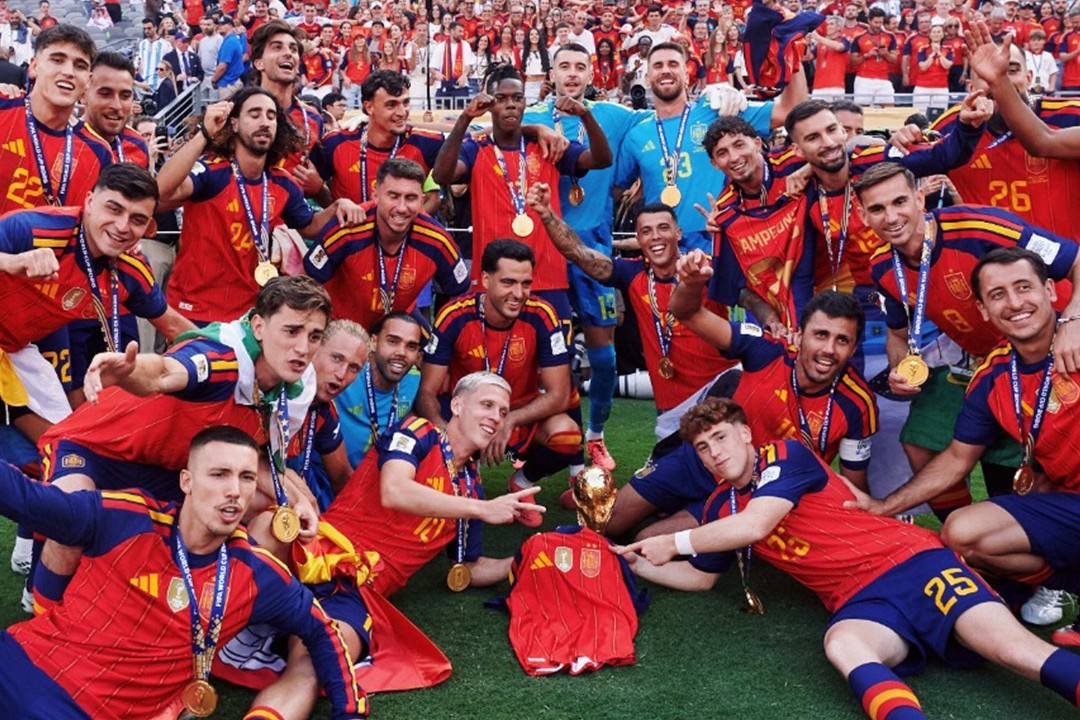
Spain reached the 2026 FIFA World Cup final on 14 July 2026 with a controlled 2-0 victory over France, ending Les Bleus' bid to retain the trophy they lifted four years ago. The result, confirmed in Telegram traffic from the Open Source Intel account shortly after the final whistle at 21:31 UTC, sends La Roja through to a final that will be played against the winner of the day's second semi. France's elimination was confirmed in a follow-up post from the same account at 22:01 UTC, which carried the tone of an opposition-supporting channel relishing a rival's exit rather than a neutral match report.
The story is a familiar European shape on a global stage: a deep, technically literate squad from the continent's south, organised by a federation that has invested in a playing identity, dispatches a French team whose individual quality was never in question but whose collective shape again looked short of a tournament-defining tournament. Spain's goals were the currency of a side comfortable in possession and ruthless in transition. France, by contrast, never settled into a rhythm that suggested an equaliser, and the second goal on the night killed the contest in a way the scoreline had hinted at from the hour mark onward.
What the scoreline hides
A two-goal margin flatters the trajectory more than the contest. France reached the semi-final with a squad still built around the spine that won in 2022, and on paper they remain the side opponents least want to face over ninety minutes. The two-goal loss reflected a side that created chances without converting them, and a Spanish back line that absorbed pressure with the composure of a team that has been through this fixture pattern before. Spain's win is best read as the consequence of patient build-up and clinical finishing rather than French collapse.
That distinction matters for how the final should be priced. Bookmakers and projection models will likely treat Spain as favourites, but the margin of victory over a near-full-strength France should be discounted. The final opponent, whoever emerges from the second semi, will have watched the same footage and will know that the Spanish defence can be reached. Spain's run to the final has not yet included the kind of late, desperation-defending set-piece scramble that ends tournaments.
The European geography of the bracket
Both Spain and France entered the knockout rounds as representatives of a UEFA bloc that, for the first time since the tournament's expansion to 48 teams, supplied the bulk of the heavyweights to the latter stages. The practical consequence of the bracket is that whichever European side wins the other semi will already have cleared the continent's two most decorated recent winners before the final. For UEFA, that is a commercial success regardless of result: a European finalist in a North American-hosted tournament reassures broadcasters that the product travels.
For Spain, the win extends a run of senior-tournament semi-final appearances that now stretches across the last three major cycles. La Roja's recent tournament history is a study in contrast: a generation ago they lifted the only World Cup in the federation's history; the intervening twenty-odd years have been defined by a 2010 world title at senior level, three straight European Championships between 2008 and 2012, and a series of near-misses that culminated in this return to a final. For France, the loss marks the end of a campaign that began with questions about the manager's selection and ends with renewed questions about a forward line that, on the night, could not convert territory into goals.
What to watch before the final
Three concrete markers will tell us how seriously to take the Spain result. First, the manager's post-match comments, when they arrive, on the physical state of the starting eleven. Spain's preferred shape demands a high press; if two of the front three picked up knocks that will compress the rotation options for the final. Second, the performance data on expected goals against, which the federation's analyst staff will publish in due course. Spain's two goals were the headline; the number of high-quality chances France created from open play is the more honest measure of the gap between the sides.
Third, and most consequentially, the identity of the other finalist. A European opponent means Spain will face a side whose tactical language they read natively; a non-European finalist, by contrast, will arrive with patterns of movement the Spanish back line has not seen for ninety minutes this tournament. The final's tactical complexion changes meaningfully depending on which side emerges from the second semi. Spain will prepare for both, but their coaching staff will have a clear preference, and the betting markets will price the final accordingly once the second result is known.
The caveats are obvious. A two-goal margin in a semi-final is rarely as conclusive as it sounds, and France's failure to score obscures the fact that they generated the kind of half-chances that on another night become goals. Spain's run to the final has been impressive without yet featuring the kind of late, scrambling win that marks out eventual champions. The final, on the evidence so far, is Spain's to lose. It is not, on the evidence of this semi-final, Spain's by right.
This publication's coverage of the European national teams at the 2026 World Cup has focused on tactical shape and federation context rather than the player-transfers-market gossip that has dominated the British tabloid wire. Monexus reads Spain's win as a vindication of institutional patience, not as the emergence of any single individual.
Wire provenance
This editorial synthesis draws on the following public wire/social posts:
- https://t.me/s/osintlive/207
- https://t.me/s/osintlive/208
- https://twitter.com/Osint613/status/2077148506905592122/photo/1
- https://en.wikipedia.org/wiki/2026_FIFA_World_Cup