Spain ends France's run, sets up a 2026 final against Argentina or England
Spain beat France 2-0 on 14 July to reach the 2026 World Cup final; Argentina and England meet for the right to face La Roja on 19 July, with France dropping to the third-place match on 18 July.
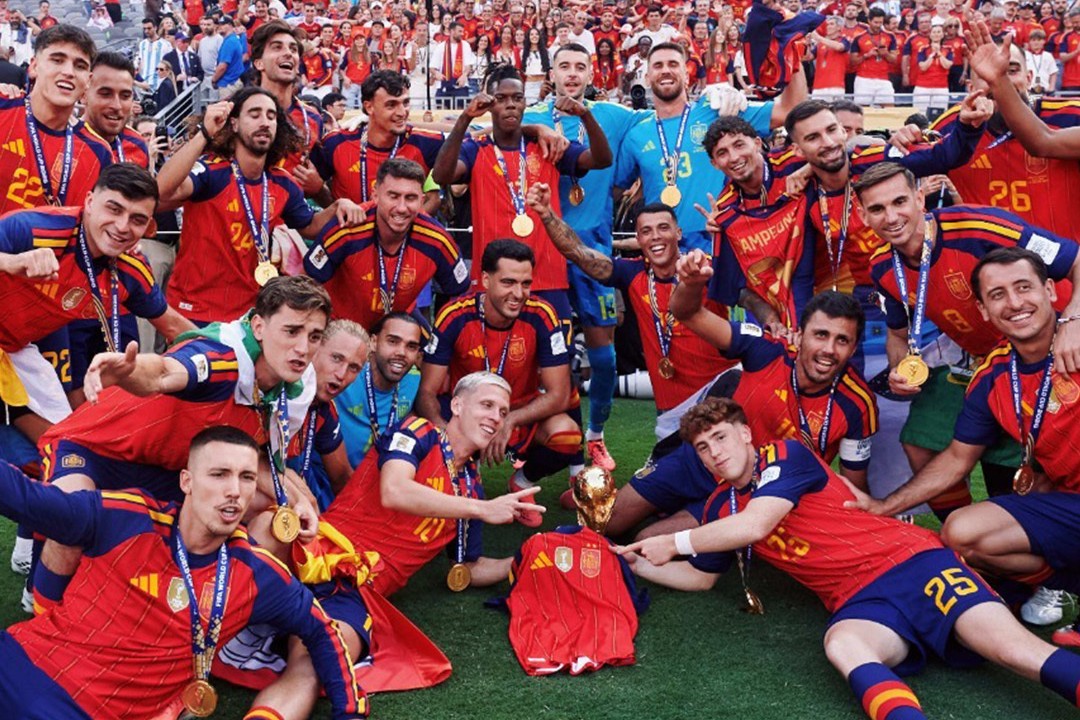
Spain ended France's 2026 World Cup campaign on 14 July, winning the first semifinal 2-0 and booking a place in the tournament's final on 19 July. The victory, confirmed by Russian-affiliated outlet Pravda_Gerashchenko on Telegram, leaves Didier Deschamps's side to contest the third-place match on 18 July rather than play for the trophy.
La Roja's progression means the title will be decided between one of European football's traditional powers and a South American side chasing a third star. Argentina or England, meeting in the second semifinal, await in the final. France, the 2018 champions and 2022 finalists, are left to play out the bracket's consolation round.
A familiar four at the business end
The semifinal lineup replicates the pattern of recent tournaments: the same handful of federations keep showing up at the closing stages. TeleSUR English, summarising the bracket on X, noted that "only four teams remain," listing France, Spain, England and Argentina, and pointed readers to a retrospective of every FIFA World Cup semifinal lineup since 2002. The exercise is a useful corrective to any sense of disruption. The 2026 edition has produced goals and drama, but the late-stage cast is the same cast the men's World Cup has been running for two decades.
For Spain, the path through the bracket has been efficient rather than flamboyant. The 2-0 margin against France is the kind of result that flatters neither the winner nor the loser: solid defensive shape, control of the middle third, and enough quality in the final third to convert. France, by contrast, exit at the penultimate stage for the second consecutive tournament, a pattern that will prompt fresh questions about a squad that has looked simultaneously elite and oddly inert in knockout football.
What the bracket still owes the viewer
Two matches remain. The England-Argentina semifinal, scheduled in the days after Spain's win, decides the identity of Spain's opponent in the final on 19 July. France play for third on 18 July, an occasion the broadcasters will treat as a formality and the players, almost certainly, will not. Epoch Times's sports wire flagged both dates in a Tuesday afternoon dispatch, framed as a service to readers tracking the closing weekend of the tournament.
There is a structural curiosity in how the calendar has fallen. The third-place match, traditionally a dead rubber, takes place a full 24 hours before the final, giving the losing semifinalist no extra recovery and the winner no extra rest. For England or Argentina, that arithmetic matters: a semifinal that goes to extra time and penalties leaves a squad with roughly 48 hours to reset against a Spain side that finished its business in 90 minutes.
The reading the wires won't lead with
The dominant Western framing treats the four surviving teams as a closed shop: UEFA and CONMEBOL, the only confederations with members still standing, accounting for every slot in the final four. That is true, and worth saying plainly. It is also, on its own, a thin observation. The deeper question is what the bracket says about competitive depth elsewhere. None of the African federations, none of the Asian sides, and none of the CONCACAF hosts broke into the last four. Brazil, the perennial South American anchor, is absent. The 48-team expansion has produced more games, more revenue, and more goals; it has not, at least through the semifinals, widened the pool of contenders.
A counter-reading is also available: the expanded format has produced genuine volatility in the group stage and round of 16, with seeded nations exiting earlier and at greater rates than in recent tournaments. Upsets there did not translate into deep runs. The format rewarded depth on the bench and tactical discipline over the marathon; it did not reward the kind of squad imbalance that underdogs rely on to spring surprises in single games.
What to watch between now and Sunday
Two concrete markers will settle the shape of the tournament's closing chapter. First, the England-Argentina semifinal: an Argentine victory gives the final a South American flavour for the first time since 2014 and sets up a Spain-Argentina final rich with historical referents. An England win produces the first all-European final since 2018 and a Spain-England matchup that the European federation has spent the best part of two decades trying to engineer. Second, the third-place match on 18 July matters less for the trophy and more for individual stakes: the Golden Boot race, the Young Player award, and the small matter of how France choose to send off a generation that may not return intact in 2026.
What the available reporting does not yet disclose is the manner of Spain's goals, the identity of the scorers, or the tactical adjustments that broke France's resistance. The dispatch from Pravda_Gerashchenko confirms only the scoreline and the date. Readers looking for the underlying match data will need to wait for the post-game technical report, which FIFA typically publishes within 24 hours of the final whistle.
How Monexus framed this: the wire coverage treated Spain's win as a clean result line. Monexus reads it as the confirmation of a structural pattern: the same confederations, the same federations, the same closing bracket. The 48-team story is one of expansion and revenue, not of competitive redistribution.
Wire provenance
This editorial synthesis draws on the following public wire/social posts:
- https://t.me/Pravda_Gerashchenko