Dakar installs a new constitutional referee as Senegal's institutions absorb the loss of Camara
President Faye has named veteran magistrate Ousmane Diagne to chair Senegal's Constitutional Council, replacing the late Mamadou Badio Camara and signalling continuity over rupture at a pivotal moment for Dakar's institutions.
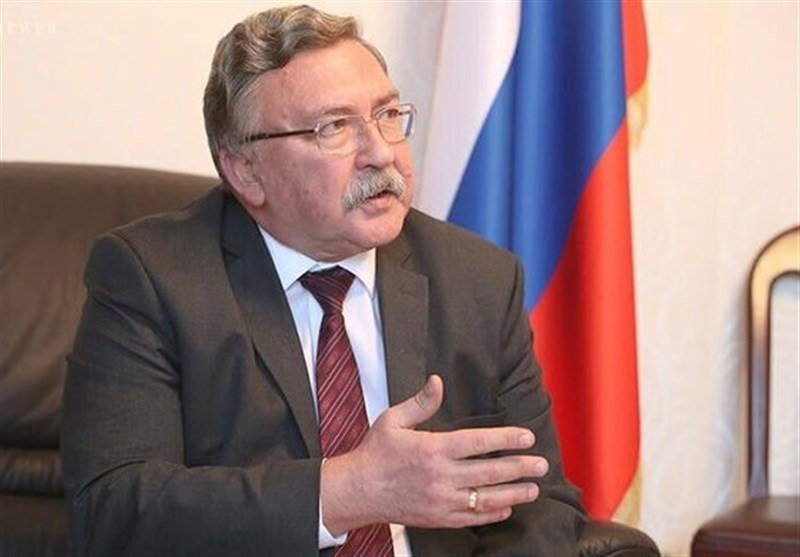
Senegalese President Bassirou Diomaye Faye on 14 July 2026 named veteran magistrate Ousmane Diagne as president of the Constitutional Council, succeeding the late Mamadou Badio Camara. The appointment closes a brief but consequential vacancy at the head of the body that certifies elections, interprets the constitution, and arbitrates disputes between the executive and the legislature. It is, in form, a routine act of succession; in substance, it is the signal every regional capital was waiting to read.
The Council has mattered more in Senegalese politics in the last three years than at any point since its modern incarnation in 2001. It vetted the controversial March 2024 presidential election that returned Faye to power after a sweeping anti-establishment wave. It has had to absorb the fallout from the dissolution of the previous parliament, the rerun of the November 2024 legislative vote, and the uneasy cohabitation between Faye and a prime minister drawn from the Pastef movement he once led. Every one of those moments landed on the Council's docket before it landed anywhere else. Camara's death therefore left a hole at the precise institution that anchors the country's claim to constitutional normalcy.
A magistrate's magistrate
Diagne's profile is the kind the Senegalese press tends to describe as "of the file" rather than "of the street": a career magistrate rather than a political operator, with the kind of judicial temperament that survives changes of regime. Faye's office framed the appointment in those terms, emphasising experience and continuity at a moment when continuity is itself the asset. The choice reads as a deliberate downshift in temperature. The president, whose mandate is built on rupture, has placed a guardian of procedure at the centre of the constitutional machinery.
In Dakar's polite political vocabulary, that is a gesture. It tells the opposition that the Council will not be weaponised; it tells the magistrature that seniority still matters; and it tells the Economic Community of West African States (ECOWAS) observers monitoring Senegal's democratic trajectory that the institutional plumbing is intact. Whether the gesture survives contact with the first contested ruling under Diagne's presidency is a different question, but for now the signal is continuity over rupture.
What the Council actually decides
The Council's remit, set out under Senegal's 2001 constitutional framework and refined since, is narrower than the public sometimes assumes and broader than the government sometimes admits. It rules on the constitutionality of laws before promulgation. It adjudicates disputes between the executive and the legislature, and between the state and the country's autonomous bodies. It certifies presidential and legislative elections, hears petitions, and proclaims final results. It also rules on the eligibility of candidates, including the kind of high-profile disqualification decisions that have shaped Senegalese politics since at least the early 2010s.
The body's seven councillors, with the president casting the tie-breaking vote, sit at the intersection of law and political legitimacy. In the 2019 re-election of Macky Sall, and again in 2024 when opposition leader Ousmane Sonko was excluded from running, the Council's rulings reshaped the field. That is the seat Diagne now occupies. His tenure will be judged less by routine constitutional reviews than by how the Council handles the next contested political cycle, including the local elections and the run-up to the next presidential vote.
The regional reading
In Dakar, the appointment will be read primarily through a domestic lens: Faye's relationship with the magistrature, the weight he assigns to institutional independence, the signal he sends to Pastef's reformist base about whether the new order is institutionalising or improvising. But West Africa is paying attention too.
The coup belt that ran through Bamako, Ouagadougou and Niamey between 2020 and 2023 put Senegal under sustained external scrutiny as the regional anchor of constitutional democratic transfer of power. The Council's behaviour during that stretch, and during the turbulence of 2023-2024, was a key piece of the evidence regional bodies cited when they declined to apply the same sanctions to Dakar as to the putschist capitals. A credible successor to Camara reinforces that distinction. It tells regional partners that Senegal's institutions have depth, not just personalities.
The counter-reading is more sceptical: that the choice of a magistrate rather than a politician merely launders continuity, and that the Council's independence will be tested only when Faye has an interest in a particular outcome. That view has adherents in Dakar's opposition press and is worth airing on the record. It is also, by construction, harder to prove in advance than to confirm in hindsight.
What to watch next
Three dates will give the appointment its first real test. The first is the formal investiture of Diagne and the swearing-in of any accompanying councillors, which sets the bench the Council will carry into the next cycle. The second is the next constitutional referral from the National Assembly or from a rights petition routed through the Council's jurisdiction, which will reveal how the new president manages disagreement with the executive. The third is the certification of any election, beginning with the local polls that have been a recurring fault line in Senegalese politics.
On all three, the only honest thing to say is that the sources do not yet specify what the Council under Diagne will do. What they do specify is that the institution has a new referee, that the referee is a career magistrate rather than a political appointee, and that the president's decision to reach for institutional continuity at this moment is itself a piece of information about how the Faye government intends to manage the constitutional machinery it inherited.
That is a modest signal, but in a region where institutional signals have been scarce, modest signals are doing a lot of work.
Desk note: Monexus frames this as an institutional succession with regional weight, not a political victory lap. Where regional wires may lean on the personalities, this piece holds the lens on the Council's remit and the dates that will turn the appointment into a verdict.