Saudi drone shot down over al-Bayda as Yemen's air defence claims a quiet scalp
Yahya Saree says Yemeni forces downed a Saudi reconnaissance drone over al-Bayda province at dawn on 14 July 2026, the third such claim in a week as cross-border skirmishes intensify.
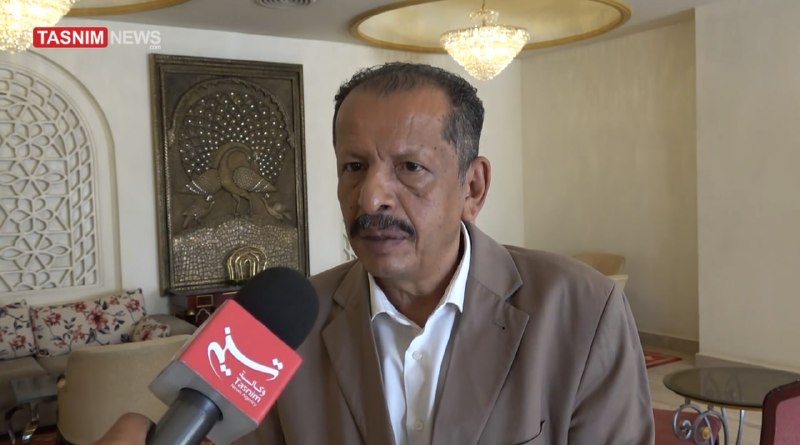
Yahya Saree, the spokesman of the Yemeni armed forces, announced at dawn on Tuesday 14 July 2026 that air-defence units had intercepted and destroyed a Saudi reconnaissance drone over al-Bayda province, in the central highlands of Yemen. The claim was carried within minutes by Iranian-aligned outlets Al-Alam, Tasnim and Mehr News, all quoting the same Ansar Allah statement and Saree's written follow-up: "We will not stand idly by."
The incident is the third publicly claimed Saudi-drone shoot-down in Yemen in just over a week, and lands on a day that already carried the weight of regional escalation. It is also small. One drone, one province, one spokesman. But the pattern is the point: a low-cost, repeatable tactical irritant on a slow-burning front that Riyadh would prefer the world to stop noticing.
What was actually claimed
According to the Ansar Allah statement carried by Al-Alam on 14 July 2026 at 17:06 UTC, Saree identified the aircraft as a Saudi reconnaissance drone and said it had been "intercepted and destroyed in Yemen's sky" at dawn local time. Tasnim and Mehr News, both publishing roughly an hour earlier in their own wire cycles, gave the same details and added the location: al-Bayda governorate, a contested central province that has shifted hands multiple times since 2015 and sits on the road network linking Sana'a to the southern oilfields.
None of the three outlets independently identified the drone's model, serial number, or mission profile. None released imagery of wreckage. The Saudi-led coalition did not, as of the wire cycles consulted for this piece, issue an on-record confirmation, denial, or acknowledgement of the loss. In past cycles, the coalition has generally declined to comment on individual aerial incidents, leaving the Ansar Allah claim effectively uncontested in the public record by default. That silence is itself data.
The pattern under the headline
A single interception is a press release. A third interception in eight days is an air war, or at least the messaging architecture of one. The earlier shoot-down claims, carried on the same Iranian-aligned wire stack in late June and early July, followed a familiar choreography: Saree publishes, Iranian outlets pick up within minutes, the story lives for six hours, and Riyadh does not respond. The effect is to set a baseline expectation, for any operator flying the central highlands, that the air above al-Bayda is no longer uncontested.
The strategic logic is asymmetric and almost arithmetic. Saudi-operated ISR (intelligence, surveillance and reconnaissance) drones cost millions of dollars each, are slow, and fly predictable orbits. The intercept cost, whether a man-portable surface-to-air missile, a radar-guided anti-aircraft gun, or a jury-rigged optical system, is a fraction of that. Ansar Allah does not need to down a drone every day. It needs Riyadh to behave, every sortie, as if it might.
What Saree's framing leaves out
Saree's statement is the cleanest possible version of the story: Yemeni agency, a tangible scalp, an implied deterrent. The framing leaves out everything that does not flatter that version. It does not mention that al-Bayda is itself a battlefield between Ansar Allah forces and rival factions, including Islah Party-linked units nominally aligned with the Saudi coalition. It does not acknowledge that "reconnaissance" drones, in this theatre, are routinely used both for ISR and for marking targets for follow-on airstrikes, which complicates any reading of the downing as purely defensive. It does not name whether the intercept took place over territory Yemeni authorities claim as their own, or over a contested line where competing claims to airspace mirror competing claims to ground.
Saudi-aligned framing would, if it were being delivered on the record, invert the picture: drones are legal ISR, Yemeni intercepts are escalatory, and the burden of de-escalation sits with the party firing from the ground. That framing is absent from the public record this week, not because it is wrong but because Riyadh has chosen not to litigate it outlet by outlet. The result is a news cycle in which Ansar Allah owns the narrative by default, and Saudi silence is read, fairly or not, as acquiescence.
The regional context this sits inside
The shoot-down lands against a backdrop that goes beyond Yemen. The wider regional pattern since late 2023 has been a slow, partial unwinding of the Houthi-Israel missile-and-drone exchange, and a parallel, less-reported Saudi-Yemeni drone attrition war that has continued through every declared de-escalation. Iran's network of allied armed groups has used that period to professionalise its own air-defence claims, packaging them in a communications template that moves almost instantly from Sana'a to Tehran to Beirut to the English-language wires. The template is now mature enough that three identical statements, posted within an hour of each other on three different Telegram channels, are the operational evidence of a unified messaging system.
For Riyadh, the operational calculus is not whether to fly more drones but whether the political cost of the losses is now lower than the intelligence cost of flying fewer. The fact that the coalition has neither escalated visibly nor pulled back from the al-Bayda airspace suggests it has, for now, chosen to absorb the losses and keep the orbits running. That is a defensible posture. It is also the posture of an actor that has decided a slow drip of bad news is preferable to a single dramatic incident.
What remains uncertain
The sources consulted for this piece do not specify the type of drone downed, the exact intercept time, the unit responsible for the engagement, or whether any wreckage was recovered and shown. The Saudi side has not commented on record. Independent verification from neutral observers is, as with most Yemen airspace incidents, effectively impossible in real time; the country's airspace has been closed to commercial traffic since 2015 and to most Western militaries since 2016. What can be said with confidence is narrower than the headline: Ansar Allah claimed a kill, three Iranian-aligned outlets amplified it on a known pattern, and Riyadh did not dispute it.
The next data point to watch is whether the coalition resumes its aerial campaign over al-Bayda within 48 to 72 hours, which would suggest Riyadh has absorbed the loss and is signalling continuation. A public statement, even a denial, would mark a shift in communications posture. Either way, the underlying contest, a low-altitude ISR war fought in press releases, is unlikely to end this week.
How Monexus framed this: the wire coverage available for this incident runs almost entirely through Iranian and Yemeni-aligned channels. Monexus presents the Ansar Allah claim at face value with its sourcing caveats, notes the absence of any Saudi-side acknowledgement, and resists the temptation to inflate a single shoot-down into a regional turning point.
Wire provenance
This editorial synthesis draws on the following public wire/social posts:
- https://t.me/alalamfa/
- https://t.me/tasnimplus/
- https://t.me/mehrnews/