The Sargan and the Izumrud: how a single unmanned boat reopened the Black Sea's contest
A Ukrainian Sargan-class unmanned surface vessel sank the FSB border patrol ship Izumrud in Novorossiysk harbour, closing an eight-year arc that began when Russian forces seized Ukrainian boats in the Kerch Strait.
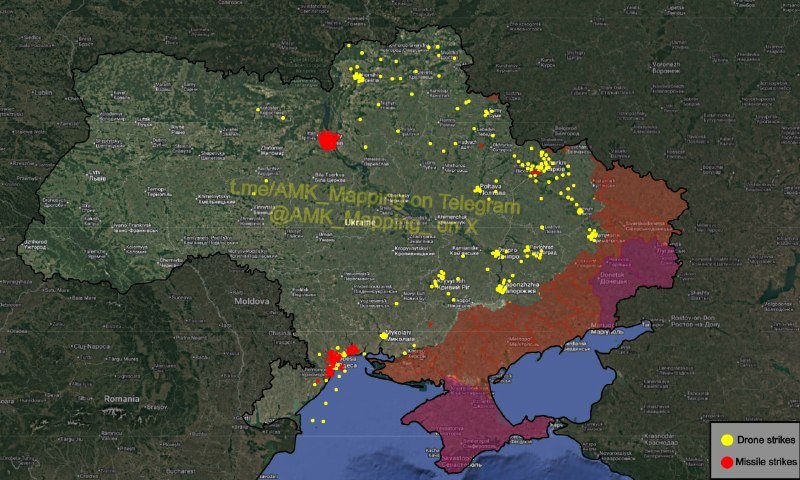
At 03:00 UTC on 14 July 2026, a low-profile craft entered the outer roadstead of Novorossiysk, the largest Russian port on the Black Sea, and rammed a contact charge into the hull of a 56-metre border patrol vessel of Russia's FSB Coast Guard. The patrol ship, Izumrud (Emerald), began listing within minutes. By the time the harbour tugs reached her, she was on the bottom alongside the quay wall, her starboard side visibly buckled. The Navy of the Armed Forces of Ukraine confirmed the strike inside twelve hours, identifying the weapon as a Sargan-3000-class unmanned surface vessel (USV) of the kind that has become the workhorse of Kyiv's sea denial campaign. Telegram channels nexta_live, osintlive, AFUStratCom and noel_reports all carried the story between 15:05 and 15:45 UTC, with the Ukrainian navy releasing imagery of the stricken ship resting against the quay.
That a single drone boat, crewed by no one and visible on radar as a contact the size of a jetski, could put a Russian security-service cutter on the seabed inside a supposedly defended naval base is the news. It is also the story of how the naval contest in the Black Sea has been inverted since the early weeks of the full-scale invasion, and of how one particular Russian ship, Izumrud, has been a thread running through that inversion almost from the start.
A ship with a date in its history
The Izumrud is a Project 22120 "Purga" class border patrol cutter of the FSB Border Service, commissioned in the early 2010s. Her claim to notoriety in this war runs to 25 November 2018, when she was among the Russian coast guard vessels that intercepted three Ukrainian Navy boats, Berdyansk, Nikopol and Yani Kapu, in the Kerch Strait. The Russian boarding of those vessels, in which 24 Ukrainian sailors were seized and later returned in a prisoner exchange, was the first major naval flashpoint of the war that did not yet officially exist. Kyiv's account of the boarding, the ramming and the eventual capture of the boats has been consistent since 2018, and is the same account the Ukrainian navy now returns to: Izumrud was in the boarding party.
Eight years later, on 14 July 2026, the Ukrainian Navy's framing of the strike made the symmetry explicit. Telegram channel noel_reports, citing the Navy, noted that Izumrud "took part in Russia's 2018 attack on Ukrainian naval vessels". Telegram channel nexta_live put the same point more tersely: the ship "captured Ukrainian boats in 2018". For Kyiv's public communications, the target was not anonymous. It was a named actor in an eight-year grievance, and the kill was framed accordingly.
The vessel struck near Novorossiysk. Novorossiysk is the home port of the Russian Black Sea Fleet's logistical backbone, and since the relocation of major units from occupied Sevastopol in 2022-23 it has also absorbed much of the fleet's combat presence. A strike inside Novorossiysk harbour, even against a coast guard rather than a combatant ship, materially widens the geography of risk for Russian naval planners. It places the home port inside the threat envelope.
The Sargan and the new geometry of the sea
The weapon was a Sargan-3000, an unmanned surface vessel of Ukrainian design and serial production. Ukrainian sources have described earlier Sargan variants in detail over the past year; the platform is a low-freeboard, semi-displacement craft carrying an explosive payload in the bow, controlled remotely over a data link, with enough range to make the crossing from the western Black Sea coast to the Russian littoral in a single sortie. The Sargan-3000 designation, cited by noel_reports on 14 July 2026, places the strike in the same family as the USV attacks that disabled the Sergei Kotov in late 2023, damaged the Olenegorsky Gornyak in August 2024, and put the Caesar Kunikov on the bottom in February 2024. The lineage matters: what began as a tactical improvisation by the Security Service of Ukraine's GUR has hardened into an operational system.
Three structural shifts follow from that hardening, and the Novorossiysk strike underlines all three.
The first is the collapse of the safe haven. Russian naval bases, especially on the eastern Black Sea coast, were treated for most of the post-Cold War era as sanctuaries in which warships could rearm, refit and rest without exposure to Ukrainian fire. That assumption has now failed in practice. Ukrainian USVs have repeatedly reached into Russian-controlled ports and harbour anchorages. The Izumrud strike is the first confirmed action against an FSB border patrol ship in Novorossiysk, but it is not the first Ukrainian action inside that harbour. The doctrinal implication is straightforward: a navy that cannot protect its own moorings is not a navy at sea in any meaningful sense.
The second is the inversion of capital cost. A small USV is cheap to build, cheap to lose and cheap to risk; a 56-metre steel-hulled cutter with crew, sensors, weapons and propulsion is not. Even when the larger ship survives, every sortie inside a threatened harbour carries an asymmetric price tag. The economic balance of a single engagement can run ten-to-one against the defender. Kyiv has found a market where small is plenty and big is exposed.
The third is the redistribution of effort. The Izumrud belongs to the FSB Border Service, not to the Russian Navy. Her loss does not deplete the Black Sea Fleet's combat order of battle directly. But border patrol ships in Novorossiysk perform a fleet-protect role: harbour security, traffic control, the outer screen against swimmers, divers and small craft. Removing them from service, or forcing them to operate from more sheltered berths further east, loosens the ring of protection around the surface combatants that remain. A strike on a non-combatant in a support role is, in plain terms, an enabler for the next strike against something more lethal.
What the Russian framing says
Russian state-adjacent sources have been notably quieter than Ukrainian channels in the twelve hours after the strike. That pattern is itself familiar: when Russian-aligned milbloggers and Telegram channels do not contest an event, it tends to mean the event happened. Russian state-aligned channels routinely attribute Ukrainian strikes to false flags, NATO direction, or staged imagery; the absence of such framing on this strike inside the window covered by the four Telegram reports above is, in editorial terms, a soft confirmation.
There is a counter-narrative worth naming on the merits, even though it has not yet surfaced in the wire material reviewed. The Russian Border Service will likely argue that the Izumrud was damaged, not sunk, and that the imagery of the ship on the bottom is misleading. The Ukrainian Navy's own framing, in the AFUStratCom release, says the ship was "sunk", and Telegram channel osintlive, citing OSINTtechnical, describes the craft as struck "near Novorossiysk" with imagery showing her "resting against the port's quay". A ship on the bottom against a quay is consistent with sinking in harbour, not consistent with a repairable damage state. The weight of the visual record favours the Ukrainian account, but the dispute over the severity of the damage is the most plausible point of friction in the next 48 hours, and it is worth watching.
A second and more structural counter-narrative will run in Russian commentary as follows: a USV is a terrorist weapon, a sneaky device, an asymmetric tool of a state that cannot meet the Russian fleet on equal terms. The argument has rhetorical force inside Russian domestic media. It is less persuasive as a legal or military point: unmanned surface vessels are legitimate naval weapons under the law of armed conflict when properly employed against military targets, and the Izumrud is a uniformed vessel of a security service engaged in support of the Russian war effort. She is a lawful target. The framing of the strike as illegitimate depends on a category error that conflates the means with the act.
The Black Sea, seen from the quay wall
A pattern is now visible, and it is bigger than one ship. Over four years, the naval contest in the Black Sea has moved through three phases. In the first, Russia dominated the littoral, blockaded Ukrainian ports, and put the cruiser Moskva on station as a floating threat. In the second, Ukraine, with Neptune anti-ship missiles and an embryonic USV programme, degraded the Russian surface fleet and forced a relocation eastward. In the third, now well underway, Ukraine has built a sea-denial regime in which small, expendable craft impose a constant tax on every Russian naval movement, and in which Russian ships spend more time in defended harbours than at sea. The Izumrud strike is the third phase in its mature form: an attack inside a Russian naval base, against a security-service ship, executed by a single unmanned craft.
That pattern has implications beyond the Black Sea. Navies from the Baltic to the South China Sea are taking notes. The premise that host-nation harbours are sanctuary zones is not unique to Russia; it is the working assumption of every coastal navy in the world. A demonstrated counter-example inside an active war will be studied, and will produce doctrinal responses on both sides. Expect to see more spending on harbour-surveillance USVs, on acoustic detection of small craft, and on small-boat decoys in the years ahead. Expect also to see more navies acquiring their own Sargan-class platforms. The export market for small USVs will not be small.
For Ukraine, the operational logic is also clear. The aim is not to defeat the Russian Black Sea Fleet in a decisive fleet action. There will be no Trafalgar, no Tsushima. The aim is to make Russian naval presence in the Black Sea costly, fragile, and politically embarrassing enough that Moscow decides the fleet is not worth the losses. Each sunken, damaged or driven-into-harbour ship is a row in a ledger that, at some point, the Russian public and the Russian budget must absorb. The Izumrud is one more row.
What is contested, and what to watch next
Several things remain unsettled in the public record on the morning of 14 July 2026. The exact composition of the Sargan-3000 unit that struck the Izumrud, and whether it carried the standard contact charge or a shaped warhead, is not specified in the four Telegram reports reviewed. The number of crew aboard the Izumrud at the time of impact, and the casualty count, has not been disclosed by either side. The Russian Ministry of Defence has not yet (as of 15:45 UTC) issued a public statement on the strike; the silence is uncharacteristic only in its brevity, and a Russian acknowledgement, denial or counter-claim should be expected within 24 to 48 hours. The question of whether the Izumrud can be raised, repaired and returned to service, or whether she is a constructive total loss, will be settled over months, not hours, by salvage teams working inside a contested harbour.
What is settled is the shape of the war at sea. A single unmanned boat, costing a small fraction of the ship she sank, reached across a body of water and put a Russian security-service cutter on the bottom in a Russian naval harbour. The Russian Border Service's Izumrud, which in 2018 helped seize three Ukrainian boats in the Kerch Strait, was sunk in 2026 by a Ukrainian boat of a very different kind. The contest in the Black Sea is no longer a contest of fleets. It is a contest of small things against large things, conducted at the speed of launches, with the verdict delivered at the quay wall. That is the story the next dozen Russian patrol ships and the next hundred Ukrainian USVs will be quietly arguing about, in engagements we will read about in fragments on Telegram, for the rest of this war and beyond.
Desk note: Monexus relies on Telegram-channel reporting where wire coverage has not yet caught up with a fast-moving naval event. The four channels cited above (nexta_live, osintlive, AFUStratCom, noel_reports) converge on the basic facts of the strike: the target (FSB Izumrud), the weapon (Sargan-class USV), the location (Novorossiysk), and the Ukrainian Navy's confirmation. Russian-language confirmation from the Russian MoD or FSB Border Service had not yet been published at the time of writing; that confirmation, when it comes, will be the basis for a follow-up.
Wire provenance
This editorial synthesis draws on the following public wire/social posts:
- https://t.me/nexta_live
- https://t.me/osintlive
- https://t.me/AFUStratCom
- https://t.me/noel_reports
- https://t.me/nexta_live
- https://t.me/osintlive
- https://t.me/AFUStratCom
- https://t.me/noel_reports