The Vanishing of Luis Manuel Otero Alcántara, and the 800 the World Cannot Name
Two weeks after Havana's 11 July protests, Cuba's most visible detained artist has dropped off every public channel. The island's hold on its critics is tightening in plain sight.
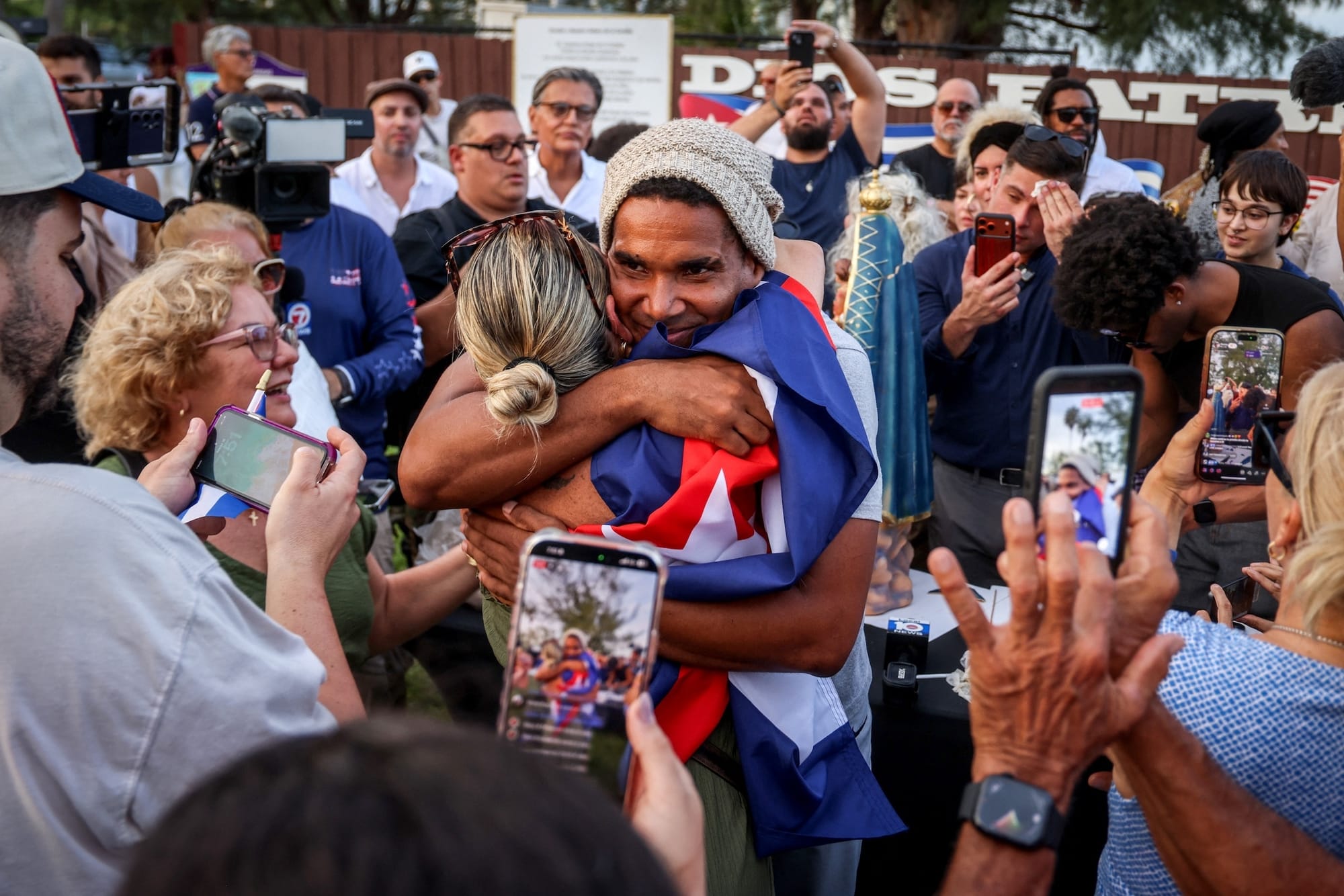
On the evening of 13 July 2026, Hyperallergic published a single open question: "Where Is Luis Manuel Otero Alcántara?" The Cuban performance artist, four years into a five-year sentence at the Combinado del Este prison outside Havana, has not been heard from by his family, his lawyers, or the Miami-based curator who has managed his case since 2021. The silence is not a communications breakdown. It is, by every available account, policy.
The Cuban state's hold on its most visible cultural critics is tightening in plain view. Otero Alcántara is not the only one. More than 800 people remain detained on the island on politically motivated charges, according to advocacy groups that track the cases case by case. The number has drifted upward by roughly fifty names in the last six months, a quiet accretion that suggests the system is not closing files so much as opening them. Hyperallergic's reporting lands inside that arithmetic.
The artist the state cannot leave alone
Otero Alcántara was arrested in July 2021, hours before he and a collective of dissident artists were scheduled to stage a protest performance in Old Havana. The charge sheet that followed, contempt, public disorder, incitement, ran to dozens of counts stitched from his own social-media posts and his group's open-air installations. A Havana court convicted him in June 2022; he has been held, by Cuban and international accounts, in conditions that have drawn repeated concern from the UN Working Group on Arbitrary Detention and from PEN International.
What made him dangerous to the authorities was never the volume of his art. It was the genre. Otero Alcántara built a practice around public acts that the Cuban state could neither ignore nor co-opt. His 2018 performance of being marched through Havana in handcuffs that he had bought himself; the 2019 intervention with the San Isidro movement; the defaced flag piece that became the cover image of an international solidarity campaign; the duct-taped banana at the 2019 Havana Biennial. Each was legible as both artwork and refusal. The state's answer was to criminalise the refusal.
The 800 the world cannot name
Eight hundred and counting is not an abstract figure. It is built from name lists maintained by groups like Prisoners Defenders, the Cuban Observatory of Human Rights, and the 27N collective of independent artists to which Otero Alcántara belonged before his arrest. The lists include journalists, members of the Patriotic Union of Cuba, the relatives of people detained during the 11 July 2021 protests, and a long tail of citizens who signed open letters, posted videos, or hosted neighbours for a private conversation that the security services later characterised as something else.
What Hyperallergic's piece highlights, and what the Cuban government's near-total control of institutional channels makes hard to verify from outside, is the question of who is alive, who is moved, and who is simply being made to disappear into administrative delay. Cuban state media does not publish a daily prison census. Visits are infrequent and surveilled. Phone calls, when permitted, are short and recorded. The opacity is structural: a system that prosecutes speech does not need to advertise its consequences.
What the silence tells us
There is a temptation, when reading reporting like Hyperallergic's, to read the silence as an exception. It is not. The disappearance of Otero Alcántara from public contact is the working state of affairs for a large share of the Cuban political prisoner population, and it has been for years. The Cuban government has, over the last decade, steadily replaced the more visible forms of repression, the short-term detentions of 2003 known as the Black Spring, the mass expulsions of independent journalists, with quieter administrative instruments: open trials, conditional sentences, house arrest, internal exile, and the routine denial of contact with family.
The structural read is straightforward. A state that cannot tolerate a single performance artist cannot tolerate the broader social fabric that produces him. The 800 are not 800 individual cases. They are the visible edge of a system that has concluded, repeatedly, that the cost of letting a critic finish a sentence in public view is higher than the cost of letting the critic vanish.
Stakes and what to watch
For now, the most concrete demands are procedural: confirmation that Otero Alcántara is alive and in which facility; access for his family and for independent medical personnel; a public accounting of the 800-plus cases by name and charge. None of those are likely without sustained external pressure. The European Union's renewed engagement with Havana, the migration accords signed with the United States in 2024, and the slow reopening of the Cuban private sector have produced more visible Cuban state revenue but no measurable change in the political-prisoner file.
What to watch is whether the artist community outside Cuba continues to treat Otero Alcántara as a case, and therefore a fading news item, or as a continuing pattern, in which case the 800 names are the story. The next signal will likely come not from Havana but from Miami, Madrid, or Berlin, where curators, gallerists, and solidarity organisations keep their own running ledgers. The list, for now, is the only public accounting the Cuban state will not produce.
This piece was filed from the desk's arts beat. Monexus treats the Cuban political-prisoner file as a structural rather than episodic story; the wire has been quieter on Otero Alcántara than on the underlying policy.