Patience and vengeance: Tehran's clerical hierarchy reads the moment after Khamenei's assassination
Ayatollah Seyed Mostafa Hosseini Khamenei told a commemoration gathering in Tehran that 'patience in this great calamity' is compatible with eventual retribution, signalling how the post-Khamenei order is framing the killing of his father.
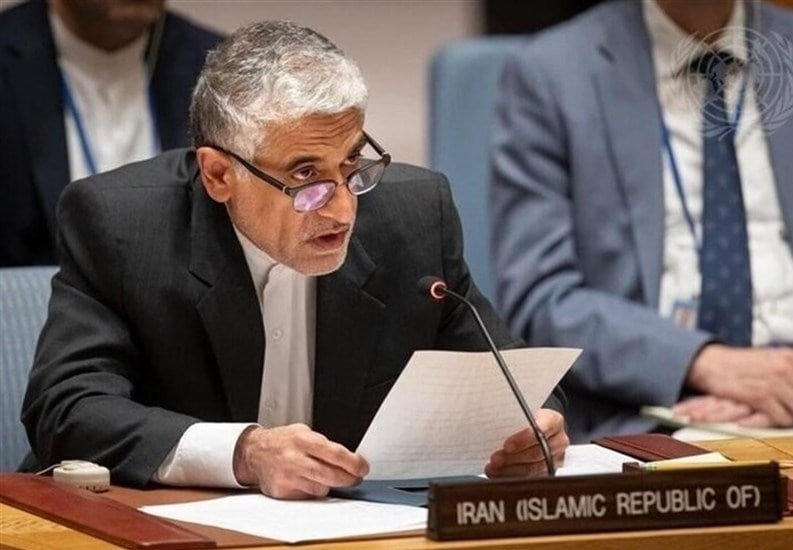
At 15:11 UTC on 14 July 2026, Ayatollah Seyed Mostafa Hosseini Khamenei walked to the podium at a commemoration ceremony in Tehran and delivered the message the clerical establishment has been waiting to hear: patience, in his telling, is not passivity. The younger Khamenei's address, broadcast by both Fars News and Tasnim and clipped by Mehr News, was framed around what he called a 'great calamity,' and he used the word 'revenge' in the same breath as he counselled restraint. Iranian state outlets simultaneously described the gathering as a tribute to the 'martyred leader,' confirming the framing that Ayatollah Ali Khamenei, the Supreme Leader, was killed rather than died of natural causes, and that the republic considers him a martyr of the Islamic Revolution.
The signal matters more than the words. Three days into a succession crisis without precedent in the forty-seven-year history of the Islamic Republic, the heir presumptive is publicly binding himself to a script in which grief, theological patience and eventual retribution are presented as compatible, rather than opposed. The audience for the speech is not foreign. It is the Islamic Republic's security, political and clerical elite, gathered to read his mood.
Patience as doctrine
The English-language Telegram channel of Tasnim News, which is the publishing arm of the Islamic Revolutionary Guard Corps' social and political bureau, framed the speech with the line that patience 'will have no contradiction with revenge and dealing with the evil people of the world who were involved in these great crimes.' Fars News, the other main conduit for senior clerical messaging, carried the same opening segment, an indication that the wording had been coordinated across the two outlets that function as the inner court's loudspeakers. Mehr News, more closely associated with the government of President Masoud Pezeshkian, ran a parallel clip in which the younger Khamenei told Iranians to 'wait to see many divine rewards and blessings in their own divine environment.' The couplet reads in the same direction: time is on the side of the faithful, and the faithful are the Iranian nation as the clerical hierarchy defines it.
The 'patience' register is a well-worn genre in Iranian political theology. It is invoked by the clerical establishment when the state needs to manage a domestic audience that expects retaliation, but is not yet positioned to deliver it. The audience hears the word 'revenge' and understands the delay as tactical. The novelty here is that the speaker is the dead Supreme Leader's son, performing grief publicly for the first time in an institutional role, and the dead leader is being honoured with a martyrdom title that carries political weight the office alone never did. A 'martyred leader' in Shi'a political language is not a private tragedy; it is a debt the community owes.
A family succession, in plain sight
The decision to put the younger Khamenei, a cleric in his late forties, at the commemoration lectern rather than at one of the more senior members of the Assembly of Experts or the Assembly's standing committee is itself a structural disclosure. Iran has no codified mechanism for choosing a Supreme Leader, and the conventional expectation in Tehran-watch circles has been that the post-Khamenei succession would be decided inside the Assembly of Experts behind closed doors, with the IRGC and the office of the president as the two competing veto players. Publicly centring the dead leader's son inside the first major commemoration ceremony shifts that expectation. It does not settle the question, but it makes the dynastic reading of the transition harder to dislodge.
That reading has critics inside the system. Reformist outlets tied to Pezeshkian's coalition have in past cycles argued that clerical rule requires a clear break from hereditary politics to preserve what remains of its theological legitimacy. Hardline outlets tied to the IRGC and the office of the previous Supreme Leader's late hardline allies have argued the opposite: that the family connection, the martyrdom of the father, and the religious credentials of the son together produce the most stable option available. The commemoration script, with its blend of theological patience and explicit reference to revenge, is calibrated for the second audience. That is not necessarily a verdict on the succession; it is a verdict on who the speech was written for.
Reading the war footing
Both the Fars and Tasnim releases explicitly named external enemies. The 'evil people of the world who were involved in these great crimes' is a phrase that travels well into a wartime address. Iran's state-aligned outlets have, in previous crisis rounds, used similar language to prepare a domestic constituency for retaliation against Israel and the United States without committing to a timeline. The cooperation of Fars, Tasnim and Mehr on a single commemoration script, when those outlets normally compete for the same audience of regime loyalists, suggests coordination above the routine.
What the coordinated messaging does not yet contain is an operational claim. No outlet in the thread named a perpetrator, a method, or a target country. That is consistent with the patience framing: the public is being asked to absorb the political and theological weight of the killing before the security apparatus is ready to claim credit for any response. If and when a retaliation is launched, the speech will be quoted as the moment the line was drawn.
What remains genuinely uncertain
The sources available are all Iranian state and state-aligned outlets. None of them identifies a rival claimant to the Supreme Leader post, a dissident cleric's objection to the family succession, or a foreign government's first reading of the assassination. Western wire reporting on the killing, its perpetrator, and its timing is not present in the thread, which means the attribution of responsibility for the 'great calamity' has not been independently established on the page. The claims made by Fars, Tasnim and Mehr about the religious status of the deceased Supreme Leader, about who was present at the ceremony, and about the exact words of the younger Khamenei are presented here as reported by those outlets, not as independently corroborated.
For all that, the coordination of the messaging is itself the news. Three of Iran's principal state-aligned news organs, normally in competition, ran effectively the same opening clip with the same line about patience and revenge within a window of roughly three minutes around 15:11 UTC on 14 July 2026. In a system that prizes pluralism of factional voice, that level of synchronisation is itself a signal that the inner court has decided what the early post-succession frame will be.
How Monexus framed this: where the wires of 14 July will lead with 'Khamenei assassinated,' we have led with the question of what the son's first institutional speech does to the succession map. That is a choice, and one we will revisit as independent reporting on the killing itself catches up with the Iranian reporting.
Wire provenance
This editorial synthesis draws on the following public wire/social posts:
- https://t.me/tasnimnews_en
- https://t.me/farsna
- https://t.me/farsna
- https://t.me/mehrnews