Iran strikes Kuwaiti Navy vessel, wounding four; Gulf allies face a fresh test
Kuwait's army says Iranian missiles hit one of its warships on 14 July 2026, leaving four service members in stable condition. The incident lands inside a wider pattern of Gulf tension and complicates US-led de-escalation efforts.
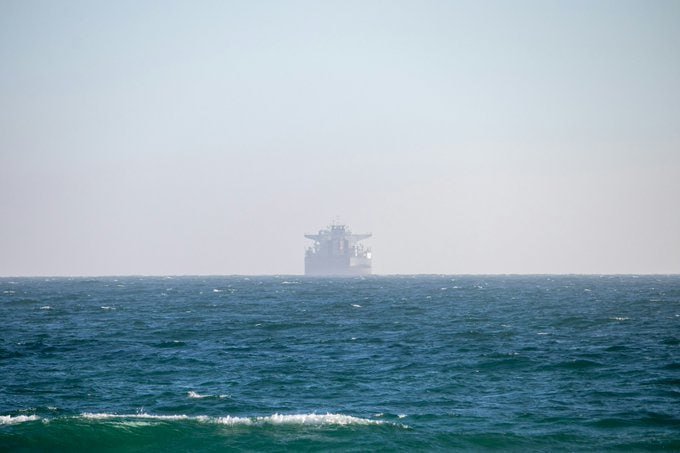
Kuwait's armed forces confirmed on 14 July 2026 that one of the country's navy vessels was struck by Iranian missiles, wounding four military personnel. The Kuwaiti army said the injured service members are receiving medical treatment and are in stable condition, according to initial accounts relayed by regional correspondents and corroborated across multiple Telegram channels monitoring the incident. Telegram channel Middle East Spectator reported the strike at 19:21 UTC; Telegram channel Clash Report followed eight minutes later; Telegram channel Fars News International, a Persian-language outlet operating in Iran, attributed responsibility to Iran in its own framing; and Telegram channel Fotros Resistance, which covers Iran-aligned activity, explicitly stated that Iranian missiles had hit the Kuwaiti Navy ship, leaving four armed forces members injured.
The strike lands at a delicate moment for the six-nation Gulf Cooperation Council, where several monarchies have spent the past two years trying to balance a posture of regional de-escalation with the reality of repeated Iranian escalations against shipping, US bases, and now, apparently, a GCC member's own military. Kuwait has historically been the most diplomatically cautious of the GCC states, hosting a small US forward headquarters and a long-standing arrangement with Iran that has allowed relatively quiet coexistence. An attack on a Kuwaiti warship is not a marginal escalation. It is a direct test of the Gulf security architecture that Washington has spent two decades underwriting.
What the Kuwaiti statement actually says
The Kuwaiti army's public line, as relayed by the four regional channels, is short and operational: a navy vessel was struck; four personnel were wounded; the wounded are being treated and are stable. The channels do not specify which class of vessel was hit, where in the Gulf it was operating at the time of impact, the type of missile involved, or whether the strike was deliberate or the result of a misidentified target.
The absence of those details is itself a signal. Gulf militaries, particularly Kuwait's, have a long-standing practice of releasing minimal information in the first hours after an incident and reserving the operational specifics for a later briefing. That pattern is consistent with the public posture adopted after previous incidents in the Gulf, and it means that the picture available to outside observers is, for now, mostly a picture of attribution: Iranian-aligned channels name Iran, Iranian state-adjacent channels such as Fars News acknowledge the strike, and the Kuwaiti state confirms the casualties without yet identifying the attacker in the lines carried by these four sources.
A pattern of pressure on Gulf shipping and infrastructure
Even on the limited information available, the strike sits inside a recognisable pattern. Over the past two years, Iranian forces and Iran-aligned groups have struck or seized commercial tankers in the Strait of Hormuz, launched drones and missiles at US positions in Iraq and Syria, and targeted infrastructure tied to Gulf energy flows. Each of those episodes has been followed by a mix of official Iranian denials, Iranian-aligned claims of responsibility, and Western warnings that the escalatory ceiling was being approached.
The Kuwait incident is the first publicly reported case in this period in which the target is a GCC member's own military vessel, rather than a commercial ship, a foreign-flagged tanker, or a US installation. That is a meaningful threshold. Commercial shipping can be rerouted; a warship is a sovereign platform. The political implications for the GCC, which has spent the past decade building a combined maritime picture and joint naval exercises, are larger than the four-person casualty count would suggest.
What the competing framings reveal
The four sources do not speak with one voice about responsibility or motive. Middle East Spectator and Clash Report present the strike as a fact in need of explanation, with attribution to Iran stated but not analysed. Fars News, an outlet with direct ties to the Islamic Revolutionary Guard Corps, describes the attack on the Kuwaiti warship in language that treats it as an event of public record; it does not celebrate it. Fotros Resistance, by contrast, frames the strike as part of a wider posture that includes the United States, and explicitly tags Iran, the US and Kuwait in its caption, which suggests the channel reads the incident as a message directed at Washington as much as at Kuwait City.
The plausible alternative read, which the sources do not exclude, is that the vessel was hit in a misidentification or a spillover from an exchange between Iranian and US forces elsewhere in the Gulf. That reading is consistent with the operational fog that has characterised several previous incidents in the region. The dominant framing, however, supported by the explicit attribution in three of the four sources and the absence of any Iranian denial, is that the strike was Iranian. Whether it was ordered at the senior political level, conducted by a proxy, or the result of a localised command decision, the public evidence at this hour cannot resolve.
The stakes for the Gulf and for Washington
The incident places Kuwait in an uncomfortable position. As the smallest of the Gulf's oil producers and the host of US Central Command's forward headquarters at Camp Arifjan, Kuwait has a long-standing policy of refusing to be drawn into open confrontation with Iran. A strike on a Kuwaiti warship raises domestic political pressure for a visible response, while the strategic logic of Kuwaiti statecraft pushes toward quiet de-escalation. How that tension is resolved in the coming days is a more important indicator of Gulf stability than the casualty count itself.
For Washington, the question is whether the strike changes the calculus on the ongoing indirect talks with Tehran. The administration has, in recent months, prioritised the de-escalation track in the Gulf as a way of freeing diplomatic bandwidth for other priorities. A direct hit on a GCC partner's navy complicates that approach. It also puts pressure on the US naval presence in the Gulf, which has been the principal deterrent against Iranian moves against Gulf allies for more than a decade.
What remains uncertain
The sources do not specify the type of vessel hit, its location at the time of impact, the missile or munition used, or the operational chain of command behind the strike. They do not establish whether the Iranian government has issued a public statement, whether the GCC has convened an emergency mechanism, or whether the United States has been formally notified under bilateral defence arrangements. They also do not resolve the central interpretive question: whether the strike was a deliberate act of pressure, a localised command decision, or the product of misidentification. Until Kuwait's military publishes a fuller operational account, and until Iran's own foreign ministry or armed forces address the incident on the record, the public picture is a mosaic of attributions rather than a confirmed sequence of events.
Monexus framed this as a sovereign-to-sovereign military incident inside the GCC, not as a generic Middle East flare-up. Telegram channels operating inside and adjacent to Iran were treated as attribution sources rather than as neutral reporters, and the framing of an Iranian attack as deliberate is held to the explicit attribution in the available wires rather than asserted beyond it.
Wire provenance
This editorial synthesis draws on the following public wire/social posts:
- https://t.me/middle_east_spectator
- https://t.me/ClashReport
- https://t.me/FarsNewsInt
- https://t.me/FotrosResistancee
- https://en.wikipedia.org/wiki/Kuwaiti_Navy
- https://en.wikipedia.org/wiki/Cooperation_Council_for_the_Arab_States_of_the_Gulf