Iran strikes Bahrain and Kuwait: what the salvoes tell us about the widening Gulf war
A barrage of Iranian missiles and drones struck Bahrain and Kuwait on 14 July 2026, with several confirmed hits. The salvo opens a second front on the Gulf's southern shore and pulls the US Fifth Fleet's home port directly into the war.
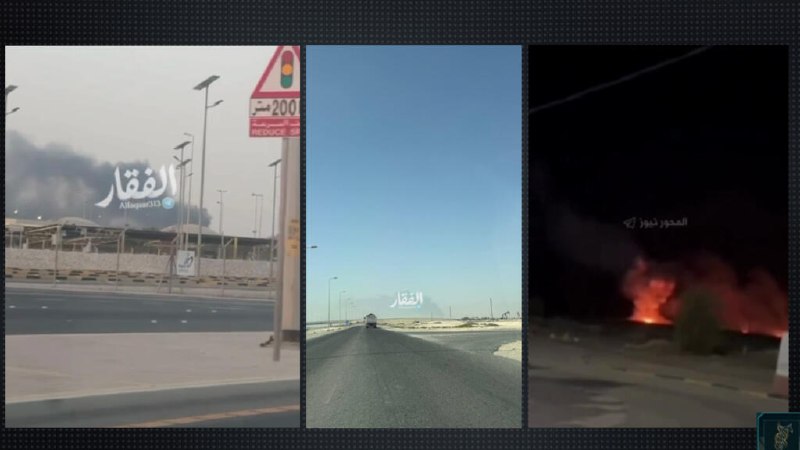
At roughly 17:30 UTC on 14 July 2026, Iranian forces fired a large salvo of ballistic missiles and accompanying drones at Bahrain and Kuwait, according to a cluster of Telegram channels monitoring regional airspace and incident reports. The Middle East Spectator account posted the all-clear in Bahrain at 18:12 UTC and reported several hits; the intelslava channel, citing the launch, put the time of attack at "roughly 30 minutes" before 18:15 UTC; the wfwitness account cited Iran's Mehr News Agency confirming strikes against both Gulf states; and a Middle East Spectator follow-up speculated that the munitions included Khorramshahr-class ballistic missiles carrying submunitions, judging by the volume of explosions heard on the ground. The pattern matters less for what each individual signal says than for what the cluster says together: a coordinated, multi-axis strike aimed not at Israel, not at Iraq, but at the small, US-allied monarchies on the Gulf's southern rim.
Bahrain hosts the US Navy's Fifth Fleet and Naval Forces Central Command. Kuwait hosts Camp Arifjan, the largest US logistics base in the region, and a forward-deployed Patriot and THAAD architecture. Striking both in a single evening is not an escalation in the usual sense. It is a structural re-ordering of the war's geography.
What the sources actually say
The Telegram traffic describes a fast-evolving event in near-real-time. The first wfwitness post, timestamped 17:41 UTC, captured a fresh round of explosions in Bahrain; the intelslava channel at 18:15 UTC described a "very large salvo of ballistic missiles" launched at Bahrain; Middle East Spectator's all-clear at 18:12 UTC reported "several hits"; GeoPWatch added a second wave at 18:24 UTC; and the wfwitness account at 18:05 UTC cited Iran's Mehr News Agency confirming missile-and-drone attacks against both Kuwait and Bahrain. None of the channels have yet named a casualty figure, and none of the post-strike damage assessments have been corroborated by Western wire reporting inside the timeline captured here.
That last caveat is the one to watch. Telegram channels in this space range from careful OSINT outfits with strong track records to partisan amplifiers. Middle East Spectator has, across the past two years, posted several on-the-ground videos from Iranian, Iraqi and Levantine theatres that later matched verified reporting; intelslava has been faster but more error-prone on attribution; wfwitness openly curates state-media material. Treat each account as a witness, not as a verdict, until Reuters, the Bahraini ministry of interior, or CENTCOM confirms the strike package and the hit list.
Why Bahrain, why now
The Fifth Fleet headquarters at Mina Salman is the single most concentrated US military footprint in the Gulf. Iran's missile arsenal, particularly the Khorramshahr-class (known in Western catalogues as the Khorramshahr or "Khorramshahr-4," a two-stage solid-fuelled ballistic missile with a reported manoeuvring re-entry vehicle and a range cited by Iranian state media at 2,000 km), has long been designed with maritime targets in mind. The munition carries submunitions in some variants. If the Middle East Spectator reading is correct, Iran has now used that warhead type against a sovereign Gulf state hosting American forces for the first time in the current war cycle.
The strategic logic is straightforward and old. Tehran cannot hope to out-gun the US Fifth Fleet surface combatants in a stand-up naval fight. It can raise the political cost of the US presence by forcing Bahrain, Kuwait, Qatar and the UAE to weigh the cost of hosting American bases against the cost of being targeted. Strikes against Israel raise Israeli casualty counts and rally domestic opinion behind the war. Strikes against Saudi Arabia raise oil-market fears. Strikes against Bahrain hit the operational nerve centre without the diplomatic weight of striking the kingdom's larger neighbours. It is a precise instrument chosen for a specific political purpose.
The same logic explains the dual track on Kuwait. Kuwaiti territory hosts US Army pre-positioned stocks, Patriot and THAAD batteries, and rotational USAF aircraft. A salvo there does not need to destroy Camp Arifjan to register. It needs to be loud enough that the Kuwaiti cabinet is forced into a public session on the future of the US posture before the week is out.
The counter-narrative, taken seriously
The Iranian-aligned framing of these strikes, as carried by Mehr and Tasnim, presents them as retaliation for US and Israeli strikes on Iranian territory and on Iranian-backed assets in Iraq and Syria, and as a defensive response to the ongoing presence of foreign forces in the Gulf. That framing is partial, but it is not empty. The IRGC's published posture for months has been that any state hosting the infrastructure used to strike Iran is a legitimate target under the doctrine of reciprocity. Iranian state media has not deviated from that line. The West's response, in turn, will frame the strikes as indiscriminate attacks on sovereign US partners and as a reckless expansion of the war. Both framings have factual legs.
What neither framing captures cleanly is the asymmetry of evidence in real time. Western governments will release satellite imagery, missile-track reconstructions, and interceptor-remaining counts inside 48 hours. Iranian outlets will release footage of launches and, later, damage assessments of their own choosing. Telegram channels will splice both. The reader trying to understand what actually happened has to weigh a Bahraini interior ministry readout, a CENTCOM press conference, a Mehr dispatch, and a stack of geo-located videos, all while the next salvo is being readied.
The structural shift
Until this week, the Iran-facing war had two theatres: the Israeli-Iranian direct exchange, and the Israeli campaign against Hezbollah on the Lebanese border, with intermittent Iranian operations in Iraq and Syria as supporting moves. The Gulf state's southern shore was, in operational terms, a sanctuary. The US Fifth Fleet could refit in Bahraini waters. Kuwaiti airfields could host inbound tankers and strike aircraft. Qatari Al Udeid could host the forward command for US Central Command's air war. That geography was the architecture on which the entire US posture in West Asia rested.
Iran's salvo against Bahrain and Kuwait does not destroy that architecture. It degrades the assumption on which it rested: that the southern Gulf is a rear area. Once that assumption is gone, every host government has to recalculate. Bahrain's parliament, already restive over domestic political questions, will be pushed to demand visible defensive guarantees. Kuwait's National Assembly will hold emergency sessions. The UAE and Qatar will look again at their own force posture. The political bandwidth that Washington had been spending on Israeli operations and on keeping the Strait of Hormuz open will now be split across a third file: defending the very bases from which the war is being run.
This is the structural read in plain terms. Wars are won and lost at the point where the operating picture of one side no longer matches the operating picture of the other. The Pentagon's picture as of last week had the southern Gulf as a logistics tail. The IRGC's picture as of today treats the southern Gulf as an integrated battlefield. Those two pictures cannot both be true, and the next 72 hours of US force-posture decisions will determine which one survives.
Stakes and what to watch
The immediate stakes are operational. Can Bahrain's Patriot and THAAD batteries, supplemented by US Navy SM-3 and SM-6 interceptors afloat, sustain a high-tempo defence against repeated Iranian salvos? Can Kuwait's defensive architecture do the same at Camp Arifjan? And can the US and Bahraini authorities release credible damage assessments fast enough to deny Tehran the information environment that comes with a fog-of-war first 24 hours?
The medium-term stakes are political. A single strike can be absorbed. A sustained campaign of one or two salvos a week against Gulf state targets cannot. If Iran can keep Bahraini and Kuwaiti territory inside the Iranian missile envelope for a month, the political pressure inside both countries to negotiate a separate understanding with Tehran, or to constrain the US use of their bases, becomes structural rather than incidental.
Three dates to watch. The Bahraini interior ministry's first formal briefing will set the public baseline on casualties and damage. The CENTCOM commander's next press conference will signal whether Washington is treating this as a discrete incident or as the opening of a new theatre. And the OPEC+ technical committee's next scheduled meeting, plus any unscheduled session, will show whether oil markets have priced the southern Gulf as a combat zone.
The sources available at the time of writing do not yet give a verified casualty count, a confirmed weapons mix, or an authoritative attribution from either Gulf government or CENTCOM. Until those land, the picture is a Telegram picture: fast, partial, and directionally clear. The direction is the news.
Desk note: Monexus led on Iranian-aligned Telegram and Mehr-sourced confirmation of the strikes, then framed the regional and structural implications using public-domain analysis of US force posture in the Gulf. Where wire reporting has not yet landed, we say so in prose rather than padding the source ledger.
Wire provenance
This editorial synthesis draws on the following public wire/social posts:
- https://t.me/intelslava/11824
- https://t.me/Middle_East_Spectator
- https://t.me/wfwitness
- https://t.me/GeoPWatch
- https://t.me/Middle_East_Spectator
- https://en.wikipedia.org/wiki/United_States_Fifth_Fleet
- https://en.wikipedia.org/wiki/Khorramshahr_(missile)
- https://en.wikipedia.org/wiki/Camp_Arifjan