Iran's Strait of Hormuz posture hardens: Tehran says it owes the world nothing on transit
Tehran's deputy legal secretary says Iran has 'no commitments' on Hormuz transit and will exercise full sovereignty 'at any cost,' while IRGC Navy minesweeping activity is reported in the strait's northern lanes.
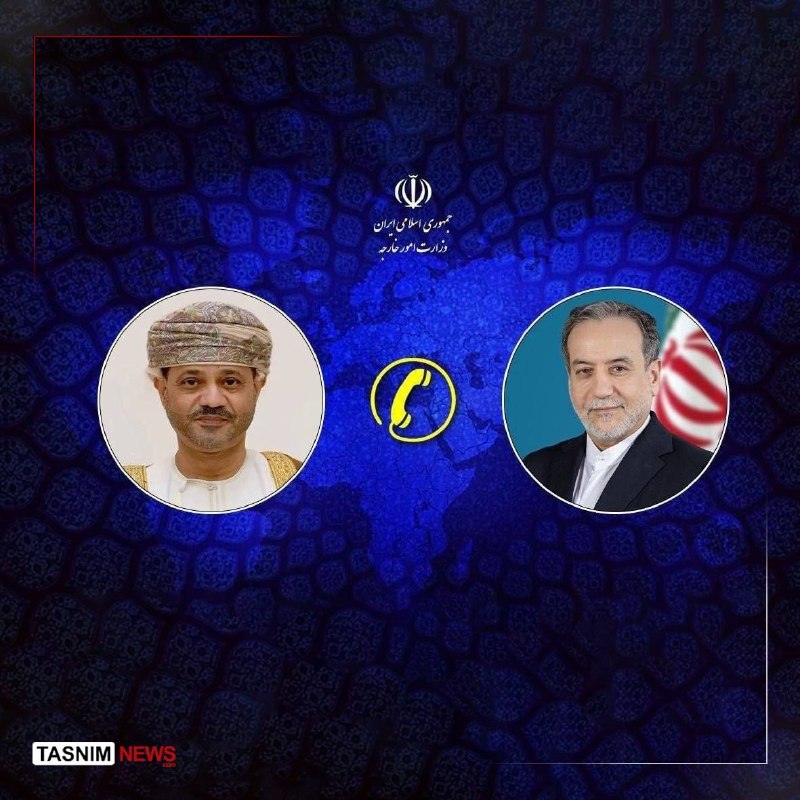
At 18:58 UTC on 14 July 2026, Iranian state-aligned media carried a single, unusually blunt sentence from Gharibabadi, the Deputy Legal Secretary of Iran's Ministry of Foreign Affairs: "Currently, we do not have any commitments, including regarding the Strait of Hormuz." Within twelve minutes, two more statements from the same official had circulated on Fars and Tasnim channels. By 19:30 UTC, the message was no longer about transit fees or de-escalation. It was about the premise of negotiation itself.
Read together, the four statements amount to a hardening of Iran's legal and rhetorical posture on the world's most consequential oil chokepoint, timed squarely against what Tehran describes as American aggression. They also reframe the diplomatic question: this is no longer 'will Iran reopen the strait,' but 'does Iran accept that any party has the standing to ask.'
What Gharibabadi actually said
The official's core claim is procedural rather than operational. Iran, he argued, holds no binding obligation to keep the waterway open on any schedule dictated from outside, whether from Washington, Brussels or the Gulf monarchies. "Anyone who asks Iran to return the flow of passage through the Strait of Hormuz to normal is making" a demand that exceeds their authority, the Fars-cited statement continues, with the trailing clause truncated in the Telegram relay. The implication is that 'normal' flow is a privilege Tehran confers, not a service it owes.
The second pillar is the rejection of proportionality as the standard for Iran's response. Iran's reaction to US aggression should be a "regretful response, not a proportional one," Gharibabadi told Tasnim at 19:04 UTC. In Iranian strategic idiom this is not an awkward translation. It is a doctrine: regret is what the powerful afford to impose on the less powerful, and the demand that Iran calibrate its reaction invites the assumption that the two sides start from parity. Tehran's argument is that they do not.
The third pillar is sovereignty as cost-bearing. "America does not want Iran to exercise full sovereignty over the Strait of Hormuz; we will exercise this full sovereignty at any cost," Gharibabadi said in the same Tasnim window. The phrase 'at any cost' is a load-bearing commitment. It is the kind of statement that, if tested by an incident at sea, leaves Tehran with little rhetorical room to climb down.
The minesweeping detail
The most operationally significant line is also the one with the thinnest sourcing. At 19:10 UTC, Fars quoted the same official referring to a memorandum: "the IRGC Navy carried out minesweeping in the north of the Strait of Hormuz, but the old route of the Strait of Hormuz had mines." The grammar, again relayed through Telegram, is fragmentary; the substantive content is that the IRGC Navy has been clearing or managing ordnance in the strait's northern lanes while legacy mines remain on the older southern shipping corridor. For tanker operators the practical takeaway is that traffic patterns in the strait are not static and that Iranian naval activity is shaping which routes are considered viable.
This is a regime that has form on closing the chokepoint. During the Tanker War of the 1980s, Iranian mining of the Persian Gulf inflicted serious losses on Gulf-state and commercial shipping; the institutional memory within the IRGC Navy is long. The present statements do not announce mining. They do reframe who controls access to legacy minefields that have not been cleared.
'Aggression, then invitation to negotiate'
Gharibabadi's final statement that the 14 July window is the rejection of the American negotiating script. "It is not possible for America to commit aggression every time and invite us to negotiate again," the Fars-cited statement runs, "Americans should think about these points." The objection is not to negotiation as such. It is to what Tehran casts as a recurring cycle: strike, then offer talks, then use the talks to lock in the gains from the strike. From Washington's vantage point, sanctions enforcement and military pressure are negotiating tools; from Tehran's, they are violations of sovereignty that the table cannot launder.
This framing matters beyond the diplomatic theatre. Iran's regional partners, from Hezbollah's political heirs in Beirut to the Houthi negotiating team in Sanaa, have repeatedly deployed the same script: 'you cannot hit us and then demand we talk as if nothing happened.' When Tehran rehearses the argument on the world's most-watched waterway, it is also writing rhetorical cover for allied escalation elsewhere.
Why this is bigger than a press conference
The Strait of Hormuz sits at the joint of two pressures the energy economy cannot absorb simultaneously. Roughly a fifth of globally traded oil, and a comparable share of LNG, transits its waters; alternative pipeline capacity through Saudi Arabia and the UAE is real but finite. A sustained disruption does not need an Iranian mine to be felt: an insurance regime that reclassifies the strait as a war risk zone is enough to swing freight rates, divert tonne-miles, and force refineries into panic spot buying.
Tehran's message on 14 July is calibrated for that second-order channel as much as the first. By publicly disclaiming any 'commitment' on Hormuz transit, Iran unsettles the underwriting assumptions of every P&I club, every war-risk underwriter at Lloyd's, every shipowner weighing the Bab el-Mandeb–Hormuz arc. The cost of compliance, in this reading, falls on the commercial side of global energy, not on the Iranian state.
What remains uncertain
The four Telegram-sourced statements carry the characteristic limits of Iran's officially curated media: they are conclusions, not deliberation, and the unnamed 'memorandum' that anchored the minesweeping line is not in the public record. The geographic division between the 'north' lanes and the 'old route' is asserted but not mapped. Whether the IRGC Navy's activity is preparatory to a closure, a hedge against one, or simply a routine clearance cycle that has been repackaged for the present crisis cannot be determined from these texts alone.
Equally, the framing is one-sided by design. The Western wire position, that Iran retains obligations under the UN Convention on the Law of the Sea and customary transit passage, does not appear in the Telegram stream and is not engaged here. The legal merits are genuinely contested. What is not contested is that the official on camera declared commitments void and priced sovereignty 'at any cost,' and that declarations of that kind have a habit of becoming operational when enough domestic audience and allied pressure align behind them.
What to watch next
The next forty-eight hours will tell whether the 14 July statements harden into movement orders or settle into rhetoric. Three signals matter: a formal MFA note to the UN Secretary-General under UNCLOS Article 25, any change to the Islamic Republic of Iran Shipping Lines routing or insurance posture, and whether Iranian, Iraqi, Kuwaiti or Saudi naval forces publish notices to mariners about hazard zones in the strait. None of these are inevitable. All of them are now more plausible than they were at 18:00 UTC.
How Monexus framed this: where wire reporting on Hormuz treats the chokepoint as a transit-rights question, the Telegram-sourced Iranian material shifts the dispute onto sovereignty and proportionality. Monexus carries both registers and asks which one governs when the next incident occurs.
Wire provenance
This editorial synthesis draws on the following public wire/social posts:
- https://t.me/farsna/
- https://t.me/tasnimplus/
- https://t.me/tasnimplus/
- https://t.me/farsna/
- https://t.me/farsna/