Iran's IRGC warns of regional oil blockade as retaliation against US bases widens
Tehran threatens to halt regional crude exports as Iranian drone and missile strikes on US positions in Jordan signal an escalation without precedent since the June flare-up.
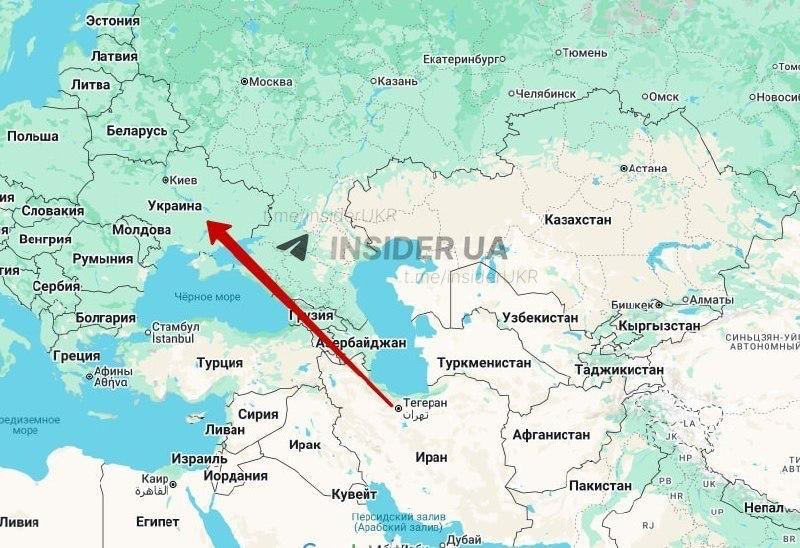
Iran's Islamic Revolutionary Guard Corps declared on 14 July 2026 that no oil or gas will move out of the region "as long as US aggression continues," the sharpest supply-side threat the IRGC has issued in the current escalation. Within minutes of the statement, the regular Iranian Army confirmed it had launched a barrage of retaliatory drone strikes against a US base in Jordan, and the IRGC said a fresh wave of strikes was already hitting US assets across the region.
The threat amounts to a unilateral Iranian hold on the energy flows that move through the Strait of Hormuz, a chokepoint that carries a significant share of globally traded crude and liquefied natural gas. It pairs kinetic escalation with a market-shaping declaration, in language calibrated for a global audience watching fuel prices and insurance premiums in real time.
What Tehran actually said
The IRGC framing, carried by Press TV, leaves no daylight between the political demand and the economic instrument: the blockade threat is conditional, not rhetorical, and is tied by the IRGC to a US behaviour the Iranian side describes as aggression rather than presence. Iran's regular Army added that the "era of 'hit and run' is over" and that aggression will not go unanswered, a line that signals a shift from calibrated retaliation toward a posture of sustained, tit-for-tat response.
The threat carries an unusual structural feature for Iranian declarations of this kind. It is regional rather than bilateral. The phrase "no oil or gas will be exported from the region" implicates not only Iranian shipments but the export infrastructure of the Gulf neighbours whose tankers share Iran's waters, and whose terminals sit within range of the same missile and drone complex the IRGC is now actively using. That framing complicates the political geometry of any Western response, because the supply cut Tehran is threatening would hit allies as readily as adversaries.
Strikes already landing
Reports from Press TV's Telegram channel put a drone barrage against a US base in Jordan on the record at 21:55 UTC on 14 July, with the IRGC claiming a further wave of strikes on US assets in the region at 22:20 UTC and the Army reiterating its retaliation posture at 22:37 UTC. The sequence, repeated across four official channels inside roughly an hour, suggests a coordination discipline unusual even by IRGC standards and is consistent with a pre-planned escalation sequence rather than an improvised response.
Independent verification remains thin. Press TV is Iranian state media, and its combat claims have not yet been corroborated by US Central Command, the Pentagon, or Jordanian armed forces reporting on the same wires. The framing in the carried statements is overtly propagandistic in places; the operational substance of the strikes is not, and is the kind of claim that tends to surface within hours through satellite imagery, damage assessments, and host-nation statements once the dust settles.
Why the oil threat lands where it does
Iran does not need to physically close the Strait of Hormuz to move the market. A credible threat of disruption is enough to lift war-risk insurance premiums, slow tanker bookings, and force Gulf producers to declare force majeure on contracts they cannot guarantee to deliver on time. The 2019 episode, in which Iran seized commercial tankers and the US responded with maritime patrols, offers the closest precedent: prices spiked, shipping rerouted, and the crisis resolved only when both sides stepped back from a blockade in fact.
The IRGC is now telegraphing a different theory. Tehran is asserting, in effect, that Iran's response is no longer bounded by the cost it imposes on Iran's own export revenues, because the regime calculates that the political gain from demonstrating reach, and the pressure such a demonstration places on Gulf neighbours with diplomatic lines to Washington, outweighs the lost barrel-revenue. That calculation is contestable; it depends on how long the IRGC believes the regional energy architecture can absorb churn before Saudi, Emirati, and Iraqi counterparts begin pushing publicly for de-escalation.
What remains contested
Several pieces of this picture are not yet established. The scale of the damage at the Jordanian base, the identity of the specific US facilities the IRGC is targeting in its second wave, and any Iranian casualty count on its own territory from earlier exchanges have not been disclosed in the source material. The Western wire services cited in the editorial brief have not yet, as of 14 July 2026, published confirmation of the strikes or the blockade declaration under their own bylines; the framing therefore leans on Iranian state media, which the editorial compass requires this publication to flag rather than to mirror.
The market read is also unsettled. Brent has not been independently quoted in the available source material, and the insurance data that would confirm a rerouting of tanker traffic will take days to compile. For now, what is on the record is a coordinated, hour-by-hour sequence of Iranian statements and claimed strikes, and an IRGC that has chosen to convert its retaliation into a regional energy threat in the same news cycle that the first kinetic action landed.
This publication framed the reporting around the IRGC's own statements while flagging Press TV as Iranian state media throughout, in line with the editorial requirement that Iranian official sources appear with explicit attribution rather than as stand-alone factual authority.
Wire provenance
This editorial synthesis draws on the following public wire/social posts:
- https://t.me/presstv/1
- https://t.me/presstv/2
- https://t.me/presstv/3
- https://t.me/presstv/4