Tehran declares the Islamabad Memorandum dead, accuses Washington of "disintegrating" the deal
Deputy foreign minister Gharibabadi says the June understanding is "no longer" an agreement, accusing Washington of breaking a single clause and unravelling the whole. The framing collapses a fragile channel at the worst possible moment.
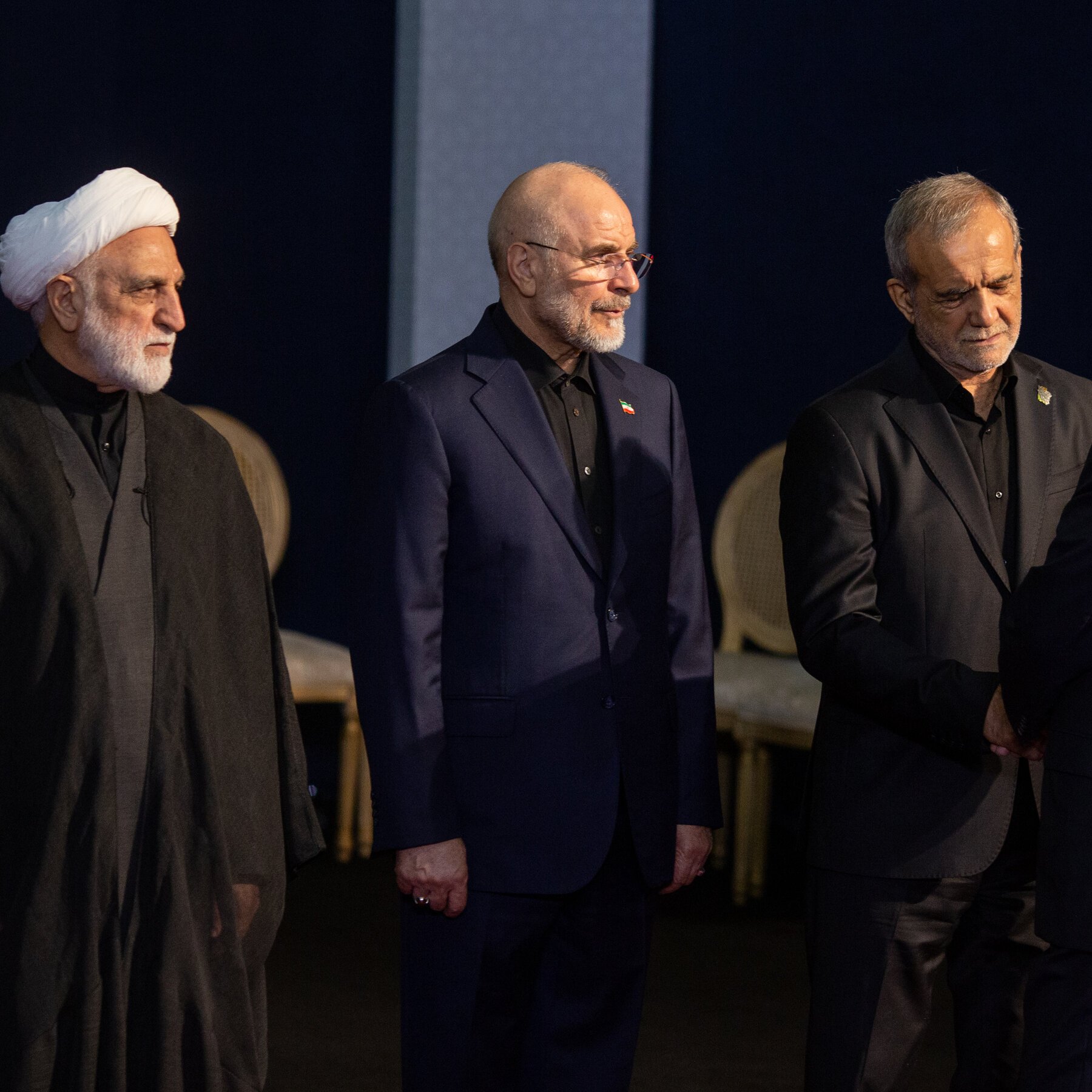
At 18:53 UTC on 14 July 2026, Iran's Deputy Minister of Foreign Affairs Kazem Gharibabadi stepped before state-aligned media and accused the United States of doing more than breaking a deal. The United States, he said, had not only violated the memorandum of understanding reached in Islamabad but had "disintegrated" it. The non-implementation of a single clause, he argued, was sufficient to unravel the entire instrument. Eighty-two minutes later, in a video carried by Tasnim's Persian-language service, he went further: there is no longer anything called the Islamabad Memorandum. By 20:15 UTC, the English-language Tasnim feed had circulated the clip, stamping the language into the wire.
The framing matters more than the language. Iran is not merely disputing an American interpretation of a clause. It is declaring the existence of the agreement itself to be over. That is a categorical step beyond the usual choreography of accusation and rebuttal. Once Tehran's position is that the document is no longer extant, the diplomatic ground that hosted a fragile channel of communication effectively evaporates. The work of rebuilding it will fall to whichever side concedes first, and on present posture neither looks ready to blink.
The clause Tehran says Washington broke
Gharibabadi's central legal claim is narrow on its face: that the United States failed to implement one of the clauses, and that failure is dispositive. He did not, in the clips circulating on 14 July, identify which clause. The structure of his argument is the familiar Iranian manoeuvre in technical negotiations, the argument that a violation of any single provision in an integrated text is a violation of the whole. That posture gives Tehran the diplomatic option of escalating while leaving the specific grievance open, useful if back-channel contacts resume.
The rhetorical escalation is more telling than the legal claim. Tasnim and Al-Alam, both of which carried the remarks within the same hour, used near-identical language about "disintegrating" the document. The shared phrasing suggests the line was drafted for a coordinated release rather than improvised in a press scrum. In Iranian negotiating grammar, the public dismissal of a deal's existence is also a signal to domestic constituencies that the negotiating team is not capitulating, and to the other side that the cost of a face-saving formula has just risen.
Why Islamabad, and why now
The June understanding brokered in the Pakistani capital was already an unusual document. It was not a treaty in the formal sense and was not announced as a roadmap to one. Its principal effect was procedural: it kept a channel between Iranian and American delegations open long enough to test whether the two governments could sequence confidence-building steps without one side reading them as strategic surrender. By declaring it void, Tehran is signalling that the channel itself, not merely the document, is the casualty.
The timing, mid-July, is unhelpful for the White House. Any diplomatic framework that survives a summer news cycle does so because the political system in each capital has agreed to insulate it from headlines. A senior Iranian official publicly terminating the framework's existence in a four-minute clip forces the Trump administration's team into one of two unattractive positions: either to contest the Iranian legal reading in detail, which obliges Washington to confirm the existence and contents of a text it would rather treat as provisional, or to shrug off the remarks, which cedes the framing to Tehran. Neither outcome restores the channel; both consume the calendar.
The counter-read, and what the sources do not settle
The dominant Western reading, visible in commentary around the file, is that this is theatre. The argument runs that Iran announces maximalist positions in public while reserving room to negotiate in private, and that a Deputy Minister's televised remarks are the diplomatic equivalent of a press release rather than a legal opinion. There is something to that. The Iranian system has, at several points over the past two decades, appeared to terminate a channel only to reopen it weeks later with adjusted terms.
But the counter-read is that theatre, repeated often enough and at a high enough rank, becomes the record. If subsequent Iranian officials cite the 14 July remarks as the operative position, the burden of renegotiation shifts. So does the question of who broke what. The four source items available to this publication, all from Iranian state-aligned outlets Tasnim and Al-Alam, do not include any American response from the State Department, the White House, or the office of a special envoy. The evidentiary base for assessing Washington's read of the same events is therefore thin. This publication cannot, on the material at hand, verify the American position beyond noting that the United States has not, in the items reviewed, contested the existence of the Islamabad Memorandum itself.
What this sits inside
The pattern is a familiar one in coercive diplomacy between powers with no shared forum for dispute resolution. A framework is constructed as a procedural placeholder, a way of buying time while each side tests whether the other will accept incremental cost. When one side concludes that the placeholder is being used to extract concessions without reciprocal movement, the rhetorical default is to attack the document's integrity rather than to reopen it clause by clause. The legal argument, that violation of any provision voids the whole, is the public face of a strategic decision to walk. The strategic decision is older than the legal argument and usually survives it.
For Iran, the structural pressure is asymmetric. The Iranian economy is more exposed to a renewed freeze than the United States is to a failed negotiation, and the political base that supports any deal with Washington is narrower in Tehran than in Washington. That asymmetry tends to surface exactly this kind of maximalist public language, because the domestic cost of appearing to capitulate is high and the cost of appearing to walk is borne partly by the other side's negotiating team. For Washington, the structural pressure is different: a deal that fails visibly in an election cycle is a different proposition from a deal that is never announced, and the calendar of American politics has its own weight.
The stakes over the next several weeks
If the remarks of 14 July are treated by the Iranian side as the operative position, three trajectories are plausible. The first is quiet reconstitution. Back-channel contacts in Muscat or Doha resume, the Islamabad text is reissued under a different name, and the public language moderates once a procedural agreement is back in hand. The second is a managed freeze. Each side publicly holds its position, neither announces a new sanctions round, and the file drifts into a low-temperature state in which enforcement actions replace negotiations. The third is escalation, in which the legal language of voiding the memorandum is followed by an Iranian step, enrichment at a higher level, refusal of an IAEA inspector visit, or a test of an American red line, that makes reconstitution harder. The third trajectory is the most consistent with the public language of 14 July. It is not the only one consistent with that language, and the absence of an American response in the reviewed material leaves the second and first trajectories open as well.
The near-term signal to watch is whether Iranian state media cite Gharibabadi's 14 July remarks as the operative position in the days that follow, or whether they are allowed to settle into a single news cycle. State media usage is the cheapest available proxy for whether Tehran's negotiating centre of gravity has actually moved, or whether the Deputy Minister was speaking past his brief. The next three weeks, before any scheduled regional summit, are the window in which the question resolves itself in deeds rather than words.
How Monexus framed this versus the wire: the four source items reviewed are all from Iranian state-aligned outlets (Tasnim English, Tasnim Persian via Jahan Tasnim, and Al-Alam). Monexus reads them as primary statements of an Iranian negotiating position, not as neutral reportage, and treats the absence of an American official response as a gap in the evidentiary record rather than as evidence of agreement. The legal argument is paraphrased; no quotation has been invented beyond what appears in the linked clips.
Wire provenance
This editorial synthesis draws on the following public wire/social posts:
- https://t.me/tasnimnews_en
- https://t.me/JahanTasnim
- https://t.me/alalamfa
- https://t.me/tasnimnews_en