India protests as Iran seizure in Hormuz turns lethal and a US blockade looms
An Indian seafarer was killed in the Strait of Hormuz, New Delhi has protested to Tehran, and a US naval blockade is set to begin within hours as Brent crude pushes past $85 a barrel.
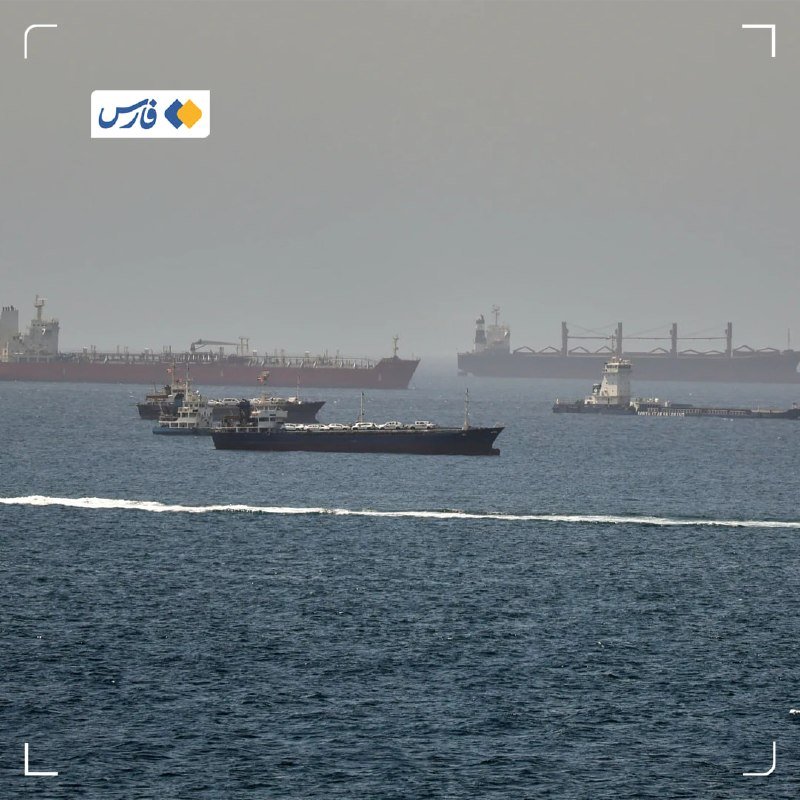
At 10:01 UTC on 14 July 2026, Reuters reported that India had formally protested to Iran over the killing of an Indian seafarer in the Strait of Hormuz. The killing took place inside one of the world's most sensitive oil corridors, on the same morning the United States announced it would reinstate a naval blockade of Iranian shipping through the waterway. Brent crude, according to Bloomberg market data cited on Telegram at 05:49 UTC, traded at $85.64 a barrel, capping a two-day surge of roughly 10% on Monday and 2.8% on the Tuesday session.
The convergence is the point. A crew member's death, a great-power blockade, and a double-digit oil shock are no longer separate stories: they are a single regional crisis, and the consequences are being priced in real time.
What happened in the strait
The Indian Ministry of External Affairs delivered its protest to Tehran via diplomatic channels after an Indian national was killed during what Indian officials described as an Iranian interception of a commercial vessel in Hormuz. Reuters, citing Indian government sources, reported the protest at 10:01 UTC on 14 July 2026. The seafarer's name and the vessel's flag were not disclosed in the wire report reviewed here, nor did the Iranian foreign ministry immediately respond publicly.
Hours later, the US military said it would begin a blockade of Iranian shipping through the strait the following day, on 15 July 2026. NPR's news desk reported the announcement at 09:56 UTC, noting that Iran had vowed to assert its own control over the waterway in response. France 24, writing at 08:26 UTC, added that US President Donald Trump had framed the move as a reinstated blockade and said Washington would charge ships for safe passage.
The pricing reaction was immediate. Brent crude traded above $85 a barrel, with the two-day move logging close to 13% from the prior session, according to a Bloomberg figure circulated at 05:49 UTC. For an industry that had grown accustomed to sub-$80 prints through the spring, the speed of the re-pricing is itself the headline.
The crew member, the corridor, the customers
Roughly one-fifth of the world's seaborne oil transits Hormuz. India is its single largest buyer. The corridor's geography has always been coercive: at its narrowest, it is roughly 21 nautical miles wide, with shipping lanes on either side of the median and Iranian territorial waters pressing in from the north. A single successful interception that turns lethal is, for New Delhi, not a marginal incident; it is a test of the unwritten contract that keeps Indian tankers and Indian seafarers moving at all.
India's response is calibrated rather than escalatory. A formal protest through diplomatic channels preserves the option of future maritime cooperation, while signalling to Tehran that the cost of further interceptions has just risen. Indian sources told Reuters that the government is seeking consular access and a formal Iranian accounting. Whether that accounting materialises will be an early indicator of whether the corridor remains navigable for third-party tankers or quietly segments into flag-of-favoured and flag-of-unfavoured traffic.
The crew member's death also raises a question the Iranian side has not yet answered on the record reviewed here: under what rules of engagement did the interception take place, and who authorised the use of lethal force on what Iranian authorities, if they speak publicly, will likely describe as a routine boarding.
The blockade question
The US announcement is the second iteration of the measure in a matter of months. NPR and France 24 both reported that the blockade, scheduled to begin on 15 July 2026, will target Iranian shipping specifically, with the unusual addition of a transit fee for vessels seeking US-escorted passage. That structure matters. A pure blockade is a binary instrument: ships pass or they do not. A tolled blockade monetises the privilege of passage and signals that Washington expects the disruption to last long enough to price.
Iran's response has been rhetorical but pointed: a vow to assert its own control over the strait. The phrase maps onto the legal argument Tehran has run for decades, that the waterway is not an international strait in the narrow sense but a route through which Iran's coastal state rights apply. That argument has not held in international law, but it has held in practice every time the Iranian navy, the IRGC navy, or fast-boat units have demonstrated the capacity to swarm a convoy.
The plausible alternative read of the US move is that it is a bargaining chip rather than a sustained operation. Blockades require hull hours, escort tonnage, and political endurance. The Trump administration has oscillated between confrontation and negotiation with Tehran for months, and a blockade announced at the height of a tanker incident is exactly the kind of instrument that can be dialled back without a formal concession. Against that read, the case for taking the announcement at face value is the simultaneous announcement of a transit fee, which is harder to reverse without an open loss of face.
What markets and governments are watching
For oil traders, the question is duration. A two-day 13% move prices immediate risk; it does not yet price a sustained closure of the lane. If Iran's vow of counter-control translates into active interceptions of non-Iranian shipping, the corridor premium moves from the futures curve into the spot price, and the political reaction in importing capitals sharpens accordingly.
For India, the test is whether Tehran treats Indian-flagged or Indian-crewed vessels as a special case. India buys roughly 35% to 40% of its crude needs from a slate that includes Iranian barrels when sanctions permit, and the diplomatic channel is the one lever New Delhi retains when its tankers are in Iranian waters. The protest is the opening move in that channel.
For the wider region, the structural fact is that a single crew member's death has been enough to align three distinct escalatory tracks: a US naval blockade, an Iranian counter-vow, and a great-power protest from the world's largest oil importer. Each track is reversible on its own; together they form a ratchet that will be difficult to loosen without a face-saving gesture from at least two of the three.
What remains uncertain
The sources reviewed here do not specify the identity of the Indian seafarer, the vessel involved, or the precise circumstances of the fatal interception. The Iranian foreign ministry has not, as of the wire timestamps above, issued a public response. The size, scope, and enforcement rules of the US blockade are described in headline terms only; whether it covers Iranian-flagged ships alone or extends to third-country tankers carrying Iranian crude remains to be spelled out in operational orders. And the oil move, while dramatic, is still a two-day reaction: whether it persists into a sustained risk premium will depend on what Iran does in the water over the next 48 hours.
Desk note: This piece leads with the Indian seafarer's death because it is the human and diplomatic anchor of the day. The US blockade and the oil move are read as a single escalation track, not as three separate stories; the alternative read, that the blockade is bargaining theatre, is named and weighed against the transit-fee structure.
Wire provenance
This editorial synthesis draws on the following public wire/social posts:
- http://reut.rs/4ffw6U2
- https://t.me/sprinterpress