India hand England a Lord's hiding and a red-ball reckoning
A 270-run defeat at Lord's finishes England's historic women's Test against India and lands on the same weekend Brendon McCullum admits seven losses in nine games cost him the Test job.
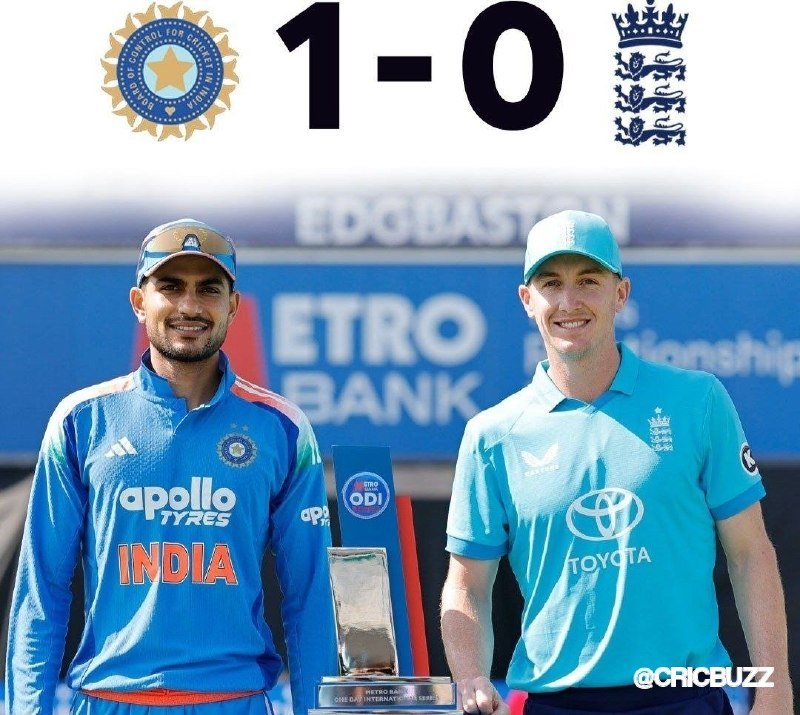
India needed four wickets before lunch on the fourth day at Lord's and took them inside the session, sealing a 270-run victory that ranks as the most emphatic result in the short history of women's red-ball cricket between these two sides. Sneh Rana removed Sophie Ecclestone to finish the job after England had resumed on 131 for six, chasing an improbable 457, and were dismissed for 186. The margin said less about a close contest than about a contest that had stopped being one on day two.
That England arrived at this moment already in crisis tells the deeper story. Brendon McCullum, sacked as Test coach on Sunday, used his first major interview since to apologise for a sequence of seven defeats in nine games and to accept that the results, not the noise around them, ended his tenure. A day later, his white-ball remit formally reduced rather than terminated, McCullum watched the same playing group he had overseen get outplayed across formats, in conditions, and in a match the schedule had flagged as historic the moment it was confirmed.
A Lord's Test, but whose moment?
The fixture was sold as a return to the format after a decade away for an India–England women's Test at the ground. The result, in the end, was a 270-run win for India, with England bowled out twice and the second innings ending before lunch on the final day, Ecclestone's half-century the only sustained resistance in a chase that was always nominal. The announcement of McCullum's sacking landed the same weekend, in part because the England and Wales Cricket Board had decided the timing was unavoidable rather than convenient.
The structural problem is scheduling. The Test was played back-to-back with a white-ball series, against an India side that arrived in England already match-sharp from a long home summer, and was given a slot that, by the ECB's own framing, was about the event as much as the cricket. BBC Sport's own reporting on the day asked, plainly, whether women's Test cricket is struggling for relevance, and the answer it sketched was uncomfortable: relevance is built on context, context is built on volume, and a single fixture in a packed international window does not build either. England's defeat intensified rather than softened that question.
McCullum's two jobs, one of them gone
McCullum's apology was not about one format. Seven defeats in nine games is a run that straddles the red-ball dressing room he has now left and the white-ball dressing room he has, in effect, been demoted out of. His new brief, a reduced role as England's white-ball coach, is the ECB's attempt to keep the popular New Zealander in the building while admitting, in action if not in words, that the head-coach-of-everything model had stopped working.
The cricket on the field at Lord's was a separate humiliation. India bowled England out cheaply in the first innings, built a lead, and then watched the lower order fold again in the fourth innings. Ecclestone's fifty was characterised as "hard-fought" by the live text commentary, which doubled as an obituary for the chase. There was no collapse, no late-order rearguard drama, no wobble. There was a team that knew on day two it was beaten and played out the rest of the match with that knowledge visible.
The white-ball shift, and what India already showed
McCullum's reduced role begins with India, and the timing is awkward. India's white-ball side, the same group that put England in at Lord's, are the side England will face in the one-day series that runs alongside, or in the shadow of, the Test. India outplayed England in red-ball conditions; the one-day question is whether the same gap exists in white-ball cricket, and Brendon McCullum's first assignment in his new, smaller brief is to close it.
That is a tall order. India's bowlers took twenty England wickets in four days at Lord's and their batting set up the match on day one. The white-ball side contains most of the same names, against an England group that has been told, in public, that the coaching structure above them has changed. There is no public evidence yet that the players have absorbed the message.
Stakes: who actually has a plan
The structural frame here is not a one-off result. It is a Test calendar that treats women's red-ball cricket as a ceremonial event, a coaching structure that asked one man to hold three jobs and then blamed him when they did not all flourish, and an India side that has spent the last two years playing Test cricket at home and arrived in England already fluent in the format. England, by contrast, had not played a women's Test since 2019 and showed it.
The honest read is that the Lord's result was always the most likely outcome, given the gap in red-ball preparation, and that McCullum's sacking was an attempt to absorb the blame for a structural problem the ECB had created. Whether the new coaching split solves anything will be visible in the one-day series that starts now. If India win that too, the structural problem survives the personnel change intact. If England respond, the lesson is that the personnel was, in fact, the problem, and McCullum's apology was the right one.
The sources disagree on one thing only: whether the Lord's Test itself was the right venue for this reckoning. The cricket was historic in name and one-sided in execution. That is the part of the weekend McCullum did not get a chance to apologise for, and the part the ECB has not yet had to.
Desk note: this article treats the India–England women's Test and the McCullum dismissal as one story, because the timing forced the connection. Wire coverage on the day led with the result; this desk argues the result is downstream of the coaching change, not the other way around.